Customer Reviews
About & Origin
Java moss is one of the most popular aquarium mosses in the hobby, valued for how forgiving and adaptable it is. Botanically it's Taxiphyllum barbieri, native to Southeast Asia, where it grows attached to rocks, roots, and tree trunks along the humid banks of streams and rivers, tolerating both submerged and out-of-water conditions.
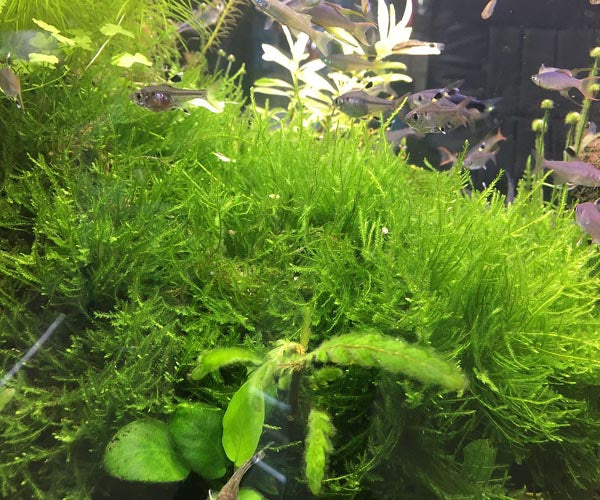
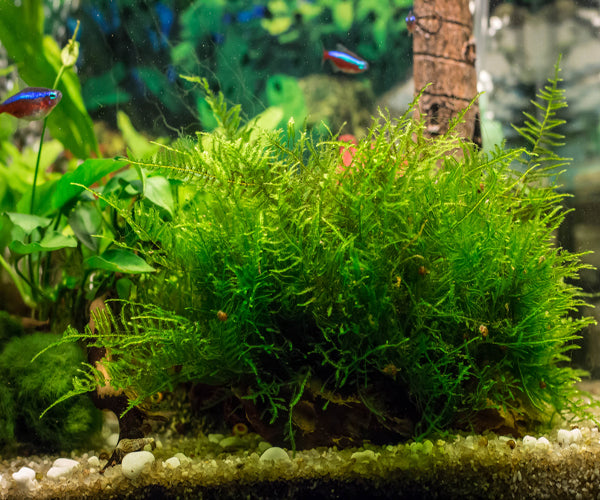
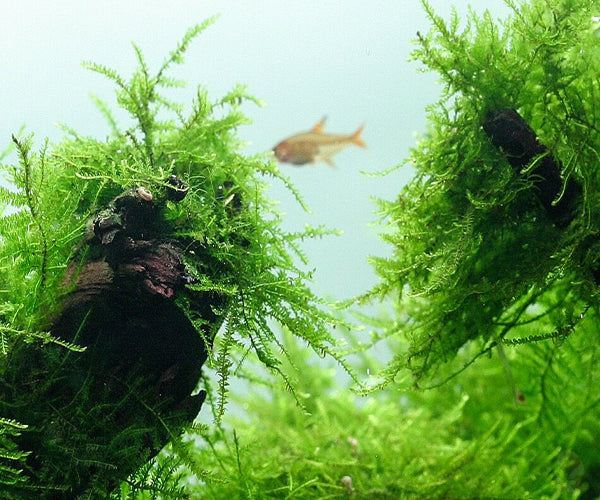
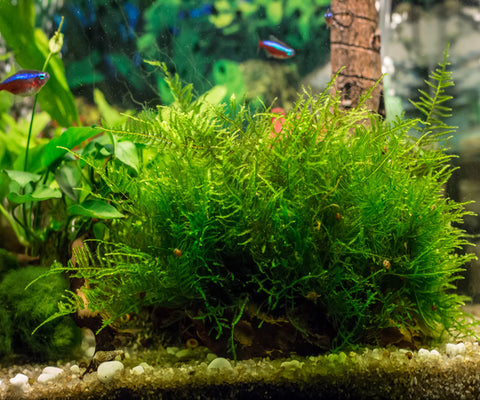
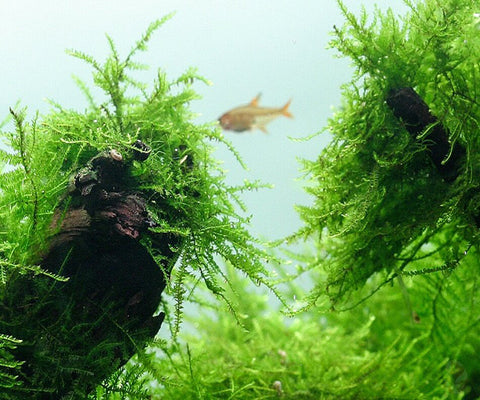
It's an epiphyte, not a rooted plant — irregularly branching stems covered in tiny overlapping leaves that cling to any firm surface they contact rather than growing in substrate. Left loose, it will drift and tangle into soft green mats; tied to hardscape, it grows into the surface over time and becomes effectively permanent.
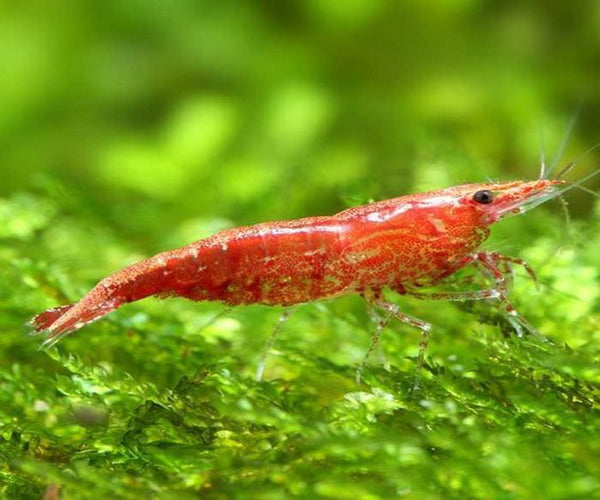
Java moss is arguably the single most widely used moss in the aquarium hobby, both for its own appearance (moss walls, moss-covered driftwood, "moss balls" as a shaped mat) and as fine cover for fry and shrimp, which graze the biofilm and microfauna that collect within it.
Its name comes from the island of Java in Indonesia, though similar mosses are found more broadly across Southeast Asia, and confusion in the trade between Java moss and several visually similar species is common -- most casual buyers won't notice the difference, since care requirements across these mosses are essentially identical.
Requirements
Java moss is about as low-maintenance as aquarium plants get.
Attachment: tie or glue small portions onto driftwood, rock, or mesh with cotton thread or fine fishing line; it will grip the surface with rhizoids within a few weeks, after which the tie can be removed. It is not planted in substrate.
Placement: works equally well as a foreground carpet-style mat, a background wall on mesh, or draped over hardscape -- versatility that's part of why it's such a hobby staple.
Light: low to moderate light is enough; low light gives a looser, more open growth while brighter light produces a denser, shorter mat.
CO2 and nutrients: not required for healthy growth.
Maintenance: trim with scissors to keep it neat and prevent detritus building up inside a thick, unmanaged mat; loose fragments regrow readily wherever they settle and attach, which is also the easiest way to propagate more.
Uses: commonly grown into "moss walls," tied over driftwood or rock for a naturalistic covered look, or shaped into "moss balls," and is a favourite substrate for breeding tanks since it shelters eggs and fry far better than bare glass or gravel. Betta and shrimp breeders in particular rely on it heavily as safe cover for vulnerable young.
Compatibility
Water & Care Conditions
Java moss tolerates a very wide range of freshwater conditions:
- pH: 5.5–8.0
- Hardness: soft to hard, roughly 2–20 dGH
- Temperature: 15–28°C (59–82°F) — unusually tolerant of both cooler unheated tanks and standard tropical setups
- Light: low to moderate is sufficient; it doesn't need strong lighting
It's one of the most forgiving plants in the hobby and adapts to almost any established freshwater tank without special adjustment. Browning or die-back at the base of a thick mat is usually a sign of poor water flow through the interior rather than a chemistry problem -- periodic trimming and thinning keeps the mat healthy by letting water and light reach the parts that would otherwise stagnate. Growth rate scales directly with light: expect a loose, slow-growing mat in low light versus a dense, faster-filling one under brighter conditions. Well-oxygenated water also supports healthier, greener growth, though this species is genuinely undemanding compared to almost any other plant in the hobby, tolerating everything from cold unheated tanks to standard tropical setups without complaint. Debris trapped inside an unmanaged mat can lower local water quality over time, which is the main practical reason regular trimming matters more than most keepers initially expect, even on a plant this hardy overall.