About & Origin
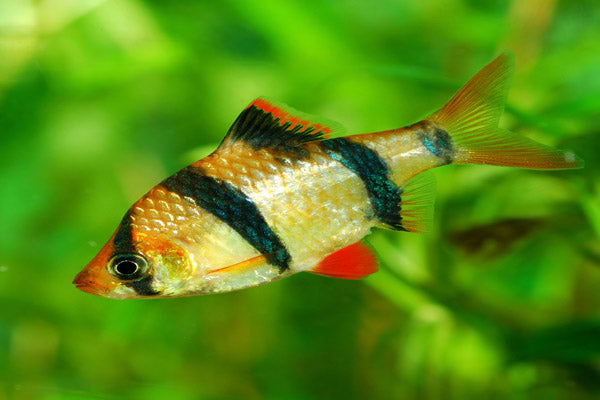
The Tiger Barb (Puntigrus tetrazona) is an active, shoaling barb species from the blackwater and clearwater streams of Sumatra, Borneo, and other parts of Indonesia and Malaysia, where it moves in large numbers through slow-moving, vegetation-lined rivers, foraging omnivorously among leaf litter and submerged plants for insects, worms, crustaceans, and plant matter.
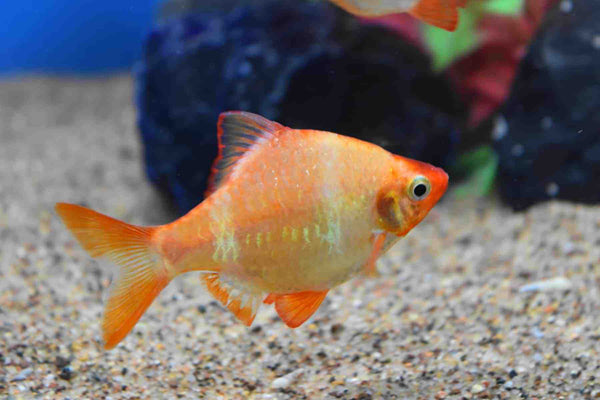
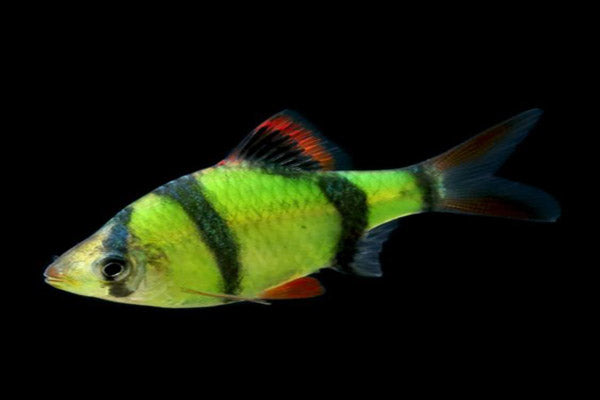
It's instantly recognisable: a deep, laterally flattened orange-gold body crossed by four bold black vertical stripes, with red-tinted fins in well-conditioned specimens. It's been a fixture of the aquarium hobby for well over a century — first described scientifically in the 1850s and imported into the trade not long after — and remains one of the most widely kept barbs worldwide, having spawned numerous colour-morph variants (albino, green, and others) bred from this same base species.
Tiger Barbs are fast, constantly active, and have a well-earned reputation as fin-nippers — but that reputation is largely a symptom of being kept in too small a group. In a proper shoal, their pecking-order energy stays directed at each other rather than at tankmates, expressed as brief chasing and fin-flaring displays between shoal members rather than sustained aggression toward other fish.
They're egg-scatterers with no parental care: a conditioned group will spawn over fine-leaved plants or a spawning mop, and adults will eat their own eggs if not removed. With good care Tiger Barbs typically live 5 to 7 years, and their combination of bold colour, constant activity, and low cost has kept them one of the most recognisable community fish in the hobby for generations.
The species name has shifted over the decades too — long sold under the genus Barbus or Puntius, taxonomists now place it in Puntigrus alongside a small number of close relatives. None of that changes anything about how the fish is kept; it remains a fast-breeding, easy-to-farm species, which is a big part of why it's stayed so affordable and widely available compared to barbs that are harder to spawn in captivity.
Requirements
Getting group size right is the single biggest factor in whether Tiger Barbs behave well.
Group size: 6 or more, no exceptions — in smaller numbers they redirect their hierarchy behaviour into fin-nipping other tank residents, especially slow, long-finned fish like bettas, angelfish, or fancy guppies. Larger groups of 8-10 or more tend to be noticeably calmer toward tankmates than the bare minimum.
Tank size: a 20-gallon (75L) long tank is a reasonable minimum for a group of 6, with more room welcomed since they're active, horizontal-space-hungry swimmers that use the length of a tank more than its height.
Diet: omnivorous and easy to feed — quality flake or small pellet as a staple, with occasional frozen or live foods (bloodworm, brine shrimp, daphnia) for conditioning and colour. Two smaller feedings a day, in amounts cleared within a minute or two, work better than one large feeding.
Filtration & flow: they come from moving water and do well with moderate current and strong, stable filtration, reflecting the flowing streams they inhabit natively.
Tankmate selection: best paired with similarly fast, robust community fish rather than slow-moving or long-finned species, which are the ones most likely to draw fin-nipping attention from an under-shoaled or bored group.
Enrichment: a busy, active group genuinely does better with some structure to patrol around — driftwood, rockwork, or dense planting broken up with open swimming lanes gives them something to interact with beyond each other and tankmates, and tends to reduce the amount of energy redirected into fin-nipping.
Acclimation: Tiger Barbs are generally hardy shippers, but a slow drip acclimation over 20-30 minutes still reduces the initial stress that can trigger ich outbreaks in a freshly introduced shoal.
Compatibility
Water & Care Conditions
Tiger Barbs are hardy and adaptable, part of why they've remained a hobby staple for so long, and do best within these ranges:
- pH: 6.0–7.5
- Water hardness: soft to moderately hard, roughly 5–15 dGH
- Temperature: 20–26°C (68–79°F)
- Oxygenation: appreciates good water movement and well-oxygenated water, matching their native flowing-stream habitat
- Water changes: weekly 20–25% partial changes keep an active, waste-producing shoal in good condition
They tolerate normal community-tank fluctuations well as long as ammonia and nitrite stay at zero — like most active shoaling fish, poor water quality affects them far more than parameters being slightly off the ideal. Sudden temperature drops or an immature filter are the most common triggers for ich (white spot disease) in this species, particularly in a shoal where it can spread between individuals quickly once it appears.
Because they're such fast, constant swimmers, a Tiger Barb showing clamped fins, hiding, or unusual lethargy is a more reliable early illness sign than with a naturally calmer species — a healthy shoal is almost always in motion. If breeding, a warmer, softer, well-planted spawning setup with adults removed after spawning gives the best results, with fry free-swimming and ready for fine foods within about a week of hatching.
Run any medication at the labelled dose for scaled fish, but always dose to the tank's actual water volume rather than its stated size, since displacement from substrate, decor, and equipment can meaningfully reduce true water volume in a heavily aquascaped setup — overdosing is a more common real-world mistake than underdosing with this hardy, easy-to-treat species.
Beyond that, this is a genuinely tough, disease-resistant fish once established — a mature, cycled tank with stable parameters and a consistent maintenance routine is really all it needs to thrive for its full lifespan.