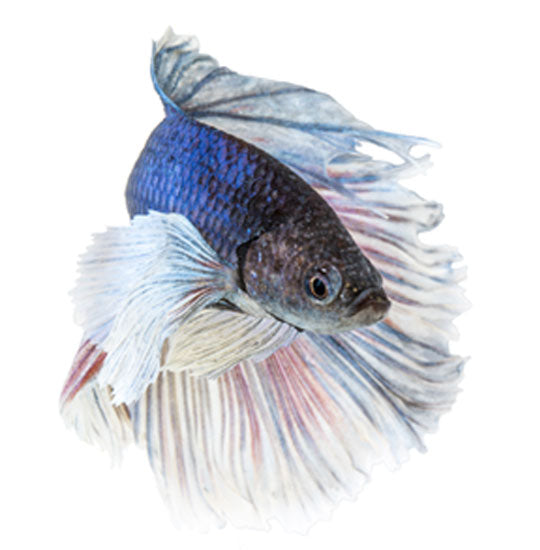
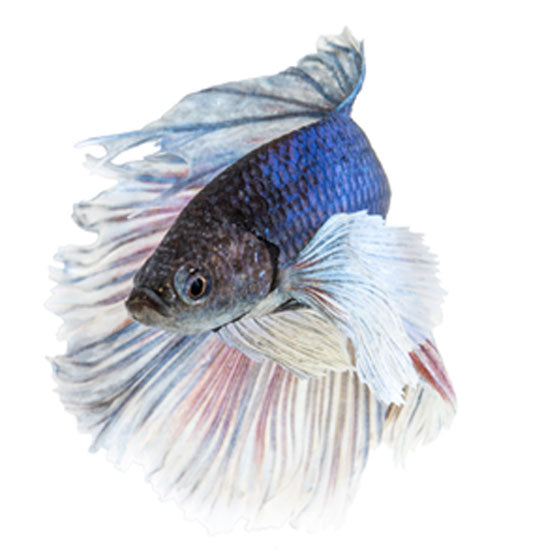
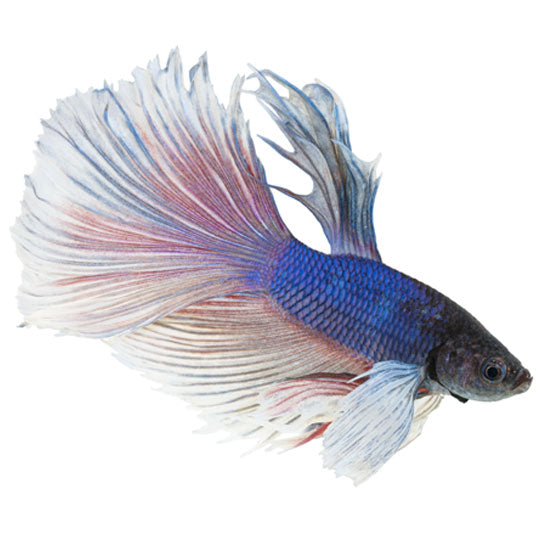
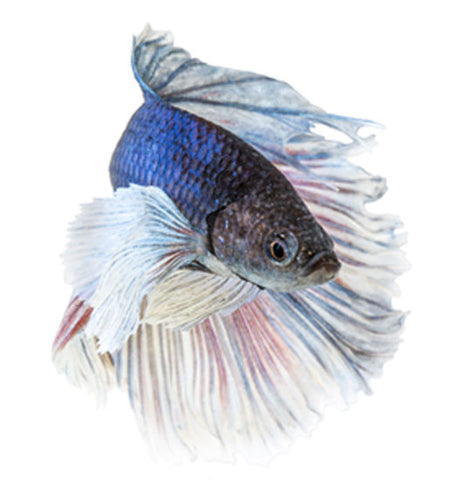
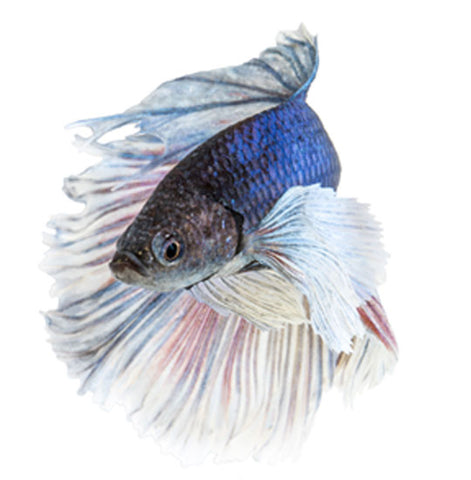
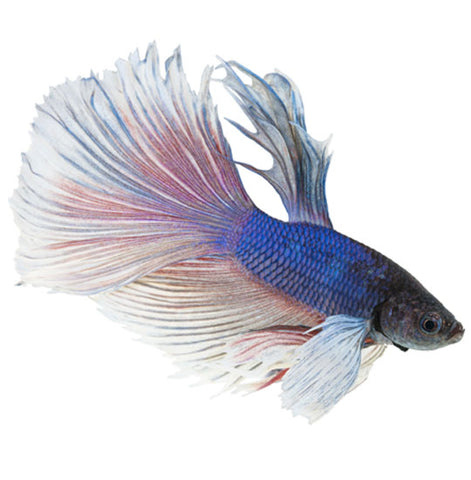
Elephant ear Betta Adult-Male betta
About & Origin
The Elephant Ear (or "Dumbo Ear") is a pectoral-fin variety of the Betta (Betta splendens), native to the rice paddies, ditches, and floodplains of Thailand, Cambodia, Vietnam, and Laos. It's named for its dramatically enlarged, rounded pectoral fins, which fan out from behind the gills like a pair of ears — a striking trait developed through selective breeding, distinct from the tail-shape varieties like veiltail or crowntail.
Aside from the pectoral fin size, it shares the same biology as every other betta: the labyrinth organ that lets it gulp air at the surface, and the same solitary, territorial nature in males inherited from its wild ancestors.
This listing is an adult fish, so its full elephant-ear fin development and adult colouring are already visible rather than still growing in.
"Elephant Ear" (also called "Dumbo Ear") describes a betta with noticeably enlarged, broad pectoral fins that resemble an elephant's ears — a distinct trait from tail-shape varieties like halfmoon or crowntail, and one that can be combined with any of those tail types.
This is a fin-type variation of the same species, Betta splendens, selectively bred over generations, originally descended from wild labyrinth fish of Thailand's shallow rice paddies and slow floodplain waters.
The enlarged pectoral fins are purely ornamental in captive-bred lines and don't affect the fish's core behaviour or care requirements compared to other betta varieties, though very large-finned adults can be slightly less agile swimmers.
"Elephant ear" (also called dumbo-ear) describes a betta with enlarged, rounded pectoral fins that fan out like ears when the fish flares or swims, a trait that can be combined with any tail type (halfmoon, veiltail, plakat, and others). It is a selectively bred trait of Betta splendens rather than a separate species, prized purely for this distinctive fin shape.
Requirements
Keep singly, or as the sole betta in a community — never house two male bettas together. The oversized pectoral fins can make swimming slightly more effortful than a standard betta, so calm water with minimal current is especially important for this variety.
Avoid fin-nipping tankmates, which its large, delicate fins are particularly vulnerable to.
Feeding is easy — a good quality betta pellet as a staple, with occasional live or frozen treats.
One male per tank — bettas are highly territorial toward their own kind and must not be housed with other male bettas, and generally do best alone or with very carefully chosen, calm, fin-safe tankmates.
Because this variety carries extra fin surface area, it benefits even more than a standard betta from very gentle water flow, since large fins are more prone to snagging on decor and being fatigued by strong current.
A betta-specific pellet as the dietary staple, being primarily carnivorous, with occasional live or frozen bloodworm/brine shrimp for variety and conditioning.
A tank of at least 20 litres, rather than the small cups or bowls bettas are sometimes wrongly associated with, gives it proper room to swim and helps keep water parameters stable.
The oversized pectoral fins can make swimming slightly more effortful than on a standard betta, so gentle filter flow and easy access to resting spots near the surface (broad leaves, floating plants) are appreciated. As with every betta, this fish must be housed alone or only with carefully chosen, non-nippy, non-flashy tankmates — never with another male betta.
A varied diet of quality betta pellets plus occasional live or frozen bloodworm/brine shrimp keeps it in peak condition, and as with all bettas, regular small feedings are better tolerated than one large feeding given its small stomach.
Compatibility

Water & Care Conditions
Same core needs as any betta, with extra emphasis on calm water given its oversized fins:
- pH: 6.0–7.5
- Salinity / hardness: freshwater only, soft to moderately hard water
- Temperature: 24–28°C (75–82°F) — a stable heater is essential
- Light: moderate, with floating plant cover appreciated
- Oxygenation: tolerant of still, low-oxygen water via its labyrinth organ; strongly prefers calm water, as its large pectoral fins make swimming against current more effortful
- Swimming effort: the enlarged pectoral fins mean gentle current and easy resting spots near the surface are especially appreciated
- Water surface access: needs easy access to the surface to gulp air via its labyrinth organ — avoid tall, narrow tanks with limited surface area
- Diet: quality betta pellets as a staple, with occasional live/frozen foods for variety and colour
As a labyrinth fish it can supplement gill breathing with atmospheric air at the surface, tolerating lower dissolved oxygen better than most fish — but this doesn't reduce the need for clean, well-maintained water.
Very gentle flow and smooth, snag-free decor matter more for this large-finned variety than for a standard-finned betta, to avoid fin damage and fatigue.
Unlike most tropical fish, this variety genuinely needs a tight-fitting lid with an air gap underneath, not to prevent jumping alone but because it periodically surfaces to gulp air through its labyrinth organ, and a fully sealed lid with no airspace can leave the air it breathes stale and humid.
A heater is essential despite the labyrinth organ's tolerance for lower oxygen -- bettas are true tropical fish and become lethargic, prone to illness, and short-lived in unheated, too-cool water, contrary to the common misconception that they can live in a small unheated bowl.