
About & Origin
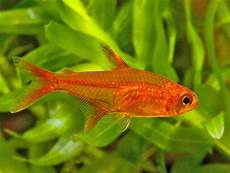
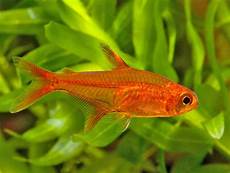
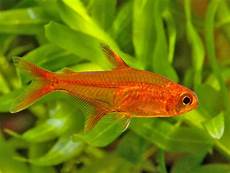
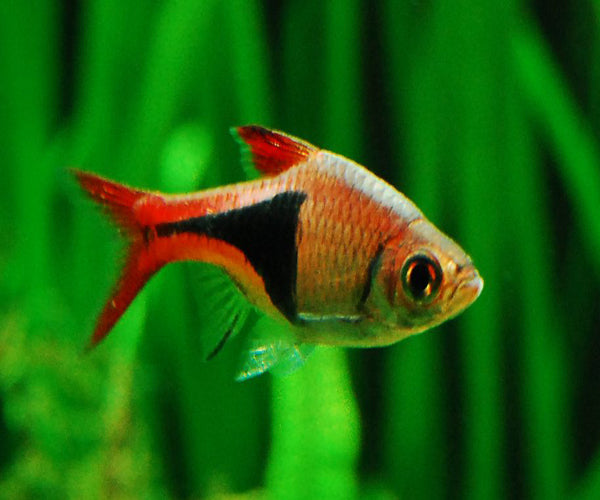
The Ember Tetra (Hyphessobrycon amandae) is a tiny, fiery orange-red tetra from the Araguaia River basin in central Brazil, discovered and described relatively recently (1987) compared to many other classic tetras. Fully grown it barely reaches 2 cm, making it one of the smallest true tetras commonly kept.
In the wild it inhabits small, shallow, densely vegetated forest streams with dark, tannin-stained water and very little current — the kind of tight, sheltered habitat that its small size and gentle nature are well suited to.
Its glowing orange colour intensifies with good diet, soft acidic water, and a darker substrate or background, which is why it's become a favourite for nano and planted aquascapes where its colour reads as a small, warm spark of colour against green plants.
The Ember Tetra (Hyphessobrycon amandae) is one of the smallest commonly kept tetras, reaching barely 2cm, and comes from the Araguaia River basin in Brazil, where it inhabits densely vegetated, tannin-stained forest streams.
Its intense fiery orange-red colouration, which gives it its common name, tends to deepen and glow further against a dark substrate and in dim, planted, blackwater-style aquascapes — a big part of why it's become a favourite nano-tank species.
It was only formally described in the early 1990s, making it a relatively recent addition to the aquarium trade compared to many other long-established tetras.
The Ember Tetra (Hyphessobrycon amandae) is one of the smallest commonly kept tetras, native to the Araguaia River basin in Brazil, where it inhabits densely vegetated, slow-moving blackwater tributaries. Its entire body glows a warm translucent orange-red, and at barely 2cm fully grown it is often kept in nano and planted aquascapes where larger tetras would be out of scale.
Requirements
Given its small size, the Ember Tetra is one of the better true shoaling fish for nano tanks, but it still needs a proper group — 8 or more — to feel secure and show its best colour; kept singly or in pairs it tends to stay hidden.
It is a very peaceful, unfussy fish, well suited to densely planted tanks with soft, slightly tannin-stained water. Because it's so small, tankmates need to be chosen carefully — nothing large enough to see it as a snack.
Feeding is easy with a high-quality micro pellet or crushed flake sized appropriately for its small mouth; live or frozen micro foods (baby brine shrimp, micro worms) bring out the best colour and condition.
As a true nano fish, it's well suited to smaller planted tanks, but should still be kept in a proper shoal of 8-10 or more, since larger group sizes noticeably calm this naturally somewhat skittish species and bring out its best colour and confidence.
Best kept with other equally small, peaceful nano tankmates (dwarf shrimp, small rasboras) rather than larger or more boisterous community fish that could outcompete it for food or intimidate it.
Small live and frozen foods (micro worms, baby brine shrimp, daphnia) alongside high-quality micro pellets bring out the best size, colour, and condition, since its tiny mouth limits what it can easily eat.
Because of its tiny adult size, tankmates must be chosen carefully — even moderately sized community fish can see it as food, and it does best either in a species-only nano tank or alongside other very small, peaceful fish and dwarf shrimp. A group of ten or more looks and behaves far better than the bare minimum of six, since its impact really comes from shoal density.
Its tiny size means even modest amounts of uneaten food or waste can affect water quality faster than in a tank of larger fish, so modest, frequent small feedings and regular partial water changes matter more than in a big-fish setup.
Compatibility

Water & Care Conditions
Ember tetras do best in soft, slightly acidic, warm water that mirrors their native forest-stream habitat:
- pH: 5.5–7.5, thriving especially well on the softer, more acidic end
- Salinity / hardness: freshwater only, soft water preferred
- Temperature: 21–28°C (70–82°F)
- Light: moderate, ideally with floating or dense planting for cover and to bring out colour
- Oxygenation: gentle filtration and low to moderate flow suit this species well; being so small, avoid strong current that it has to fight against
- Tank size: content in a nano tank from roughly 30-40 litres upward given its very small adult size, unlike most other tetras on this list
- Feeding: its tiny mouth means food must be correspondingly small — micro pellets or crushed flake, especially for fry and juveniles
- Feeding: feed small amounts frequently rather than one large feeding, given its tiny mouth and fast metabolism
- Longevity: commonly lives 2-3 years given its very small size, shorter than larger tetras
Soft, acidic, tannin-stained blackwater conditions genuinely suit this species best and noticeably intensify its colour, though captive-bred stock has become more adaptable to moderate hardness over generations of breeding.
Being so small, it's also more sensitive to sudden parameter swings than larger tetras, so gradual, regular partial water changes are preferable to infrequent large ones.
Weekly partial water changes of 20-30% help keep Ember Tetras colourful and active, since like most small characins and rasboras it's sensitive to accumulating nitrates and organic waste over time even though it isn't considered a delicate species.
A mature, cycled tank with established biological filtration is a much safer home for a new shoal than a freshly set-up system, since ammonia and nitrite spikes during cycling are a common cause of losses in small schooling fish.