Customer Reviews
About & Origin
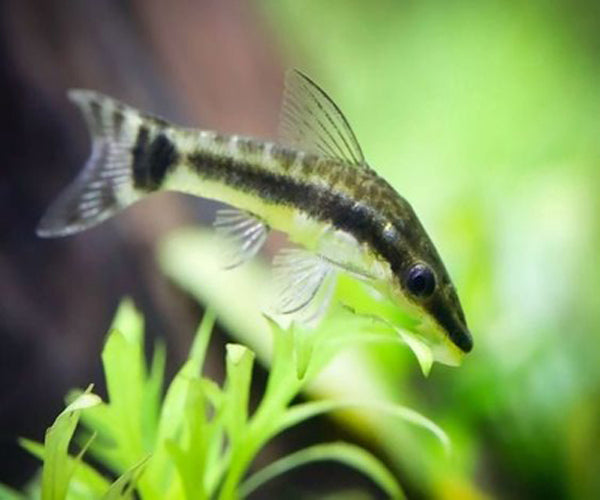
Otocinclus (commonly just "Otos") are tiny suckermouth catfish from the Amazon and other South American river systems, prized in the hobby as one of the best true algae-eating fish for planted tanks. Unlike many "algae eater" fish that outgrow the job or turn omnivorous/aggressive with age, Otos stay genuinely small (typically 3–5cm) and remain dedicated grazers of soft algae and biofilm throughout their lives.
In the wild they live in shoals among submerged vegetation and driftwood in clear, well-oxygenated streams, constantly grazing algae off leaves, rocks, and wood surfaces -- a habit that translates directly and usefully into the aquarium.
Because they rely so heavily on grazing, wild-caught Otos (the majority of stock in the trade) are notoriously prone to starvation-related stress during shipping and the first weeks in a new tank, which is the main reason this otherwise easy fish has a reputation for being delicate.
Several visually similar species are all sold under the general "Otocinclus" name (O. affinis, O. vittatus, O. macrospilus among others), and in practice their care needs are close enough that they're treated interchangeably in the hobby -- the key traits (small size, dedicated algae grazing, shoaling behaviour, sensitivity during the settling-in period) hold across the group.
Once properly settled into a mature tank, Otos are constantly active during the day, patrolling glass, leaves, and hardscape in a loose group -- genuinely useful working fish for planted-tank algae control rather than just an ornamental addition, and one of the few small catfish that reliably tackle soft green and brown algae films that many other "algae eaters" ignore.
Most Otocinclus sold in the trade are still wild-caught rather than commercially bred, since captive breeding remains difficult and uncommon at scale -- this is part of why sourcing from a reputable, well-acclimated supplier matters more for this species than for most farm-raised community fish, and why giving new arrivals real time and gentle handling in their first weeks pays off disproportionately.
Requirements
Otocinclus are genuinely easy once past the critical settling-in period, but that period needs real care.
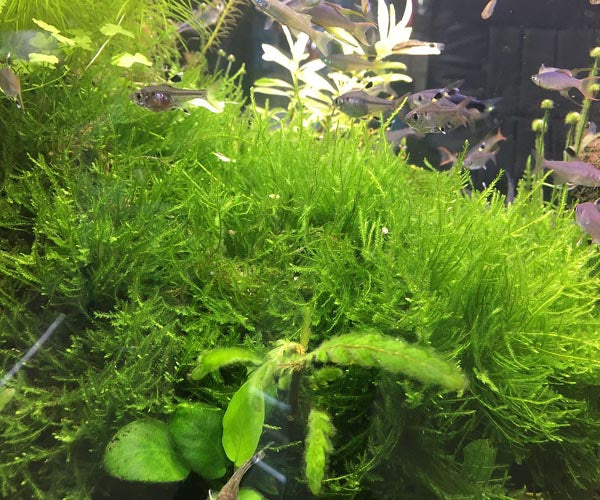
Mature tank essential: Otos need an established tank with a real, standing supply of soft algae/biofilm on leaves and surfaces -- do not add them to a brand-new, algae-free setup, as they can starve even with supplemental feeding.
Group size: keep at least 5–6; they're a shoaling species and settle in far better in a group.
Supplemental feeding: once algae supply runs low, supplement with algae wafers and blanched vegetables (courgette/zucchini, cucumber) so they don't go hungry.
Tank size: comfortable from around 45–60cm/18–24 inches upward for a small group.
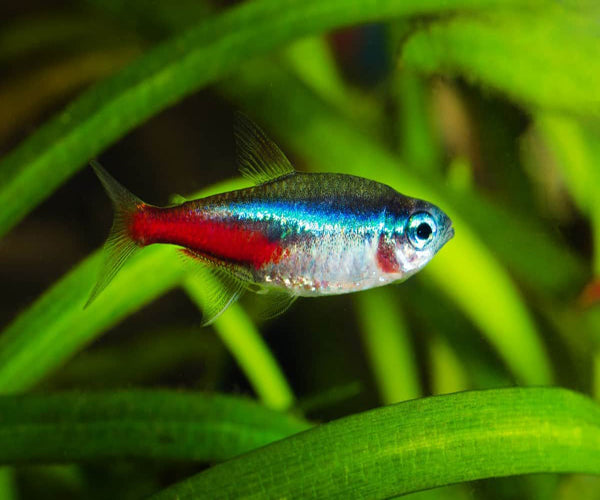
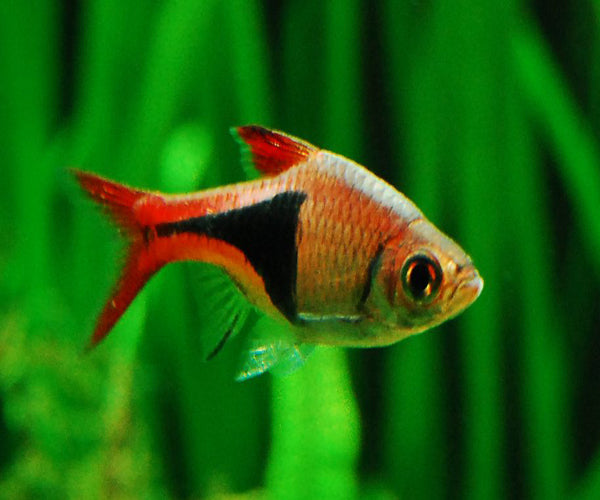
Tankmates: only peaceful, non-competitive fish -- Otos are easily outcompeted for food.
Acclimation: this is the single highest-risk moment for this species -- a slow drip acclimation over an hour or more, rather than a quick temperature-matched dump, meaningfully reduces the early losses Otos are known for. Fish that make it healthily through the first two to three weeks in a mature tank generally go on to be robust, long-lived residents.
Selecting healthy stock: look for individuals with a visibly rounded (not sunken) belly and active, alert behaviour rather than fish clustered motionless at the top of the tank -- a sunken abdomen is the clearest visible sign of the starvation stress this species is prone to during shipping.
Filtration: gentle-to-moderate flow with good oxygenation suits their fast-flowing stream origin, but avoid a current so strong it prevents them from grazing comfortably across flat surfaces.
Broad-leafed plants: Otos noticeably favour large, flat-leaved plants (Anubias, Amazon swords, java fern) as grazing surfaces over fine-leaved or floating species, so a planted tank with at least some broad leaf area will keep them busier and better fed than an otherwise bare or fine-leaved setup.
Compatibility
Water & Care Conditions
Otocinclus are sensitive to poor or unstable water quality despite their small size, so consistency matters more than for many other fish on this list.
- pH: 6.0–7.5
- Hardness: soft to moderately hard, roughly 2–15 dGH
- Temperature: 22–26°C (72–79°F)
- Oxygenation: needs good oxygenation and water movement, consistent with their fast-stream origin -- avoid stagnant, poorly filtered setups
- Nitrate: keep nitrates low (under 20ppm) through regular partial water changes -- Otos are more sensitive to accumulating nitrate than many similarly-sized fish
- Ammonia/nitrite: zero tolerance -- this species has essentially no buffer for a cycling tank's ammonia or nitrite spikes, another reason a fully mature tank is a hard requirement rather than a nice-to-have
- Lighting: moderate, consistent lighting on a regular photoperiod supports steady algae growth for grazing, without swinging between dark and overly bright conditions that disrupt the natural film they rely on
Only add Otos to a tank that has been fully cycled and running long enough to have a real algae film established -- this matters more for this species than almost any water-chemistry number.
Avoid copper-based medications entirely -- like most scaleless/armoured catfish, Otos are highly sensitive to copper, which is a common active ingredient in general fish medications and can be lethal even at doses safe for scaled community fish. Always check medication labels before treating a tank that houses Otocinclus.
Once settled, ongoing care is genuinely low-effort: regular partial water changes to keep nitrate down, stable temperature, and enough surface area (leaves, glass, hardscape, driftwood) for a natural film of algae/biofilm to keep regenerating between supplemental feedings. The transition from "high-risk new arrival" to "low-maintenance long-term resident" is well documented in this species -- the first month is genuinely the hard part.