About & Origin
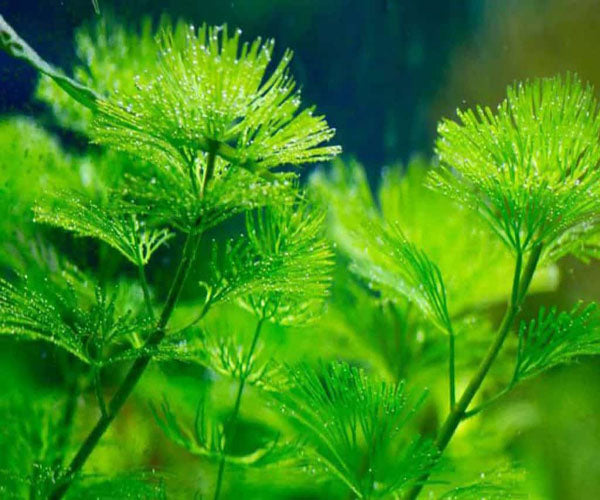
Cabomba caroliniana, green cabomba, is a submerged aquatic plant native to a wide swathe of the Americas, from the southern United States down through parts of South America, where it grows rooted in the slow-moving, sun-lit shallows of ponds, ditches, and quiet river margins.
It's instantly recognizable by its finely divided, fan-like leaves arranged in whorls along a slender stem — a texture more like an underwater fern than a typical broad-leafed aquarium plant. In good light the whorls sit close together and the plant forms a soft, feathery green column; in weak light the stem stretches out and the leaves thin.
Cabomba has long been one of the classic "background bunch plants" of the aquarium trade, valued for the contrast its fine texture gives against broader-leafed neighbors, and for the cover it offers fry and shrimp among its dense foliage.
The genus name itself comes from a South American indigenous word, reflecting how long the plant has been recognised and used in its native range long before it entered the aquarium trade. Botanically it belongs to the water-lily order rather than to the true stem-plant families most aquarium plants come from, which is part of why its structure — that whorled, feathery leaf arrangement — looks so different from almost everything else sold as a background plant.
In outdoor ponds and slow rivers across its native range it can flower above the waterline with small white or pale blooms, though in the aquarium, kept permanently submerged, it's grown purely for its foliage and never gets the chance to flower.
Worth knowing: outside the aquarium, green cabomba has become a genuinely troublesome invasive weed in parts of Australia, New Zealand, and the UK, where it escaped from ponds and aquaria and now clogs waterways badly enough to be a controlled or banned species in some jurisdictions. That's purely an outdoor-release issue rather than an aquarium-keeping one, but it's the reason some retailers label it carefully and why trimmed-off cuttings should never be dumped into local waterways.
Requirements
Cabomba has a reputation for being a little more demanding than the average beginner stem plant, mostly because of how it responds to light.
Light: it wants moderate to high light. In dim conditions it drops its lower leaves and grows leggy and sparse; under good light it stays full and compact from the substrate up.
CO2 and nutrients: it isn't strictly CO2-dependent, but supplemental CO2 and a regular liquid fertiliser routine make a real difference to how dense and healthy it stays — in a low-tech, unfertilised tank it tends to thin out over time.
Planting: plant stems in small bunches, a few centimetres apart, directly into a nutrient-rich substrate; trim and replant the healthy tops as it grows leggy at the base, which is the normal way to keep a bunch plant looking full long-term.
Handling: the fine leaves are delicate and can shed if handled roughly out of water, so plant it promptly after unpacking rather than leaving it exposed to air.
Water flow: moderate flow across the plant helps keep fine detritus and algae from settling in the dense whorls of leaves, which is a common complaint with cabomba in stagnant corners of a tank. Position it somewhere with reasonable circulation rather than a dead spot.
Common mistake: the single biggest reason cabomba fails in a tank is simply too little light for too long — people plant it expecting a typical "easy" bunch plant and it slowly disintegrates from the bottom up over several weeks. If it's shedding lower leaves, the first thing to check is light intensity and duration before assuming a water-chemistry problem.
Trimming technique: when a bunch grows too tall for the tank or starts thinning at the base, cut the healthiest stem tops a few centimetres below a whorl, strip the lowest inch of leaves so nothing rots below the substrate line, and replant directly. Discard the old, leggy bottom sections rather than trying to revive them — with cabomba it's almost always faster and more reliable to regrow from a fresh top cutting than to nurse a thinning base back to fullness.
Compatibility
Water & Care Conditions
Cabomba does best in soft, slightly acidic to neutral, well-lit water:
- pH: 6.0–7.5
- Hardness: soft to moderate, roughly 2–12 dGH
- Temperature: 22–28°C (72–82°F)
- Light: moderate to high — this is the main factor that determines whether it stays full and bushy or thins out
- Flow: moderate circulation around the plant, enough to prevent detritus settling in the dense leaf whorls without being so strong it constantly buffets and tangles the fine foliage
Outside these ranges it will usually survive but grow sparsely, with longer gaps between leaf whorls and a tendency to lose lower foliage. A cabomba stem that's thinning from the bottom up while the growing tip still looks healthy is almost always a light problem rather than a water-chemistry one — check duration and intensity before adjusting anything else. Regular partial water changes (weekly, 20–30%) also help by keeping nutrient levels and pH stable, which this plant, like most fast-growing stem plants, responds well to.
If injecting pressurised CO2, a target of roughly 15–30ppm alongside the light levels above will noticeably improve density and colour compared with a non-CO2 setup — but ramp it up gradually and watch fish behaviour (gasping at the surface is a sign of excess CO2 combined with too little surface agitation), since cabomba's higher light requirement often tempts keepers to push CO2 harder than their livestock is comfortable with. Nutrient-wise, cabomba is a moderately heavy feeder for a stem plant: a root tab at planting time plus a weekly liquid macro/micro fertiliser dose supports the dense growth this species is capable of, and nitrate/phosphate levels typical of a lightly-to-moderately stocked community tank (rather than a bare, ultra-low-nutrient setup) suit it well. Good oxygenation and surface movement matter too, since a dense, unthinned cabomba stand can measurably drop dissolved oxygen overnight if the tank is otherwise poorly aerated — another reason to keep the bunch trimmed rather than letting it grow into one solid mass.