About & Origin
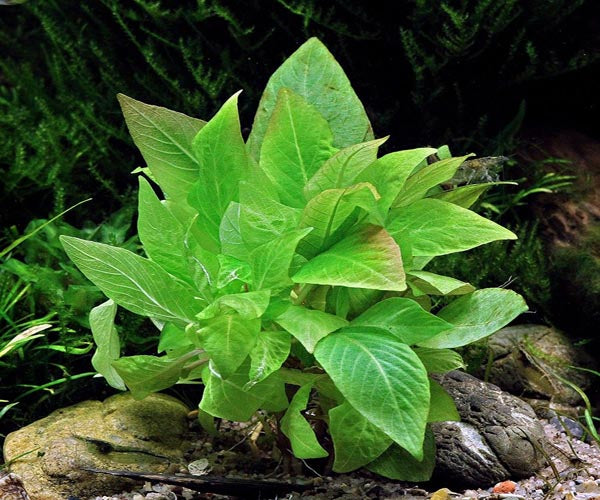
Hygrophila corymbosa is native to Southeast Asia, where it grows both as a fully submerged aquatic plant and as an emersed marginal plant along the edges of ponds, ditches, and slow streams. "Compact" is a cultivated dwarf form of the species, bred to stay noticeably shorter and denser than the standard variety.
Where the regular form can shoot up as a tall background plant, the compact form keeps its broad, pointed leaves close together on a short stem, making it useful as a midground plant instead — a rare case of a background species being bred down into a different role in the layout.
It has the classic sturdy, upright Hygrophila look: broad lance-shaped leaves in whorls, a thick stem, and a naturally bushy habit once established.
Wild-type Hygrophila corymbosa is a large, vigorous plant that can reach well over 40–50cm in a background position, so "Compact" being bred down to a fraction of that height for midground use is a genuinely useful trait rather than just a cosmetic label — it lets keepers get the same sturdy, broad-leafed Hygrophila texture without the plant quickly outgrowing a smaller or shallower tank. In the wild, emersed specimens along pond and ditch margins can flower with small purplish blooms above the waterline, though like most true aquarium stem plants it's grown purely for foliage once kept permanently submerged.
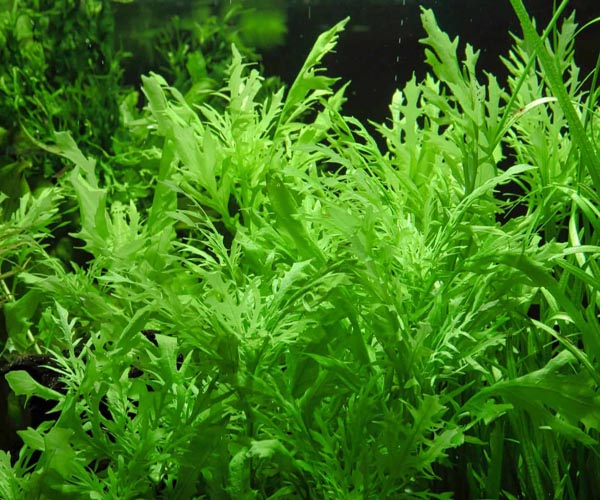
The genus Hygrophila as a whole is one of the most widely cultivated in the aquarium trade, spanning everything from this compact broad-leafed form to the finely divided "water wisteria" (Hygrophila difformis) — a useful point of reference if comparing textures for a planted layout, since they share easy care requirements but look almost nothing alike. "Corymbosa" refers to the corymb-shaped flower cluster the species can produce when grown emersed, a detail visible only outside the aquarium.
Requirements
The compact form needs a bit more attention to light than its parent species to actually stay compact.
Light: moderate to high light is what keeps it short and dense; in weak light it will stretch upward and lose the compact habit that's the whole point of this variety.
CO2 and nutrients: not mandatory, but supplemental CO2 and root or liquid fertiliser noticeably improve density and leaf colour.
Planting: root it in nutrient-rich substrate as a midground stem plant; trim the growing tip to encourage side shoots and a bushier shape rather than a single tall stem.
Propagation: cut healthy stem tops and replant — it roots readily from cuttings.
Keeping it truly compact: the single biggest factor separating a full, dense specimen from a leggy, stretched-out one is light intensity combined with regular topping — even under good light, an untrimmed stem will eventually reach for the surface and thin out at the base. Pinching the growing tip every few weeks, as soon as the plant starts pushing noticeably upward, keeps it branching sideways into the short, bushy form the variety is bred for.
Emersed vs submerged leaf form: plants purchased as emersed-grown stock (common for this species in the trade) often have slightly different leaf shape and colour above water than they develop once fully submerged — expect some leaf drop and a change in new growth over the first couple of weeks as it adapts, which is a normal transition rather than a sign of poor health.
Positioning: because it's a broader, sturdier plant than most fine-leafed midground species, it works well as a visual anchor point in a layout — planted in small clusters rather than a single stem, it reads as a solid mass of texture that contrasts nicely against finer-leafed neighbours like ferns or hair grass. Leave a little more spacing between individual plantings than you would for a true carpet plant, since each stem fills out considerably as it matures.
Compatibility
Water & Care Conditions
Hygrophila corymbosa 'Compact' does best within these ranges:
- pH: 6.0–7.5
- Hardness: soft to moderately hard, roughly 2–15 dGH
- Temperature: 22–28°C (72–82°F)
- Light: moderate to high, which is the main factor keeping the growth compact rather than leggy
Outside these ranges it will usually survive but stretch taller and thinner, losing the dense, compact form the variety is grown for.
This species is a moderately heavy feeder for a stem plant, and nutrient availability shows up visibly in leaf size and colour — under-fertilised specimens tend to produce smaller, paler leaves with more space between whorls, while a well-fed plant under good light packs leaves closely and stays a rich green. A root tab at planting time, topped up with a regular liquid fertiliser dose, supports the dense growth the compact form is prized for. If injecting CO2, a target of roughly 15–30ppm alongside moderate-to-high light gives noticeably better results than either factor alone. Weekly 20–30% water changes help keep growth even and consistent, and are worth doing on a steady schedule rather than reactively, since this species responds visibly to any lapse in nutrient or water-change routine within a week or two.
Good general water quality matters as much as the specific chemistry ranges above: ammonia and nitrite should read zero in an established, cycled tank, and stable parameters week to week matter more to this species than hitting any single "ideal" number, since sudden swings in hardness or pH are more likely to stress it than a steady value slightly outside the ranges given.
Trim away any melted or badly yellowed leaves promptly during the establishment period rather than leaving them to decompose in the substrate, since decaying plant matter can locally spike ammonia and encourage algae right around the new planting — a small amount of housekeeping early on makes a real difference to how quickly the plant settles in and starts pushing healthy new growth.