
About & Origin
This is a premium imported bloodline of the Cherry Barb (Puntius titteya), the same species native to the shaded forest streams and slow-moving pools of Sri Lanka, bred specifically for deeper, more saturated red colouration and stronger, more consistent body shape than typical farm-raised stock. In the wild, Cherry Barbs forage through leaf litter and marginal vegetation for small insects, worms, and algae, an omnivorous diet that carries straight over into how readily they accept prepared aquarium foods.
The species itself is one of the calmest members of the barb family — small, slender, and unhurried, a world away from the boisterous tiger barb side of the family. Imported bloodlines like this one are sought after by keepers who want the most vivid possible colour in a planted or aquascaped tank, where the fish's deep red really stands out against green foliage, and are often the result of years of selective line-breeding by specialist overseas breeders rather than mass commercial farming.
Like all Cherry Barbs, males show off the strongest colour, especially when well-fed and kept in a proper group with some competition for female attention. It's an egg-scattering species with no parental care, and a conditioned pair will spawn readily over fine-leaved plants given warm, soft, slightly acidic water.
With good care, this bloodline lives just as long as standard Cherry Barb stock — typically 4 to 6 years — and the extra cost of an imported line goes toward colour intensity and body conformation rather than any difference in hardiness or day-to-day care.
In the wild the species is now considered vulnerable due to habitat loss across its native Sri Lankan range, which makes captive-bred lines like this one — imported or domestic — the responsible choice regardless of colour grade. What sets an imported bloodline apart in practice is consistency: buyers can generally expect a tighter, more uniform standard of colour and finnage across a batch than with mixed-source farm stock, which is the main reason specialist keepers seek these lines out for show tanks and competitive aquascaping.
Requirements
Care requirements match the standard Cherry Barb closely — the "imported bloodline" distinction is about colour and conformation, not different husbandry needs.
Group size: keep 6 or more; a proper shoal brings out the best colour and calmest behaviour, and males colour up more intensely with some competition among themselves. A female-leaning ratio (roughly two females per male) tends to produce steadier, less stressed colouring across the group.
Tank size: a 10–15 gallon (40–60L) tank suits a small group comfortably, since these stay small (around 5cm/2in) and are unhurried swimmers that spend most of their time investigating cover rather than patrolling open water.
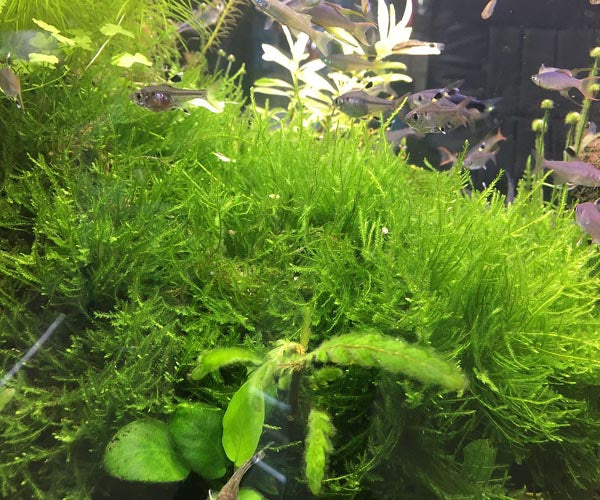
Planting: a well-planted tank both shows off the fish's colour and gives shier individuals somewhere to retreat — dense planting alongside some open swimming space mirrors the shaded streams this species comes from.
Diet: a quality flake or micro-pellet staple, with occasional live or frozen foods (daphnia, brine shrimp, bloodworm) — good nutrition is part of what keeps a premium bloodline's colour looking its best, and a varied diet noticeably deepens red pigmentation over a generic flake-only diet.
Tankmates: their calm temperament makes them safe alongside other small, peaceful community fish, without the fin-nipping tendencies some other barbs are known for.
Acclimation: imported stock in particular benefits from a slow, careful drip acclimation after the longer transport times involved — rushing this step is one of the more common causes of early stress or colour loss in premium bloodline fish, since sudden shifts in pH or temperature hit an already-travelled fish harder.
Filtration: a standard sponge or hang-on-back filter with gentle-to-moderate flow suits this species well; avoid hardness-raising media like crushed coral, which pushes water chemistry away from the soft, slightly acidic range that keeps colour at its best.
Compatibility

Water & Care Conditions
Same water preferences as the standard Cherry Barb — hardy, but colours up best within these ranges:
- pH: 6.0–7.5, leaning slightly acidic to neutral
- Water hardness: soft water, roughly 5–12 dGH
- Temperature: 22–26°C (72–79°F)
- Oxygenation: comfortable in standard community-tank flow; no special current needs
- Water changes: a weekly 20–25% partial change keeps nitrate low, which matters for colour as much as for basic health
Stable, clean water and good nutrition matter more here than chasing an exact number — both directly affect how deep and even the red colouration develops. As with the standard form, males under stress or in declining water quality will visibly fade toward the duller female colouring, making colour intensity a useful day-to-day health indicator.
Give newly arrived stock at least a couple of weeks to settle and show their true colour before judging quality — travel stress alone can temporarily dull even a genuinely well-bred fish, and colour typically rebounds fully once the fish is established in stable, well-maintained water with a varied diet.
If breeding to preserve or improve the bloodline, set up a dedicated spawning tank slightly warmer and softer than the display, and select breeding pairs for the deepest, most even colour and best body shape rather than breeding indiscriminately — this is how a bloodline's quality is maintained generation over generation, carried forward pair by pair, and why imported lines command a genuine premium over standard mixed farm stock.
This bloodline carries no extra disease susceptibility over standard Cherry Barb stock; the main practical precaution is a slow, drip-style acclimation for new arrivals and a quarantine period where possible, since imported fish that have travelled further can arrive more stressed than locally bred stock.