About & Origin
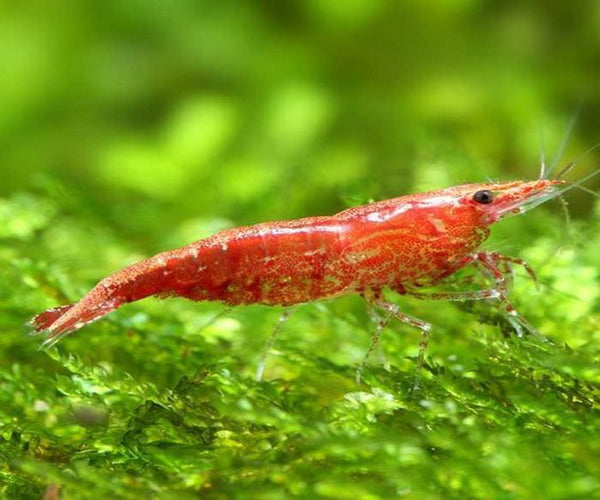
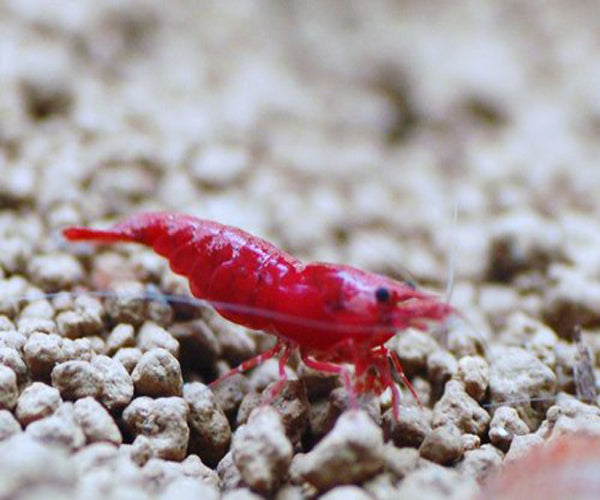
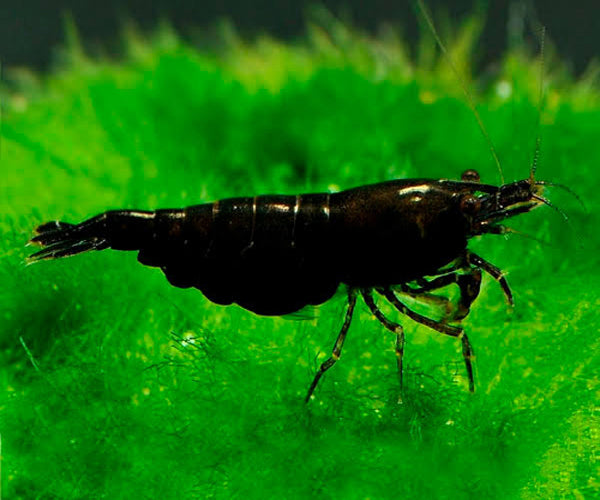
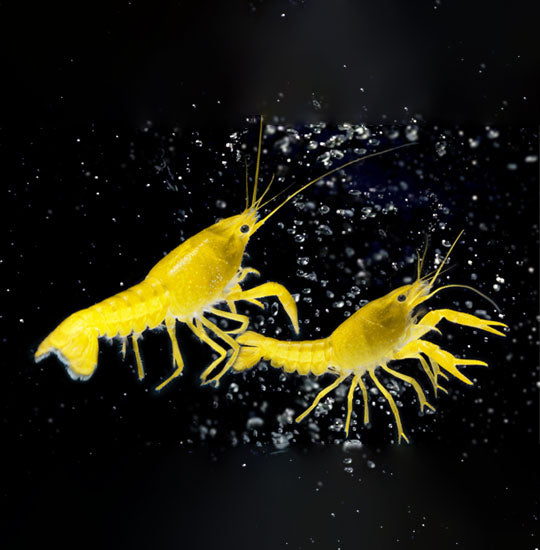
Red Cherry Shrimp is a dwarf freshwater shrimp, a colour strain of Neocaridina davidi native to streams and ponds in Taiwan and southern China. Every colour form in the trade -- red cherry, yellow, black, blue, and many others -- is the same adaptable species, selectively bred over generations for stronger, more saturated colour; wild-type Neocaridina are a plain brownish colour.
They are peaceful algae and biofilm grazers that spend their time picking over plant leaves, decor, and substrate, and breed readily in a stable, mature tank -- females carry visible clusters of eggs under their tail ("berried") and release fully-formed miniature shrimp rather than a larval stage, so a settled colony grows steadily on its own.
Red Cherry Shrimp specifically is one of the most sought-after and consistently available Neocaridina colour grades, ranging from lighter, more translucent "sakura" grade specimens up to deep, opaque "fire red" grade individuals bred for maximum colour saturation -- the deeper the red and the less transparency showing through, the more prized the grade generally is among dedicated shrimp keepers. They're also one of the most widely recommended "first invertebrate" for aquarists moving beyond fishkeeping, precisely because they're inexpensive, forgiving, and breed easily enough that a small starting group naturally becomes a self-sustaining colony.
Requirements
Neocaridina shrimp are one of the easiest invertebrates in the hobby once a few basics are covered.
Tankmates matter more than usual: almost any fish large enough to fit a shrimp in its mouth will eat it, especially vulnerable newborn shrimp -- they do best in a species-only shrimp tank, or with only very small, peaceful fish (small tetras, otocinclus) and no larger predatory or semi-aggressive fish.
Stability over time: shrimp are more sensitive to sudden swings in water parameters than most fish, and are notably intolerant of ammonia/nitrite -- they belong in a fully cycled, mature tank, not a brand-new one.
Copper is lethal: many common fish medications and even some tap water sources contain trace copper, which is highly toxic to shrimp at levels that don't bother fish -- always check before medicating a tank that houses shrimp.
They graze on algae/biofilm continuously and appreciate a small supplemental feeding of shrimp-specific food or blanched vegetables a few times a week.
Group size and breeding: shrimp are social and best kept in groups of 10 or more rather than singly or in pairs -- a proper colony breeds readily on its own in stable conditions, with berried females releasing dozens of fully-formed miniature shrimp roughly every few weeks once established.
Compatibility
Water & Care Conditions
Neocaridina shrimp are adaptable, but breed most successfully and show the strongest colour within a real comfort range:
- pH: 6.5–8.0
- Hardness: moderately hard, roughly 6–20 dGH (some mineral content supports healthy moulting)
- Temperature: 20–26°C (68–79°F) -- notably, they do better long-term slightly cooler than a typical tropical community tank; sustained high heat shortens their lifespan and can suppress breeding
- Oxygenation: appreciates good oxygenation and gentle flow; avoid strong current that fights their small size
Stable, mature water matters far more for shrimp than for most fish -- resist the urge to add them to a newly set up or recently disrupted tank. Regular small water changes (10-15% weekly) support both colour intensity and successful moulting, and mineral-rich water genuinely matters here -- soft, mineral-poor water can leave shells weak and lead to failed moults. Well-kept Red Cherry Shrimp typically live 1-2 years, with a healthy colony continuously replacing itself through breeding well beyond any individual shrimp's lifespan. Watch for shrimp hiding constantly, refusing food, or an unusual number of moults failing (dead shrimp found still partially in their old shell) as general signs that water quality or mineral content needs attention. Copper toxicity remains the single most common preventable cause of shrimp loss, so always double-check any medication before dosing a shared tank.