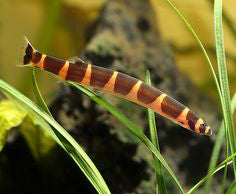
About & Origin
The Kuhli Loach is a slender, eel-like freshwater loach (Pangio kuhlii and closely related species, often traded under the same name), coming from the slow, leaf-litter-strewn streams and swampy waters of Indonesia, Malaysia, and neighbouring Southeast Asia.
It looks more like a tiny freshwater eel than a typical fish — a slender, scaleless, banded body that it uses to slip through tight gaps, burrow into soft substrate, and squeeze between plant roots. Kuhli Loaches are largely nocturnal and crepuscular, spending daylight hours hidden away and becoming much more active once the lights dim.
They're peaceful, harmless to tankmates, and genuinely useful in a community tank — patrolling the substrate for missed food and helping keep the tank floor clean.
The genus and species labels attached to "Kuhli Loach" in the trade are notoriously murky — several very similar-looking Pangio species are commonly sold interchangeably under the same common name, distinguished mainly by subtle differences in banding pattern and stripe count that even experienced keepers often can't tell apart at a glance. Practically speaking this doesn't matter much, since all of them share essentially the same appearance, behavior, and care requirements.
With good care Kuhli Loaches can live a surprisingly long time for such a small fish — commonly 10 years or more — and their unusual, snake-like movement combined with near-total invisibility during the day means many keepers are genuinely surprised, months or years in, to discover just how many they actually have once the lights go down and the group finally comes out to forage together.
Their diet in the wild mirrors their scavenging role in the aquarium: worms, small insect larvae, and other tiny invertebrates picked out of leaf litter and soft mud, an opportunistic omnivorous diet that translates easily into accepting sinking pellets, wafers, and any leftover food that settles on the substrate in captivity.
Requirements
Kuhli Loaches have a few specific needs tied to their burrowing, secretive lifestyle.
Substrate: soft sand or very smooth, fine gravel — sharp-edged substrate can injure their sensitive skin and barbels over time.
Group size: keep 5 or more; they're more confident and visible in a group, and often pile up together in a favourite hiding spot.
Hiding spots: plenty of cover — driftwood, dense planting, caves, or leaf litter — since they're shy and mostly nocturnal.
Escape risk: Kuhli Loaches are notorious escape artists that can squeeze through surprisingly small gaps — a tight-fitting lid is essential.
Diet: sinking pellets or wafers, plus whatever food drifts down to the substrate; happy scavengers. Target-feeding sinking food near known hiding spots after lights-out helps ensure a shy, mostly nocturnal group actually gets enough to eat rather than losing out to faster daytime feeders.
Tank size: a 15-20 gallon (55-75L) tank comfortably suits a small group — they're not large swimmers, but need enough substrate surface area for a group to spread out and burrow without constantly competing for the same hiding spots.
Acclimation: being scaleless and quite thin-skinned, Kuhli Loaches benefit from an especially slow, careful drip acclimation, and are more sensitive to sudden shifts in water chemistry during the settling-in period than most scaled community fish.
Filtration and flow: gentle-to-moderate flow suits them well, matching the calm, slow-moving waters they come from natively — strong current isn't necessary and can make it harder for a bottom-dwelling, sediment-loving species to feed comfortably.
Filter intake safety: their slender, flexible bodies make them surprisingly good at squeezing into narrow filter intakes — a foam pre-filter sponge over any intake is cheap insurance against a Kuhli Loach getting stuck or injured.
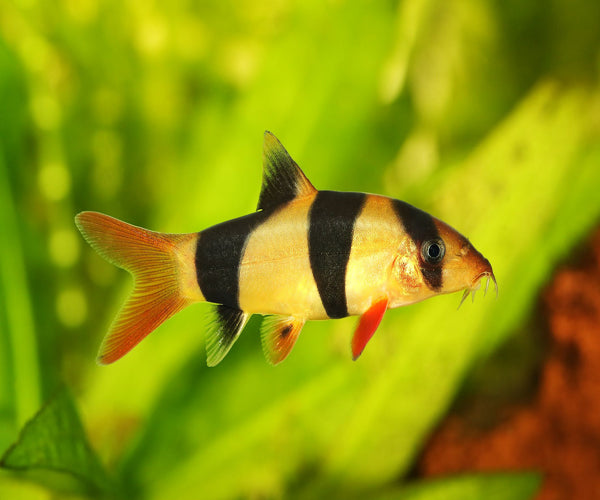
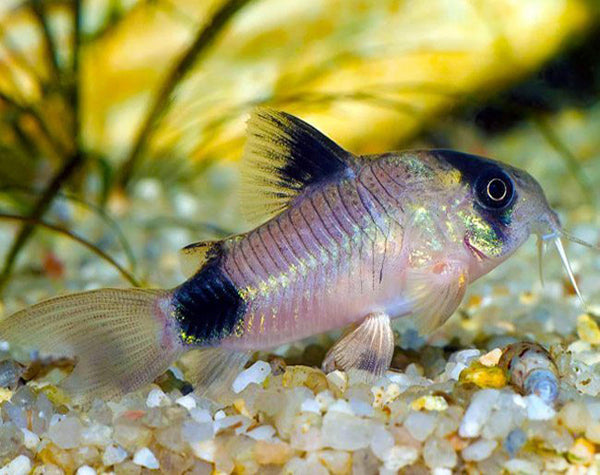
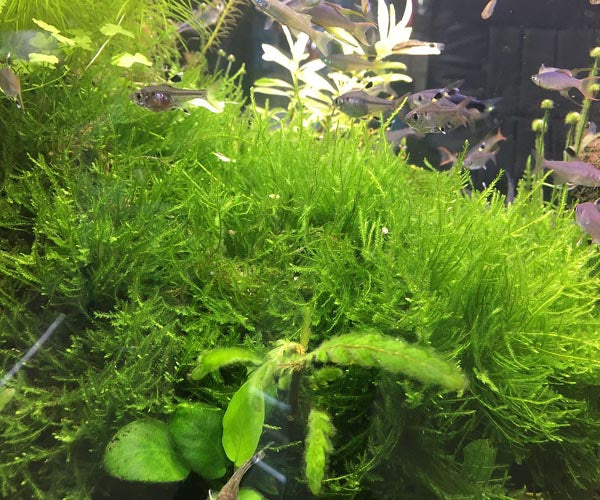
Compatibility

Water & Care Conditions
Kuhli Loaches are somewhat more sensitive to water quality than many community fish and prefer these ranges:
- pH: 5.5–7.0, leaning soft and slightly acidic
- Water hardness: soft water, roughly 2–10 dGH
- Temperature: 23–28°C (73–82°F)
- Oxygenation: appreciates good filtration and clean substrate; sensitive to waste buildup at the tank floor
Regular substrate cleaning matters more for this species than for open-water fish, since Kuhli Loaches spend most of their time in direct contact with it. A gentle gravel vacuum that disturbs but doesn't fully upend the substrate each water change helps keep waste from accumulating in the burrows and crevices they favour.
Medication sensitivity: as scaleless fish, Kuhli Loaches are notably sensitive to copper-based medications and some standard treatments dosed at full strength — always check a product's loach-safety before treating a tank containing them, and treat in a separate quarantine tank where possible rather than dosing the whole display.
Signs of stress or illness: a healthy Kuhli Loach group is active and visible at night; if the whole group stays hidden even after dark, or individuals develop a whitish, cloudy sheen or visible spots, it's usually a sign of water quality or ich needing prompt attention.
Because they're so rarely seen out in the open during the day, a change in behavior — staying visible during daylight, swimming erratically, or losing appetite — is usually a more reliable early warning sign in this species than in fish that are always out and easy to observe.
A well-cycled, mature tank suits them far better than a newly set up one, since they're sensitive to the ammonia and nitrite spikes typical of an immature filter — patience during initial setup pays off with a noticeably hardier, more confident group long-term.