About & Origin
Ludwigia repens is a hardy, adaptable aquarium stem plant, native to a wide range across North and Central America, growing in shallow ponds, ditches, and slow streams, often partly emersed at the waterline — one of the most widespread and adaptable species in the genus.
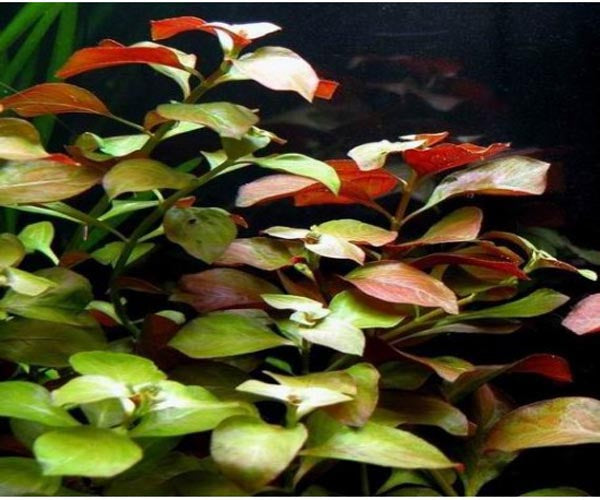
It's the classic, easy-to-find "red ludwigia" of the hobby: broad, oval leaves on a creeping-to-upright stem, ranging from green on the top surface to red-brown underneath, with the whole plant taking on a warmer reddish cast under good light. It can be grown as either a low creeper along the substrate or trained upward as a background stem plant.
Because it's genuinely tolerant of a wide range of setups, it's often recommended as an entry point into red/coloured aquarium plants for people who've found the more demanding red species too fussy.
It naturally hybridises with other Ludwigia species where their ranges overlap in the wild, and its genes appear in several cultivated hybrid forms sold in the trade, which is part of why "red ludwigia" identification can get confusing at retail — plants sold under similar names sometimes carry a mix of repens and other species' traits. The plant sold here is the straightforward, true species form, which is also the most widely available and best-documented option for new keepers.
In its native range it grows both fully submerged in slow streams and ponds, and emersed along muddy banks, which is a large part of why it adapts so readily to aquarium conditions compared to species that are exclusively aquatic in the wild — it's simply less fussy about being underwater full-time than plants without that emersed-growth backup mode.
It's also one of the most widely cultivated stem plants in the aquarium trade globally, which means the plants sold under this name are generally reliable, healthy nursery stock rather than wild-collected material — a practical benefit for buyers, since farmed aquatic-nursery plants tend to establish more easily than wild-collected ones, which can carry more stress and less consistent growth habits from the transition.
Requirements
Ludwigia repens is one of the more forgiving coloured stem plants available.
Light: moderate to high light brings out the strongest red tones; it will still grow under lower light but stays closer to green.
CO2: not required for healthy growth, though supplemental CO2 improves density and colour, as with most stem plants.
Growth form: can be grown as a creeping foreground/midground plant or trained upright as a background stem — genuinely flexible depending on how it's planted and trimmed.
Planting and propagation: root in nutrient-rich substrate, trim the growing tip to encourage bushier growth, and replant healthy cuttings as the base thins with age.
Low-tech friendliness: unlike many red-toned Ludwigia species, this one genuinely performs acceptably in a low-tech tank with no CO2 injection — it will simply grow slower and lean more green than in a high-tech setup, rather than struggling or dying back, which is exactly why it's the recommended starting point for keepers new to coloured stem plants.
Placement flexibility: because it can be trained as either a creeping foreground carpet-style planting or an upright background stem, it's one of the more versatile plants for filling awkward gaps in a layout — the same species can serve two very different roles depending on how it's trimmed and where the cuttings are replanted.
Grazing tolerance: its leaves are somewhat tougher than very soft, delicate stem plants, giving it slightly better resistance to nibbling from herbivorous fish and shrimp, though it's still not immune and heavy grazing pressure will thin it out over time.
Substrate flexibility: while it appreciates a nutrient-rich planted substrate and grows noticeably better in one, it will also make do in plain gravel or sand with root tabs or a liquid fertiliser regime, since — like most stem plants — a meaningful share of its nutrient uptake happens through the leaves and stem rather than the roots alone. This makes it a workable choice even for keepers running a simple, non-specialist substrate.
Compatibility
Water & Care Conditions
Ludwigia repens has one of the widest tolerated parameter ranges among coloured stem plants, which is exactly why it's the go-to recommendation for keepers who want red foliage without a demanding high-tech setup. It does best within these ranges:
- pH: 6.0–7.5
- Hardness: soft to moderately hard, roughly 2–15 dGH
- Temperature: 20–28°C (68–82°F)
- Light: moderate to high for the best red colouration; lower light is tolerated but the plant stays greener
- CO2: not required — grows acceptably on ambient CO2 from fish respiration and organic breakdown, though supplemental CO2 will noticeably improve density and colour for keepers who have it available
- Oxygenation: undemanding; standard community-tank filtration and surface agitation are sufficient
It's a genuinely forgiving species for most established community planted tanks, and one of the few red-toned stem plants that reliably holds reasonable colour even in a modest low-tech setup rather than requiring the full high-light, CO2-injected treatment that many showier reds demand. That said, keepers chasing the deepest, most saturated red will still see a real difference between a bare low-tech tank and one with good light and consistent fertilising — the plant simply doesn't punish the absence of those extras the way more demanding species do.
Because of this wide tolerance, it's often used as a reliable "control" plant by more experienced keepers testing new fertiliser regimes or lighting setups on other, fussier species — if repens is thriving and colouring up well, that's a reasonable sign the tank's overall conditions are healthy, since it responds positively to good conditions without being so sensitive that minor issues cause visible problems.
Water changes don't need to be more frequent than a standard planted community tank's normal schedule purely for this plant's sake — it's not a species that demands pristine, freshly-changed water the way some more delicate stems do, and it tolerates the gradual nutrient buildup between routine water changes without visible stress.