About This Product
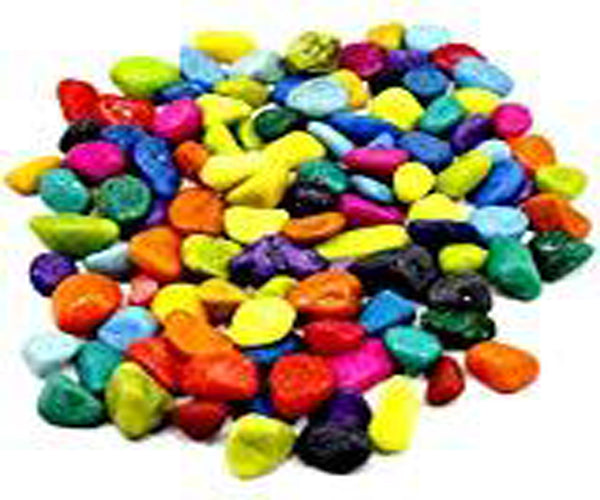
Mixed colour pebbles are an assorted blend of small, tumbled, rounded decorative stones in a range of colours rather than a single uniform tone -- a popular choice for a brighter, more playful, "fun" aquarium look, especially in kids' tanks, betta bowls, or any setup going for visual variety over a minimalist aquascape aesthetic.
Like other polished decorative stone, this mix is tumbled to remove sharp edges, giving smooth, rounded pieces that are safe underfoot for bottom-dwelling fish and won't easily scratch or injure delicate barbels (the sensitive whisker-like feelers some catfish use to forage). Colour mixes like this are generally made from dyed or naturally varied stone -- either way, quality aquarium-safe pebbles use colourants/finishes that are stable and non-toxic once rinsed, not something that leaches into the water under normal conditions.
They work well as a full substrate for a fun, colourful nano tank or bowl, or as scattered accent pieces mixed into a more neutral substrate for pops of colour.
Because the exact colour blend can vary batch to batch, buyers going for a specific visual theme should treat this as an assortment rather than a guaranteed fixed palette -- part of the charm for a casual, playful tank, less ideal for a precisely planned colour scheme.
Size grading typically matches other pebble-line products, commonly in the 1-2cm range, which keeps the finished bed even regardless of the colour variation -- it's the colour, not the size, that's mixed here. This makes it a straightforward drop-in swap for a same-size single-colour pebble product if a keeper later decides to switch the look of an existing tank without changing the substrate depth or footprint calculations.
Mixed colour substrates like this are especially popular for children's first aquariums, betta bowls kept as a simple desk pet, or any tank where the goal is visual fun and approachability rather than a naturalistic aquascape -- the bright, varied palette reads as playful in a way a monochrome substrate doesn't.
Requirements
No power or special setup needed -- this is a passive decor item. Rinse thoroughly before use until the water runs clear, since manufacturing dust is common on stone like this and can cloud a newly-filled tank if skipped.
As with any inert stone substrate, it won't buffer pH or add nutrients for plants, so it suits a fish-focused setup better than a heavily planted one unless nutrient tabs are added separately for any rooted plants. Because the mix includes multiple colours/finishes, it's worth giving pieces a quick visual check for any obviously damaged or flaking coating before use, though reputable aquarium-marketed stone is manufactured to be stable.
A depth of roughly 3-5cm suits full substrate use; a lighter scatter is plenty for accent purposes.
Being inert, no capping layer or special preparation is needed beyond the initial rinse, and it can serve as the sole substrate in a simple fish-focused tank without further treatment.
As a rough quantity guide, budget roughly 1-1.5kg per litre of tank volume for a standard ~5cm-deep substrate bed, adjusted for the tank's footprint shape -- more per litre for a shallow, long tank than a tall, narrow one holding the same water volume. Since colour ratios vary between batches, buying slightly extra from the same purchase (rather than topping up later with a separately bought bag) helps keep the blend looking consistent across the whole substrate bed.
If mixing into or layering over an active planted substrate, use it as a decorative cap that still lets roots reach through the gaps to the nutrient layer beneath, without packing it down so tightly that it blocks root penetration.
Consider tankmates when choosing a bright, mixed substrate -- most community fish are entirely unbothered by it, but a few naturally shy or easily-stressed species can be more comfortable against a plainer, darker background, so a very high-contrast bowl may suit bold, outgoing fish (bettas, many livebearers) better than a nervous, skittish species.
Compatibility
Care & Maintenance
Low-maintenance and inert, with the same basic care as any polished decorative stone.
- Before use: rinse thoroughly until water runs clear
- Maintenance: gravel-vacuum during routine water changes to clear trapped debris and waste
- Chemical stability: inert under normal aquarium conditions, doesn't shift pH or hardness
- Algae: can develop a film over time in well-lit tanks, same as any substrate; manageable with routine cleaning
- Longevity: doesn't degrade, a one-time permanent addition to the tank
- Fish safety: smooth, rounded finish suits barbel-sensitive bottom-dwellers like corydoras and loaches
- Colour check: give pieces a quick look before use for any obviously flaking coating, though reputable aquarium-marketed stone is manufactured to be stable
- CO2/planted setups: being inert, it doesn't interfere with pressurised CO2 injection or liquid fertiliser dosing
- Deep-cleaning: a full strip-down can be followed by a brief boil or dilute bleach soak, thoroughly rinsed and dechlorinated afterward, to fully sanitise before reuse
- Placement: add water before pouring onto bare glass, or pour onto a plate resting on the tank floor, to avoid scratching the glass
- Reuse: can be removed, rinsed, and reused in a different tank if the layout changes
- Equipment compatibility: works normally around filters, heaters, and root-tab fertiliser insertion, same as any inert gravel substrate
- Batch topping-up: if adding more later, rinse the new stones and mix them through the existing bed rather than layering on top, so the colour blend stays evenly distributed rather than settling into a visible new-batch patch
- Sorting by hand: if a keeper wants a slightly different colour ratio than what arrives, individual colours can be picked out and set aside or combined with other single-colour pebble products to fine-tune the final mix
- Fading check: genuine polished/dyed aquarium stone shouldn't lose colour over normal use, but if any piece is ever seen visibly shedding colour into the water, remove it rather than continuing to use it