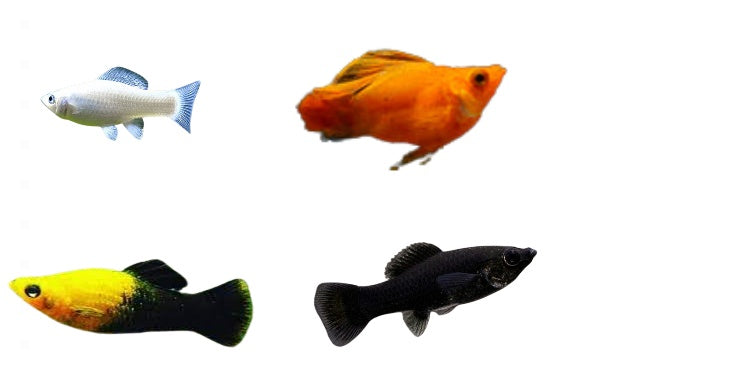
About This Combo
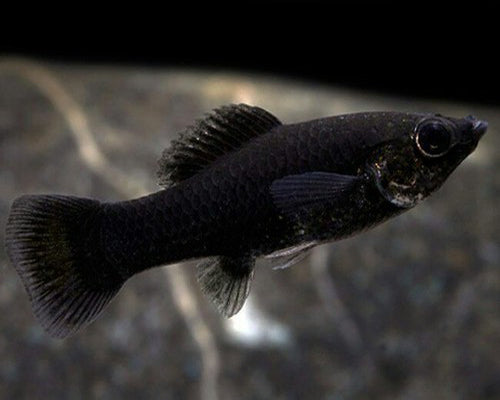
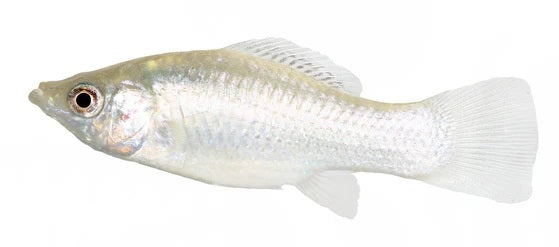
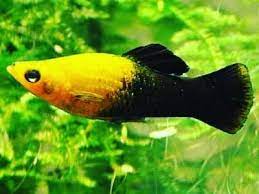
This combo is a mixed multi-unit pack of mollies -- likely spanning a few of the common colour strains (black, white, chocolate, or similar) bred from the same base stock, Poecilia sphenops/P. latipinna lineage. Wild mollies come from freshwater and brackish coastal waters of Central America and the southern United States, and today's ornamental strains are all selectively bred variations of that same hardy, adaptable fish.
Mollies are livebearers: females give birth to free-swimming fry rather than laying eggs, and a healthy mixed group will typically breed on its own without any special intervention. They're active, peaceful, mid-sized fish (adults commonly 6-10cm) that spend most of their time swimming in open water, and they appreciate a mix of open space and planted cover.
A combo pack like this is a practical way to start a proper shoal at once, since mollies are social and do best in groups of at least four to six with more females than males to avoid over-pestering.
Because this pack likely mixes a couple of the common colour strains rather than a single one, the actual individuals received can vary somewhat in exact colouring -- part of the appeal for keepers who want a visually varied shoal rather than uniform colouring throughout.
Mollies have been a fishkeeping staple for decades precisely because they combine a bold, easy-to-see body shape with genuine hardiness -- they tolerate a wider swing in water hardness and pH than almost any other common community fish, which is part of why they were historically popular in areas with naturally hard tap water where softer-water species like tetras struggled. Fin shape varies by strain too: some lines carry the tall, showy dorsal fin associated with sailfin mollies, while others keep a more standard rounded fin -- a combo pack may include a mix of both depending on what's in stock.
Requirements
A group from this combo needs at least a 60cm / 55-60 litre tank to swim comfortably, more as the group grows or shares space with tankmates. Mollies are easy, flexible eaters -- flake, pellet, and some algae-based food covers their needs well given their naturally omnivorous, algae-grazing tendencies in the wild.
The one distinctive requirement that sets mollies apart from most common community fish: they genuinely prefer harder, more alkaline water than species like tetras or corydoras, and a lot of keepers add a small amount of aquarium salt to a molly tank as a nod to the brackish water some wild populations naturally inhabit. It isn't strictly required in moderately hard, neutral-to-alkaline water, but mollies kept in soft, acidic conditions are noticeably more prone to stress and disease.
As livebearers, a mixed group left alone will breed; dense or floating plants give fry real cover from adults if surviving fry is a goal, since adult mollies (including a fry's own parents) will eat them opportunistically otherwise.
Give the group some open swimming water alongside any planted areas -- mollies are active mid-water swimmers, and a tank that's entirely dense cover with no open space feels cramped to a molly shoal even in an otherwise adequately sized tank.
Because breeding happens readily and without encouragement, think ahead about what you'll do with fry if you don't want the population to keep expanding -- rehoming, a dedicated grow-out tank, or simply accepting natural predation of most fry by adults in a community setup are all common approaches. A ratio skewed toward females (roughly two or three females per male) also reduces how much any single female is chased, which improves both her welfare and the group's overall calm.
Compatibility
Water & Care Conditions
Mollies are hardy overall, with one real chemistry preference that's worth respecting for best health.
- pH: 7.5-8.5 -- more alkaline-tolerant than most tropical community fish
- Hardness: moderately hard to hard water suits them best; a small dose of aquarium salt is a common optional addition
- Temperature: 24-28°C
- Oxygenation: standard filtration and surface agitation is enough
- Water quality: despite their tough reputation, mollies are more sensitive to soft/acidic or neglected water than they look -- consistent water changes matter more for this species than for many similarly-sized community fish
- Salt: a small optional dose of aquarium salt suits a molly-only tank, but should be skipped or reduced if live plants or salt-sensitive tankmates are also present
- Warning signs: clamped fins or unusual lethargy are early cues to check water quality and act with a partial water change
- Shimmying: a distinctive side-to-side swaying without forward movement is a classic molly stress response, usually tied to a temperature drop, poor water quality, or too-soft water -- correcting the underlying condition (rather than any medication) is usually the fix
- New tank timing: avoid adding mollies to a tank that hasn't finished cycling -- they're hardier than many species but still vulnerable to ammonia and nitrite spikes in an uncycled setup
- Water changes: weekly partial water changes of roughly 20-30% keep a molly group healthiest, particularly if salt is being dosed, since salt doesn't evaporate out the way water does and can slowly concentrate without regular dilution
- Diet variety: because mollies graze algae naturally, occasional vegetable matter (blanched vegetables, algae wafers, or spirulina-based flake) alongside standard flake or pellet food supports better colour and digestion than protein-only feeding
- Compatibility with plants: molly-friendly hard, alkaline water suits fewer of the classic soft-water aquascaping plants -- Java fern, Anubias, and Vallisneria are among the better plant choices that tolerate the harder end of molly-suitable water