About & Origin
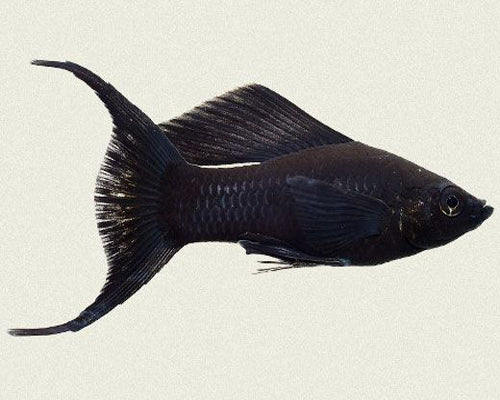
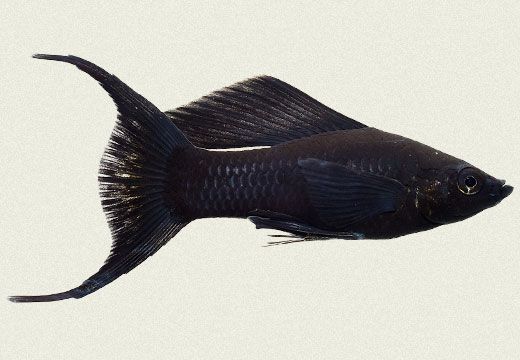
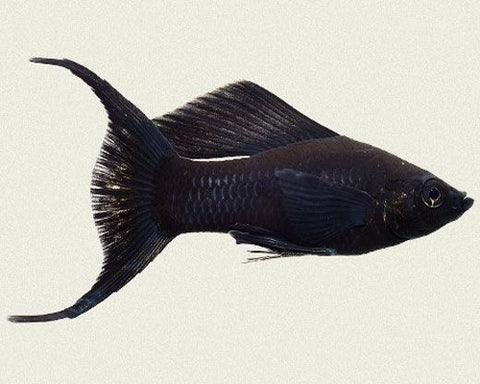
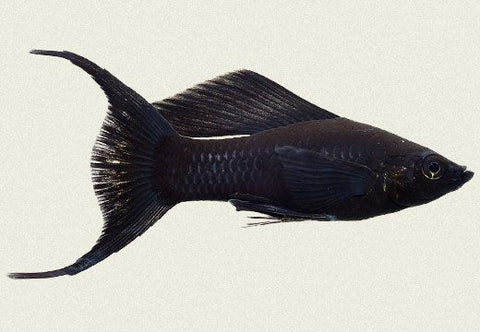
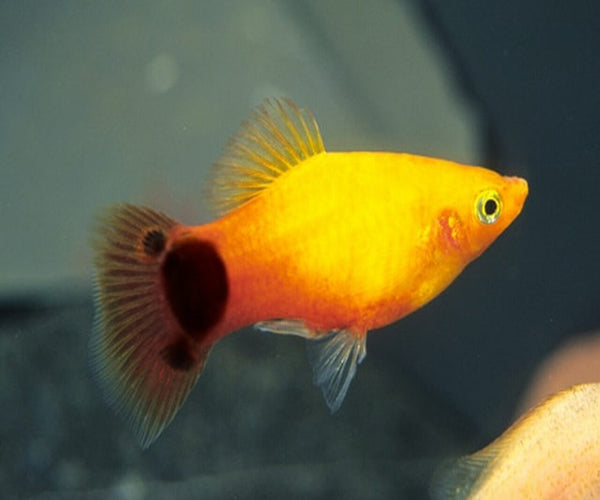
The Moon-Tail Molly is a small, hardy livebearer fish — a fin-shape variant of Poecilia sphenops/P. latipinna stock, named for the crescent, moon-shaped extension at the centre of the tail fin. Like all mollies in the trade, its wild ancestors come from fresh, brackish, and coastal waters of Central America and neighbouring parts of the southern United States and northern South America.
The moon-tail is purely a selectively bred fin trait layered onto standard molly genetics -- the fish's behaviour, hardiness, and general care needs are identical to other mollies, and unlike balloon-bodied strains, the moon-tail carries no known welfare trade-off since it doesn't alter the fish's underlying skeletal structure, only its fin shape. It remains an active, mid-to-upper-water swimmer that spends time both grazing surfaces for algae/biofilm and taking general omnivorous foods.
As a livebearer, it gives birth to free-swimming young and breeds readily in a mixed-sex group, making it, like other mollies, a popular choice for keepers who enjoy watching fry develop without special breeding setups. Mollies as a group are unusual among common aquarium livebearers for their genuine tolerance of brackish and even fully marine salinity for extended periods, a trait traceable directly to their coastal and estuarine wild habitat, and decades of selective breeding have produced dozens of named colour and fin variants — sailfin, balloon, and lyretail forms among them — of which the moon-tail's crescent caudal extension is one of the more subtle, understated options rather than a dramatic finnage change. Males are distinguished from females by a modified anal fin, the gonopodium, used for internal fertilisation — a trait shared across the entire livebearer family, including guppies and platies. Females grow noticeably larger than males over time.
Requirements
Standard molly husbandry applies (hard/alkaline water, tolerates a light dash of aquarium salt, female-heavy groups, 75cm/30in+ tank, grazing omnivore diet with vegetable matter, standard filtration) — the moon-tail's extended caudal fin doesn't change the core requirements, but it does add a couple of fin-specific points.
Fin care: the crescent extension at the centre of the tail is more delicate than a standard molly's short, rounded caudal fin, so smooth decor and calm tankmates matter more here — rough ornaments or nippy fish can damage the extension well before they'd trouble a plain-finned molly.
Flow: a longer tail drags more in strong current, so moderate rather than powerful flow is more comfortable for this strain to swim against.
Group composition: keep more females than males, roughly 2–3 to 1, since males court persistently and a female-only or female-heavy group reduces the stress that can otherwise fall on a small number of females in the tank. Mollies are also notably prolific — a mature female can produce a new brood roughly every 4–6 weeks, and given the species' tolerance for a wide salinity range, unplanned fry can appear even in setups that keepers assumed were too "marginal" for successful breeding. A 75cm (30in) or larger tank comfortably suits a small group, giving both the moon-tail's extended fin and its social swimming habits enough room to display properly. Standard, reliable filtration matters more here than exotic equipment — consistency of water quality over time is what this strain actually needs most.
Diet: primarily a grazer of algae and biofilm in the wild, so a diet including some vegetable matter (blanched zucchini, spirulina-based flake) alongside standard omnivorous food supports better long-term condition than protein-heavy food alone.
Compatibility
Water & Care Conditions
- pH: 7.5–8.5 (alkaline)
- Hardness: moderately hard to hard, roughly 15–30 dGH
- Salinity: freshwater to brackish; tolerates a small dose of aquarium salt
- Temperature: 24–28°C (75–82°F)
- Water changes: weekly 20-25%
Watch for "shimmying" (side-to-side swaying without forward movement), the classic sign of water that's too soft, acidic, or unstable for this species. On this strain specifically, also check the tail extension for fraying or clamping — fin condition is a genuinely useful early health indicator here, often visible before other symptoms.
Given correct hard/alkaline chemistry, this is a hardy strain like other mollies, though the extended tail is more fragile than a plain caudal fin. Not a good match for a soft, acidic community tank.
A gently sloped, buffered substrate (crushed coral or aragonite sand mixed into a standard substrate) is a common, low-effort way to help maintain the harder, more alkaline water this species prefers over the long term, particularly in regions where tap water runs naturally soft. Well-kept mollies typically live 3–5 years, somewhat longer than many other popular livebearers, and the moon-tail's extended caudal fin, once fully grown in, is a reliable visual indicator of the fish's overall condition — a consistently ragged or shrinking extension despite otherwise correct water chemistry is worth investigating as a possible sign of low-grade bacterial fin erosion. Weekly 20–25% water changes and stable, well-buffered hardness together do more to prevent fin problems on this strain than any targeted treatment after the fact. A well-kept Moon-Tail Molly is otherwise a hardy, low-maintenance fish once its hard-water preference and gentle-flow fin needs are accounted for. Fin rot and ich remain the two issues most worth watching for generally, and both are overwhelmingly linked to inconsistent conditions rather than any inherent fragility in the strain itself.