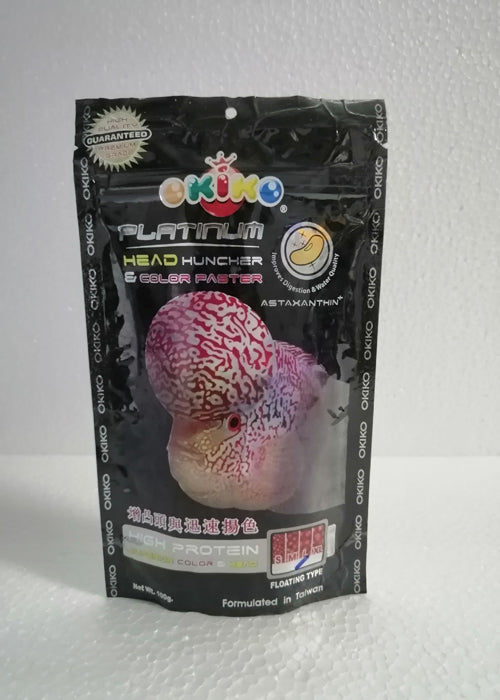
About This Product
Okkio Platinum Head Huncher is a large-pellet ("L size") formulated food marketed specifically toward flowerhorn cichlids, aimed at supporting the pronounced head hump (nuchal hump) these fish are prized for in the hobby. "Head-growth" or "hunchar/huncher" foods like this typically lean on a higher protein content, often boosted with specific amino acids or supplements the brand markets as hump-supporting, fed to actively growing flowerhorns.
It's worth being realistic about what a food like this can and can't do: a flowerhorn's head hump size is substantially influenced by genetics, age, and hormonal factors specific to the individual fish, not diet alone -- good nutrition supports healthy growth and can help a fish reach its own genetic potential, but no food guarantees a dramatically larger hump on a fish that isn't genetically inclined toward one. This page describes the food's intended purpose honestly, without overstating guaranteed results.
Flowerhorns are large, robust, predatory cichlids with correspondingly large appetites, so a bigger pellet size like this "L size" format suits adult and sub-adult fish better than very young juveniles, which need smaller food they can comfortably eat.
Flowerhorns themselves are a man-made hybrid cichlid, developed and popularised primarily in Southeast Asia from crosses of several Central American cichlid species, prized for exactly the head-hump and colour traits foods like this are marketed to support.
Many "head-growth" formulas, this one included, also market a colour-enhancing angle alongside the hump claim, often built around carotenoid-rich ingredients similar to those used in colour-boosting foods for other ornamental fish -- these do have a genuine, well-documented effect on how vivid a fish's existing pigmentation appears, even though they can't create colour patterns a fish doesn't already carry genetically. The "Okkio" and "Platinum" naming reflects the branding common across this segment of the specialty cichlid-food market, where competing formulas each claim their own particular edge.
Requirements
Feed only what the fish clears within a couple of minutes, typically once or twice a day -- flowerhorns are enthusiastic, sometimes overeager eaters, and overfeeding a rich, protein-dense food like this fouls water faster than it would with a lighter maintenance food.
Store sealed in a cool, dry place away from direct sunlight to preserve freshness and nutritional value; specialty formulated foods like this can lose potency faster than simple flake once exposed to air and moisture. Since head growth develops over a long period, consistent feeding as part of an ongoing diet matters more than any single feeding -- this is a food meant for sustained use during a flowerhorn's growth phase, not a quick fix.
As with any single specialty food, pairing it with some dietary variety (other quality pellets, occasional live or frozen food) supports overall health better than relying on one product exclusively.
Flowerhorns are also territorial, sometimes aggressive fish -- feeding time is a reasonable opportunity to check overall condition and appetite, since a sudden drop in feeding interest is often one of the earliest visible signs something is wrong.
Because flowerhorns are typically housed alone or with only a few robust tankmates, feeding is usually a simple, direct process without the competition dynamics of a community tank -- watch that the fish isn't gulping air alongside the pellets if it's an enthusiastic, fast eater, since surface-feeding fish can sometimes take in excess air with large dry pellets.
Some keepers soak large dry pellets briefly in tank water before feeding, which softens them and can reduce the risk of digestive bloating that occasionally affects large-mouthed cichlids fed exclusively on dry, unsoaked food. This is an optional step rather than a strict requirement, but worth knowing if a fish seems to struggle after meals.
Compatibility
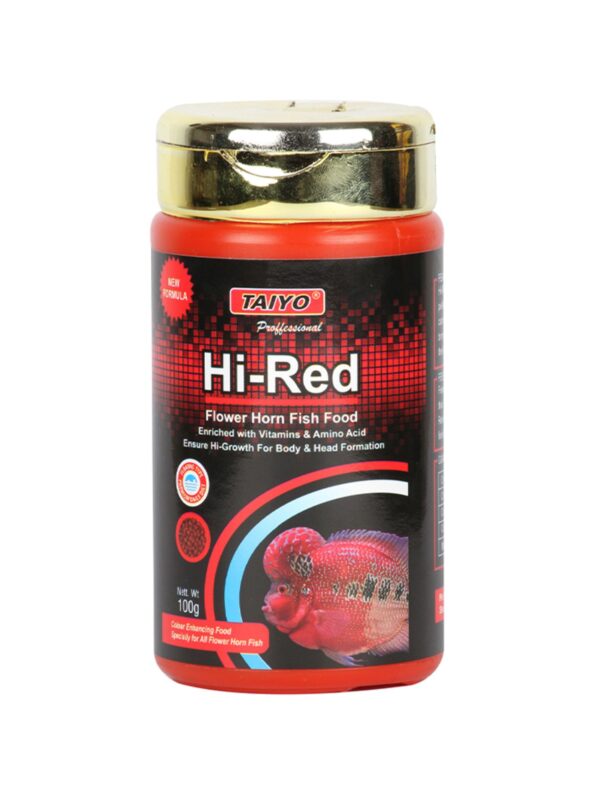
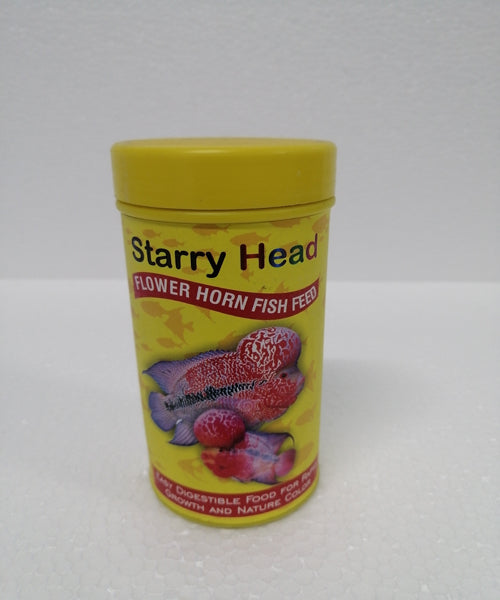
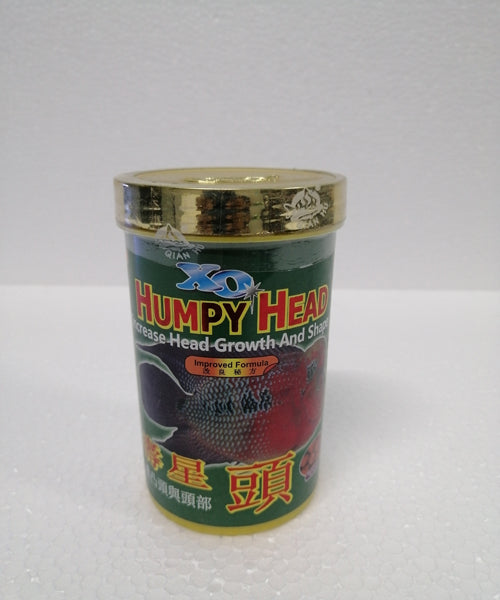
Feeding Guidelines
- Format: large ("L size") pellets, suited to adult/sub-adult flowerhorns rather than small juveniles
- Feeding frequency: once or twice daily, only what's eaten within about 2 minutes
- Realistic expectations: supports healthy growth, but final head-hump size is significantly influenced by genetics and age, not diet alone
- Storage: sealed, cool, dry place, away from direct sunlight
- Shelf life: check for a best-by date on the packaging; discard if expired or degraded in smell/texture
- Watch appetite: a sudden drop in feeding interest is often an early sign of stress or illness worth investigating
- Water quality: protein-rich foods like this produce more waste than lighter maintenance diets, so keep an eye on filtration capacity and water-change frequency, particularly in a single-fish flowerhorn tank that may otherwise get less frequent maintenance
- Feeding variety: rotating in occasional live or frozen protein (bloodworm, shrimp) alongside pellets gives a more rounded diet than any single dry food, head-growth-formulated or not
- Realistic timeline: visible hump development, where it happens, is gradual over months as the fish matures -- this isn't a food with a fast, dramatic before/after result
- Pellet size check: if a young or smaller fish struggles with "L size" pellets, break them by hand or switch to a smaller-format food temporarily rather than risking choking or refusal
- Packaging: reseal the bag tightly after each use and squeeze out excess air where possible to slow oxidation of fats and pigments in the formula
- Multiple fish: if feeding more than one flowerhorn from the same bag, portion food out rather than leaving the whole bag near a tank prone to humidity or splashing, which shortens shelf life considerably
- Variety: combine with other quality foods rather than relying on one specialty product exclusively