About & Origin
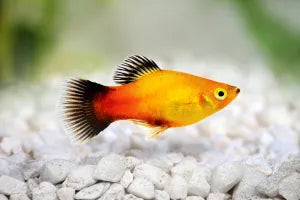
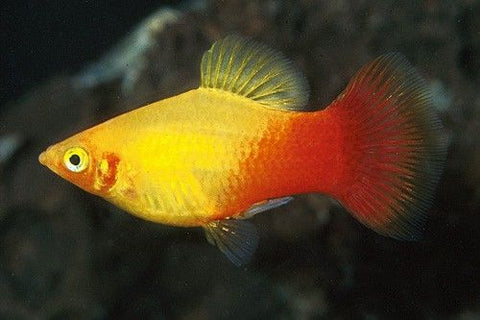
Platies (Xiphophorus maculatus and close relatives) are small livebearers native to freshwater streams and rivers of Mexico and Central America. Like guppies and mollies, the many bright colour varieties sold today are the product of generations of selective breeding from more modestly coloured wild fish.
They're compact, peaceful, and easygoing, spending their time in the middle and lower water column and rarely showing any of the fin-nipping or aggression sometimes seen in other livebearers.
As livebearers, platies give birth to free-swimming fry rather than laying eggs, and breed readily and continuously once a mixed-sex group is established, without needing any special conditions.
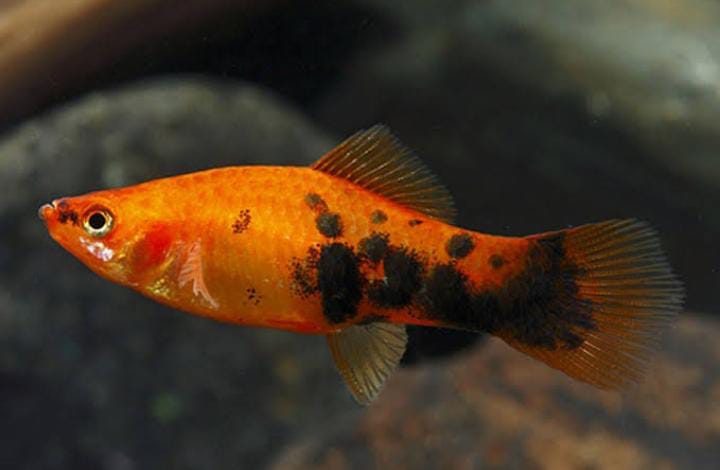
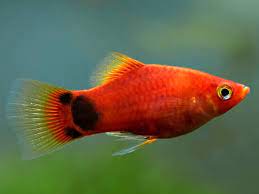
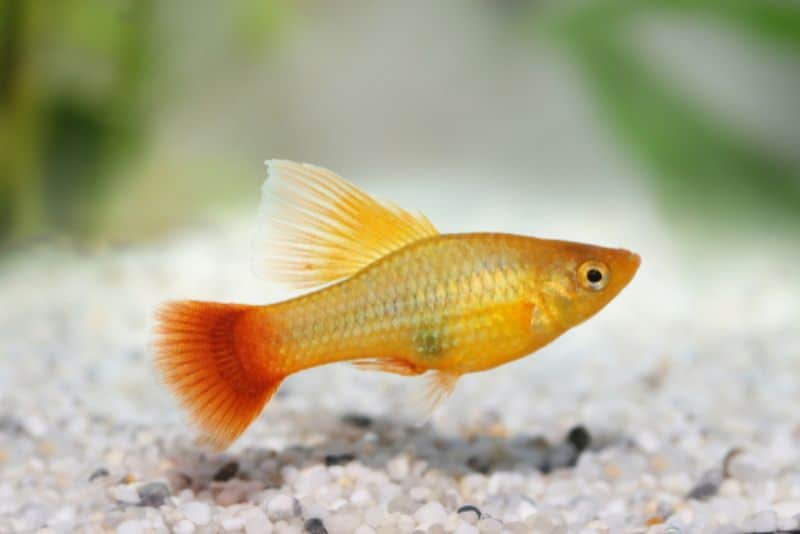
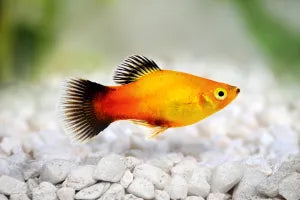
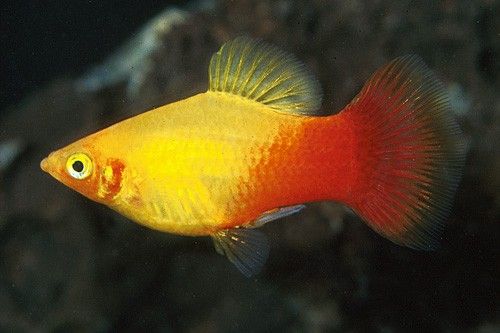
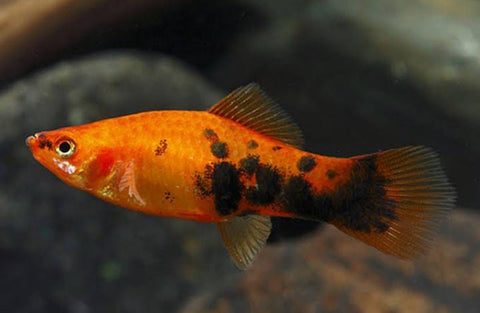
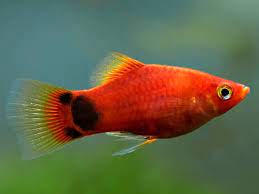
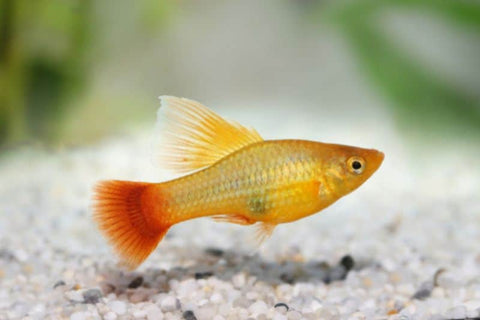
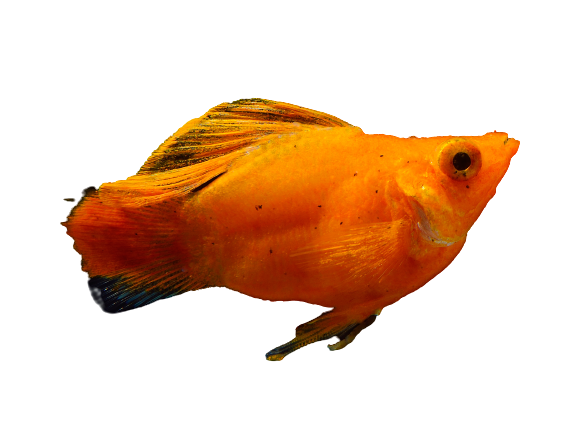
Colour and pattern variety is enormous: sunset, mickey mouse (named for the distinctive dark tail-base spots resembling the cartoon silhouette), red wag, tuxedo, and dozens of other named strains are all the same easygoing species underneath, differing only in cosmetic breeding. Platies also readily hybridise with the closely related swordtail (Xiphophorus hellerii), and mixed platy-swordtail lineages are common in the trade, sometimes producing offspring with a partial sword-like tail extension despite being sold simply as a "platy" variety.
Their small, stocky, deep-bodied shape and generally unhurried swimming style make them one of the calmest, least skittish community fish available, which is part of why they're such a consistently recommended first livebearer for new keepers alongside guppies.
Unlike guppies, whose colour and pattern genes are heavily sex-linked and inherited mostly father-to-son, platy colour genetics involve a more even mix of maternal and paternal inheritance, which is part of why platy litters often show a wider, less predictable spread of colour variation among siblings than a similarly bred guppy litter -- a detail dedicated platy breeders account for carefully when selecting which fish to pair for the next generation.
Requirements
A small group is comfortable from around 40-60 litres (10-15 gallons), and platies do well in a female-heavy group to spread out mating attention from males, much like guppies.
They're undemanding, easy eaters that do well on standard flake or micro-pellets, with occasional vegetable matter or live/frozen food appreciated but not essential.
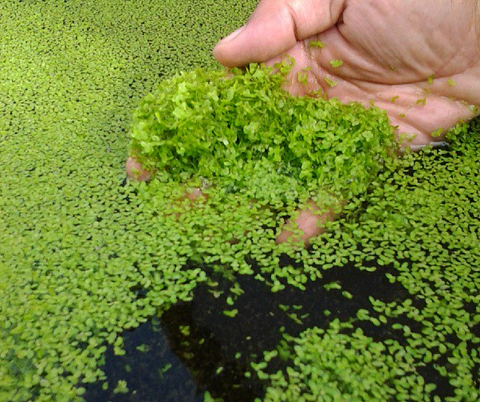
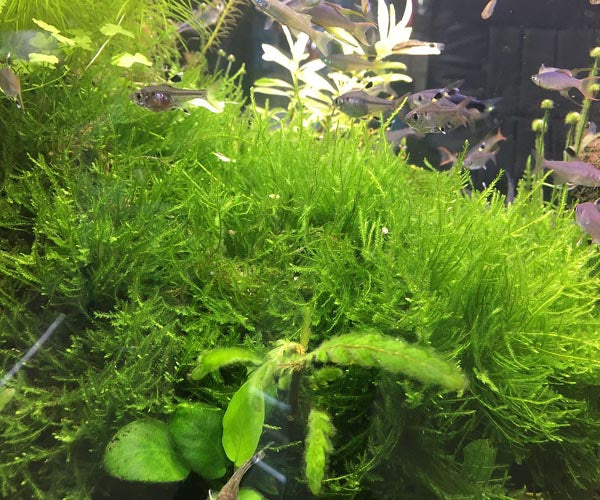
Being livebearers, an established group will produce regular broods of fry; dense or floating planting gives the fry somewhere to hide from adult tankmates.
Because they're such calm, unhurried swimmers, platies do best paired with similarly relaxed tankmates -- very fast, boisterous, or nippy fish can outcompete them at feeding time or stress a naturally placid group, even without any real aggression being involved. They also appreciate some open swimming space in the mid-water column alongside planted areas, rather than a heavily obstructed layout.
A well-fed, unstressed group of platies also tends to show noticeably better, more saturated colour than a sparsely stocked or poorly fed one, making regular, varied feeding worth the small extra effort for anyone keeping this species primarily for its colour.
Filtration flow is worth keeping moderate rather than very strong: while platies aren't especially delicate swimmers, they don't come from fast-flowing habitats either, and a heavily current-swept tank can tire out and stress a group that's better suited to calmer, gently circulating water. A well-cycled filter matched sensibly to the tank's actual volume, rather than an oversized one chosen purely for turnover rate, tends to suit this species best.
New tank introductions go smoothly with this species as long as basic cycling is respected: adding platies to an already-established, biologically mature tank rather than a freshly set-up one avoids most of the ammonia/nitrite-related stress this otherwise hardy fish can still suffer from during an uncycled tank's early weeks.
Compatibility
Water & Care Conditions
Platies are hardy and adaptable, tolerating a wider range of conditions than many community fish, though like other livebearers they do best in harder, more alkaline water than very soft-water species:
- pH: 7.0–8.2
- Water hardness: moderately hard to hard, 10–28 dGH
- Temperature: 22–27°C (72–81°F)
- Oxygenation: not demanding; good general filtration is sufficient
- Water changes: regular weekly partial water changes support the steady breeding and growth typical of a healthy, well-fed platy group
- Common issues: generally hardy and disease-resistant; ich and fin rot are the most commonly seen issues, both usually linked to unstable water conditions or overcrowding rather than the species being inherently delicate
- Group composition: keep more females than males (roughly 2-3 females per male) to spread out mating attention and reduce stress on individual females
- Longevity: a well-kept platy typically lives 2-4 years, on the shorter end for a community fish but consistent with its fast growth and rapid breeding cycle
- Lighting: not especially light-sensitive; standard aquarium lighting is fine and helps show off their colour without needing anything specialised
- Acclimation: a hardy species that typically settles in and starts feeding within a day of a standard slow, drip-style acclimation
- Substrate & decor: not fussy about substrate type; a mix of open swimming space and some planted cover for fry suits this species well
- Cycling: best added to an already-cycled tank rather than a brand-new setup, since even this hardy species is vulnerable to the ammonia and nitrite spikes typical of a tank's first few weeks
- Flow: moderate rather than strong current suits this species best, matching its calmer, non-flowing natural habitat
- Health signs: a healthy platy swims actively with bright, saturated colour and full, unclamped fins -- listlessness, pale colouring, or fin clamping are early signs of stress or poor water quality worth investigating promptly