About & Origin
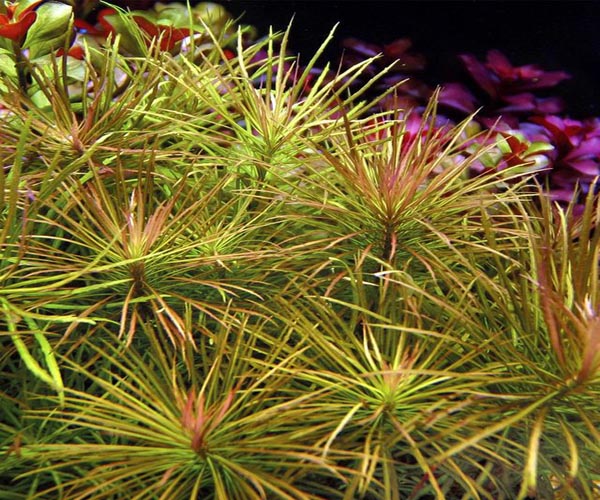
Pogostemon stellatus, often sold as Star Grass or Star Repens, is an aquatic perennial herb native to swamps, ditches and stream edges across East and Southeast Asia, the Indian subcontinent, New Guinea and northern Australia. Because of this very wide natural range, wild populations show real variation in leaf shape and colour, and several distinct aquarium forms/cultivars (including the well-known "Octopus" form) are traded under the same species name.
Its narrow, pointed leaves grow in whorls around the stem, giving mature specimens a distinctive star-like cross-section when viewed from above — the origin of its common name. In strong light the foliage takes on pink, orange or reddish tones, making it a popular colour and texture contrast plant in aquascapes.
The "Octopus" cultivar in particular is prized for producing unusually broad, wavy, almost ribbon-like leaves compared with the narrower "Star Repens" form more commonly seen in the trade, and the two are sometimes confused with each other despite the visible difference once grown out. Whichever form is supplied, the growth pattern is the same: new leaves emerge tightly whorled near the growing tip and gradually spread out and thin as the stem elongates below them, which is part of why a well-maintained, regularly trimmed group looks noticeably fuller and more colourful near the top than an untrimmed, leggy one.
As an emersed-tolerant amphibious species in the wild, it's also occasionally grown partly above the waterline in paludarium-style setups, where its leaf shape and colour shift again compared with the fully submerged aquarium form — most aquarium buyers will only ever see the submerged form, which is the one described throughout this listing. Because so many regional colour and leaf variants exist under the same species name, don't be surprised if a given batch looks slightly different from photos of "the same" plant online; this is normal variation within the species rather than a sign of a different or mislabelled plant.
Requirements
This is a genuinely more demanding plant than most easy beginner greens — it has a reputation among aquascapers as attractive but a bit fussy.
Light: needs fairly strong lighting. Under insufficient light it tends to drop its lower leaves, leaving a bare, leggy stem with growth only at the top.
CO2 & nutrients: consistent nutrient dosing (nitrate, phosphate, micronutrients) matters more than CO2 specifically for keeping this plant alive long-term, though steady CO2 does bring out its best growth and colour.
Stability: this species does noticeably better in a stable, well-maintained tank with a consistent dosing routine than in a neglected or inconsistently run one.
Trimming & propagation: trim and replant the tops regularly to prevent the classic "bare stem, leafy top" look and to keep a fuller group. Replanted top cuttings root readily, but the bare lower stem left behind rarely regrows well and is usually better discarded than kept.
Substrate: plant in a nutrient-rich substrate, since it feeds through its roots as well as its leaves — a bare, inert gravel substrate without root-tab supplementation will noticeably hold this species back compared with a proper planted-tank substrate.
Realistic expectations: this isn't a plant to add to a low-tech, low-maintenance tank expecting it to simply take care of itself — it's better suited to a tank where you're already dosing fertilizer and monitoring plant health regularly.
Placement: works best in the midground or background, in a small cluster rather than as a single lone stem, since a group creates the layered, textured look most aquascapers plant it for and also self-shades less than a single isolated stem would if surrounded by taller neighbours.
Water changes: regular partial water changes help by replenishing trace elements between fertilizer doses and keeping dissolved organics from building up, both of which this species is more sensitive to than a tougher, easier stem plant would be.
Compatibility
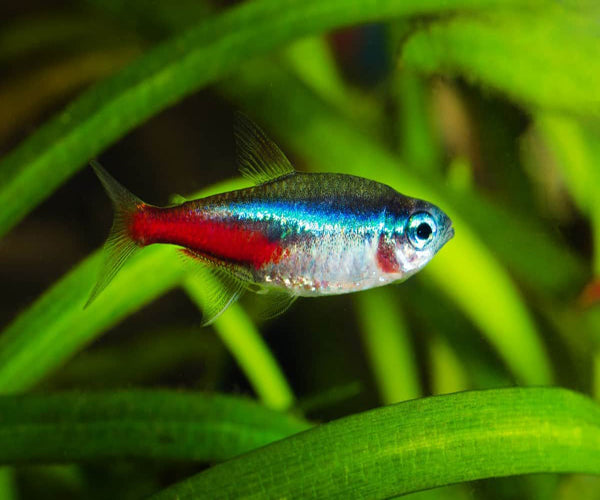
Water & Care Conditions
Given its wide natural range, this species tolerates some variation, but consistent conditions matter more than any single number:
- pH: slightly acidic to neutral, roughly 6.0–7.0
- Temperature: 22–28°C (72–82°F)
- Light: moderate to high — insufficient light causes lower-leaf drop and a leggy growth habit
- CO2 & fertilizing: regular nitrate, phosphate and micronutrient dosing is essential for long-term health; CO2 supplementation further improves growth and colour
- Water hardness: tolerates a moderate range but does best avoiding extremes at either end
- Water flow: gentle to moderate circulation, avoiding completely stagnant pockets around the base of the group
It's more sensitive to inconsistency than to any specific parameter being slightly off — a stable, regularly dosed tank suits it far better than an irregular one. The most common failure mode isn't a dramatic die-off but a slow decline: leaves get progressively smaller and more spaced out along the stem, colour fades, and lower leaves drop, all of which point toward light or nutrients gradually falling short of what the plant needs rather than any single acute problem. Catching that early and correcting dosing or lighting tends to bring it back; letting it run for weeks in that state is harder to reverse.
Because its wild range spans both tropical and slightly cooler subtropical regions, it has a somewhat wider workable temperature window than many strictly tropical stem plants, but it still colours up and grows most vigorously toward the warmer, brighter end of that range rather than the cooler end — treat the lower end of the temperature range as "tolerated" rather than "ideal."
Algae competing for the same light and nutrients is also a real risk with this species, precisely because it demands high light — if dosing lags behind the light level even briefly, algae (particularly hair or thread algae) can gain a foothold on the slower-growing lower portions of the stem before the plant itself shows obvious stress, so keeping an eye on the lower stem during routine maintenance is worthwhile.