About & Origin
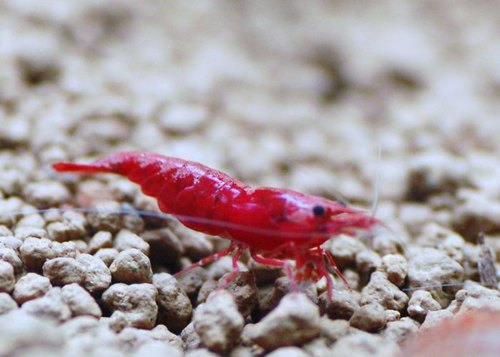
Red dwarf shrimp are a dwarf freshwater shrimp — widely known in the hobby as Red Cherry Shrimp — a selectively bred colour strain of Neocaridina davidi, native to streams and ponds in Taiwan and southern China. The wild-type colouring is a plain brown; decades of selective breeding have produced the vivid, saturated red seen in cherry shrimp today, with higher grades showing more complete, opaque colour coverage across the body.
Adults reach only around 2–3cm and spend virtually all their time grazing continuously on algae, biofilm, and leftover food across every surface of the tank — a genuinely useful, low-impact cleanup presence as well as a popular ornamental species in their own right.
Cherry shrimp are prolific, easy breeders in a stable, mature aquarium: females carry visible clusters of eggs beneath their abdomen for several weeks before releasing fully-formed miniature shrimp (no larval stage), which is why a small starter set like this can grow into a self-sustaining colony fairly quickly.
Because they're most successful and most visible kept as a group, this combo set format suits red shrimp well — a colony needs enough individuals to feel secure, forage confidently, and breed, unlike a single or pair of shrimp which is far more vulnerable.
Cherry shrimp are informally graded by breeders based on colour intensity and coverage — lower grades may show some translucency or patchiness, while premium grades ('painted' or 'fire red') show solid, opaque red across the entire body. A combo set like this typically includes a natural mix, and colour intensity in future offspring bred from the group will vary generation to generation accordingly.
Red Cherry Shrimp are widely regarded as the single easiest ornamental shrimp species for a beginner to keep successfully, precisely because Neocaridina davidi tolerates a broader range of pH, hardness, and temperature than the more demanding Caridina-type shrimp (such as Crystal Reds or Bee shrimp) that dominate the higher end of the hobby.
Requirements
A shrimp colony like this is comfortable in as little as 10–20 litres dedicated to them, though more space, more surface area, and more hiding spots (moss, plants, decor) support a larger, more stable population and give newly-hatched shrimp places to hide from adults and any tankmates.
Shrimp do best in a tank with an established biofilm layer and some algae already present — letting a new tank mature for several weeks before adding shrimp gives them the natural grazing surface they rely on, rather than starting them in a sterile setup.
Diet beyond natural grazing can include occasional shrimp-safe supplemental foods and calcium sources to support healthy moulting — feed lightly and remove uneaten food, since shrimp graze continuously in small amounts rather than eating a large single meal, and leftover food fouls a small tank quickly.
Tankmate choice is the single biggest factor in whether a colony like this actually establishes: almost any fish large enough to fit a shrimp in its mouth will eat them, particularly newly-moulted or baby shrimp, so a genuinely shrimp-safe community is smaller than many keepers expect.
A tight-fitting lid and a covered/sponge-guarded filter intake are worth having, since shrimp can climb and small shrimp can be pulled into an uncovered intake.
Because this combo set is likely to establish a breeding colony over time, it's worth deciding in advance whether an expanding population is welcome — in a dedicated shrimp tank this is usually the goal, but in a mixed community setup, population growth will naturally be limited by predation and available food/hiding space rather than needing active management.
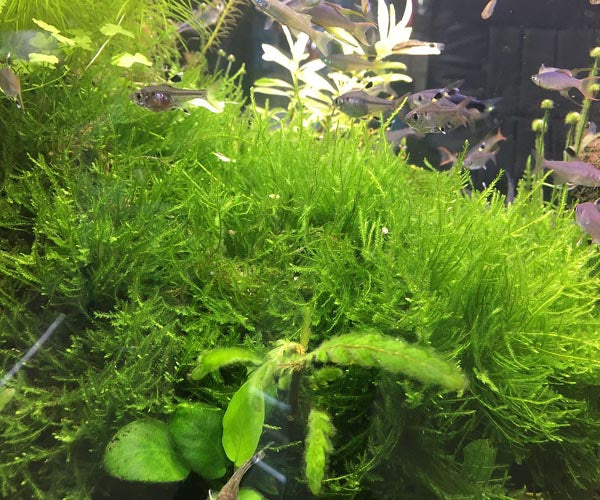
Moss (particularly Java moss) is one of the single best additions for a shrimp colony like this, since it offers constant grazing surface, safe cover for newly-moulted individuals, and a favoured spot for berried females to hide until their eggs hatch.
Compatibility
Water & Care Conditions
Dwarf shrimp are more sensitive to water chemistry and stability than most community fish, and a few points matter more for them than for a typical fish tank:
- pH: 6.5–7.5, with stability mattering more than hitting an exact number
- Hardness (GH/KH): moderate general hardness (6–8 dGH) supports healthy shell/exoskeleton development during moulting; very soft water can cause moulting problems over time
- Temperature: 20–26°C (68–79°F) — Neocaridina shrimp tolerate cooler water better than most tropical fish and don't strictly require a heater in many home environments
- Copper sensitivity: copper is lethal to shrimp even in trace amounts — never use copper-based fish medications, and check tap water/fertilisers for copper content
- Ammonia/nitrite: essentially zero tolerance — shrimp are considerably more sensitive to spikes than most fish, making a fully cycled, mature tank essential before adding them
Stable, mature water conditions are the single biggest factor in whether a starter set like this thrives and breeds, or slowly declines.
Regular small water changes (rather than infrequent large ones) suit shrimp better, since sudden large parameter shifts are far more stressful to them than to most fish — a little-and-often approach to maintenance is the safer default for a colony like this.
A sponge filter or a filter intake fitted with a fine pre-filter sponge is worth using in any tank housing this set's shrimp, since standard filter intakes are a real hazard to small shrimp and especially to newly-hatched young, which can be drawn in even against moderate flow.
A visible moult left in the tank is a normal, healthy sign rather than a dead shrimp — it's simply the discarded exoskeleton, and many keepers leave it in place since the colony will often graze on it afterward as a calcium source.