About & Origin
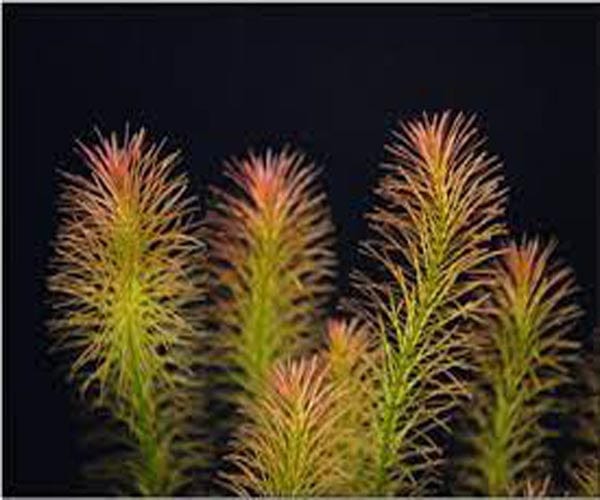
Rotala wallichii is a delicate, fine-leaved stem plant native to soft, slightly acidic waters across Southeast Asia, including India, Sri Lanka and Myanmar. Unlike the broader, rounder-leaved Rotala rotundifolia, R. wallichii has very finely divided, needle-thin whorled leaves that give the whole plant an airy, feathery look, closer in texture to a Myriophyllum than to most other Rotala.
This red form develops striking red-orange colouration at the growing tips under strong light, contrasting with greener growth further down the stem — one of the more visually distinctive colour stems used in competitive aquascaping.
Its extremely fine, thread-like leaf structure is both its main visual appeal and the reason it's considered a genuinely demanding species — such thin leaf tissue has very little reserve capacity, so it responds to poor conditions far faster and more visibly than thicker-leaved stem plants, melting back or thinning out within days rather than weeks when something in the tank's balance is off. Experienced aquascapers often use it as an early warning indicator for a high-tech tank's overall health for exactly this reason.
In competition aquascaping it's frequently grouped in dense stands and trimmed to a uniform low height, where the fine, wispy texture and red tips create a soft, almost cloud-like visual layer very different from the bolder, broader-leaved plants it's typically paired with — a deliberate textural contrast rather than a colour contrast alone.
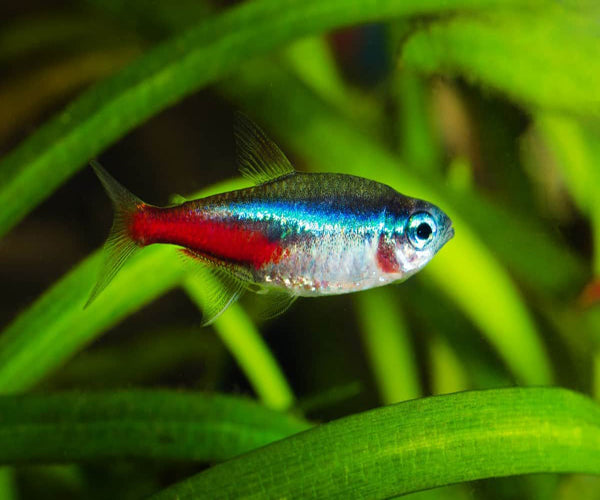
It's native to slow-moving, soft, tannin-stained blackwater habitats, the kind of environment shared with many of the fine-leaved, colour-sensitive plants prized in high-tech aquascaping — a useful hint for buyers that the water conditions this plant expects mirror, quite closely, the naturally soft, gently acidic water many popular ornamental fish (tetras and rasboras in particular) also come from, which is one reason it's so often paired with them despite being a demanding plant in its own right.
Requirements
This is a genuinely demanding plant, more suited to an experienced planted-tank keeper than a first stem plant.
Light: needs strong lighting to hold its fine, dense growth form and red tip colouration — under weak light it thins out and loses colour.
CO2: pressurized CO2 injection is close to non-negotiable for long-term success with this species; it struggles without it.
Nutrients: wants a steady, low-but-never-zero nitrate level, higher phosphate than many plants, and consistent iron/micronutrient dosing.
Placement & trimming: despite being demanding, it's easy to prune if it grows too tall, which makes it usable as both a background and midground plant even in smaller tanks — trim and replant tops regularly to keep it dense.
Not a beginner plant: honestly, this is one of the species on this site best avoided by anyone without an already-running, well-maintained high-tech planted tank — it's genuinely more forgiving of imperfect trimming technique than it is of imperfect water chemistry, which is the opposite of what most beginner-friendly stem plants offer.
Group density: because each individual leaf and stem is so fine, a sparse planting reads as barely-there — it needs a genuinely dense group, more stems per area than most other Rotala species, to create the intended soft, feathery visual mass rather than looking thin and patchy.
Common failure pattern: the most frequent cause of this plant failing in a home aquarium isn't a single dramatic mistake but a slow drift — CO2 levels gradually falling as a cylinder empties, or fertiliser dosing becoming inconsistent over a few busy weeks — since the plant has so little tolerance margin, these gradual lapses show up as steady decline rather than a sudden obvious crash, which can make the cause harder to diagnose after the fact.
Compatibility
Water & Care Conditions
A genuinely more particular species than most easy stem plants — these conditions matter for real success, not just survival:
- pH: soft, acidic water, roughly 5.5–6.9
- Temperature: 21–28°C (70–82°F), doing best around 24°C (75°F)
- Light: high — genuinely needed to keep growth dense and colour vivid
- CO2: pressurized CO2 injection (roughly 25–30ppm) is considered essential for long-term health, not optional
- Nutrients: steady nitrate (never letting it hit zero, but not excessive either), higher phosphate, and regular iron/micronutrient dosing
Considered a difficult species overall — best kept by aquarists already comfortable running a properly dosed, CO2-injected planted tank.
Oxygenation: in a well-tuned, CO2-injected setup a healthy group will often pearl visibly during peak lighting hours, a useful confirmation sign — but make sure surface agitation resumes adequately once the lights (and CO2 injection) switch off overnight, since a dense, heavily planted high-tech tank can otherwise see a real dip in dissolved oxygen for the fish and shrimp sharing the water.
Water changes: regular, consistent partial water changes matter more here than for most easier species — this plant is sensitive enough to gradually accumulating waste products and drifting parameters that a lapsed maintenance schedule shows up in its condition well before it would in a hardier tankmate plant.
Given the demands, some keepers treat this species almost as an experienced-aquarist's test of a tank's overall consistency — if it's thriving, thick, and vividly red-tipped, that's a strong sign the whole high-tech setup (light, CO2, and nutrient dosing together) is genuinely well dialled in, not just adequate.