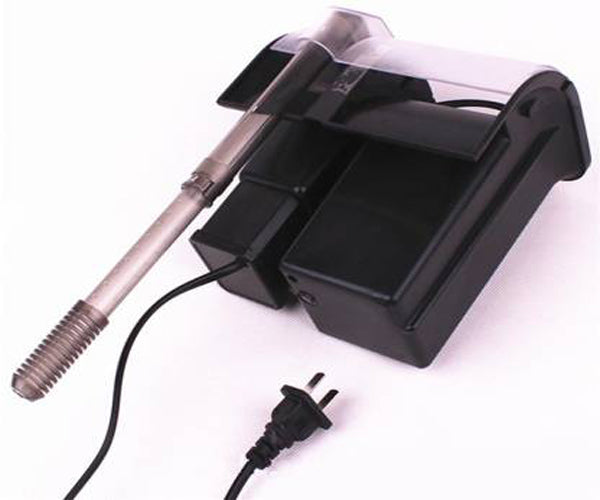
About & Function
The RS-5000 is a hang-on-back (HOB) power filter — a small filter box that clips onto the rim at the back of the aquarium, sitting mostly outside the tank with only its intake tube and outflow lip below the waterline. A tiny internal motor draws tank water up the intake, pushes it through a filter cartridge or sponge media tucked inside the box, and lets it spill back down into the tank as a steady waterfall.
That waterfall return does double duty: as it splashes back into the tank it agitates the surface and mixes in fresh oxygen, on top of whatever mechanical and biological filtration the media inside is doing. It's a simple, low-maintenance way to keep a small to mid-size freshwater or saltwater tank's water clear and its beneficial bacteria colony healthy, without a bulky external canister filter.
Being a hang-on unit rather than fully submersible, it's easy to lift off the tank rim for cleaning or media changes without disturbing the tank itself, unplugging or moving decor, or draining water the way servicing an internal or canister filter often requires. This accessibility is a big part of why HOB filters are such a common first filter for beginners: the media is right there behind the glass, visible and reachable in seconds.
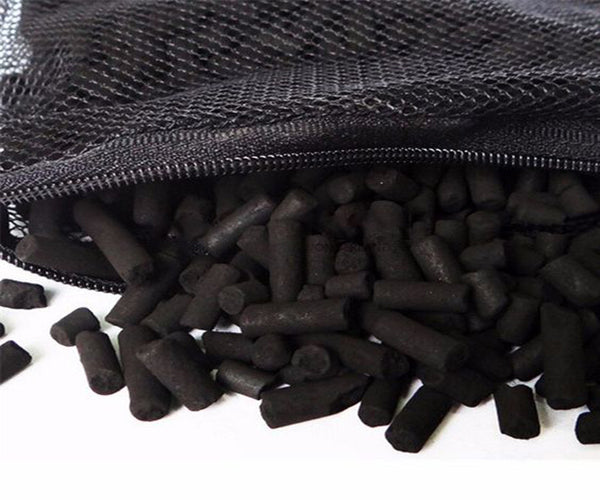
Filtration inside the box happens in up to three stages depending on what media is loaded: mechanical filtration physically traps floating debris and uneaten food as water passes through the sponge or cartridge; biological filtration happens as beneficial nitrifying bacteria colonize the same sponge surface and convert toxic ammonia (from fish waste) into nitrite and then into far less harmful nitrate, which is the core process that actually keeps a cycled tank's water chemistry safe long-term; and optional chemical filtration, if activated carbon or another chemical media is added into the cartridge, adsorbs dissolved organics, odors, and some discoloration from the water. Most stock cartridges combine mechanical and a little chemical media, while the sponge or bio-media that develops over the first few weeks of running does the real biological heavy lifting.
Requirements
The RS-5000 draws 2 watts and is rated for roughly 1000 litres per hour of turnover, which is enough flow to comfortably filter small to medium tanks — as a rough guide, aim for the filter's rated flow to turn over the whole tank volume at least 3-4 times per hour, so divide the rated L/H by 3.5 to get a rough sense of the largest tank it can properly handle.
Power: runs on standard mains electricity via its own small AC adapter/plug — there's no battery option, so it needs a nearby power outlet, and like any submersible-adjacent electrical device the cord should be kept clear of splashes with a drip loop.
Mounting: hangs directly on the rim of the tank at the back; you'll need enough clearance behind the tank for the filter box itself to sit without touching a wall, and the glass rim needs to be a standard open-top style (not fully enclosed by a hood or bracing bar) for the mounting bracket to clip on securely.
Setup: fill the media chamber with the supplied sponge/cartridge before first use, prime the siphon by filling the intake tube with water so it starts drawing on power-up rather than running dry, and give it several days to weeks to build up a healthy nitrifying bacteria colony (the biological filtration stage) before considering the tank properly cycled and safe to stock with fish. Adding a bottled bacteria starter culture at setup can shorten this waiting period.
Water level tolerance: because the intake sits below the waterline while the motor housing sits above it, the tank needs to be kept reasonably full at all times — as evaporation gradually lowers the water level between top-offs, a HOB filter is one of the first things affected, since the intake can start drawing air once the level drops too far.
Compatibility
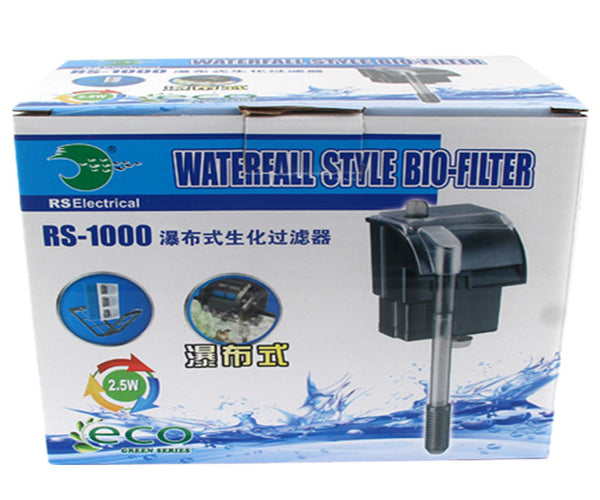
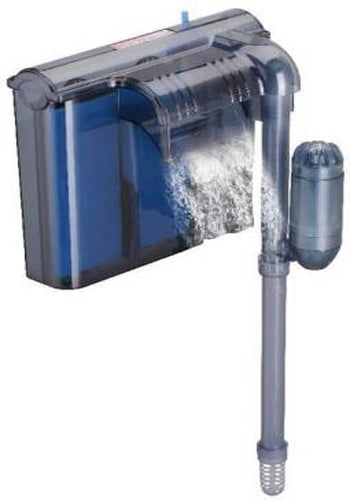
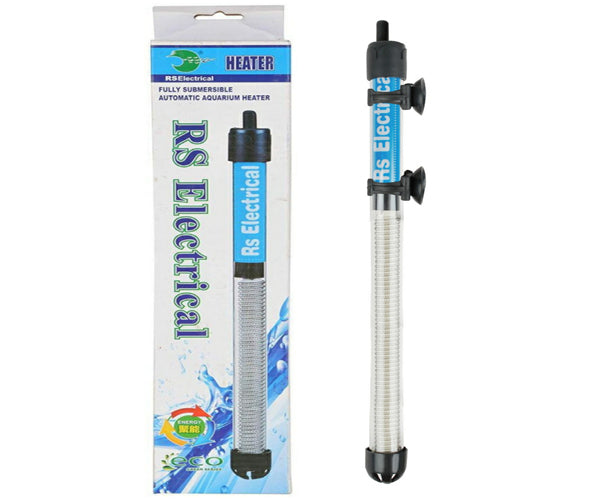
Specifications & Maintenance
Real-world specs and upkeep for the RS-5000:
- Power consumption: 2 watts
- Rated output: approximately 1000 litres per hour
- Filtration type: mechanical + biological (works for both freshwater and saltwater setups)
- Suitable tank size: small to medium tanks, broadly in the 1-2.5 foot range given the flow rate
- Maintenance: rinse or replace the sponge/cartridge media every 2-4 weeks in old tank water siphoned out during a water change (never tap water, since its chlorine/chloramine will kill the bacteria colony you've worked to establish); check the intake tube for debris buildup periodically, as a partially blocked intake reduces flow and can strain the motor
- Staggered replacement: if the cartridge combines chemical and biological media in one disposable piece, avoid swapping the entire cartridge all at once — replacing all the media in a single change effectively resets your biological filtration and can trigger a mini ammonia spike; where possible, rinse and reuse the sponge/bio-media portion and only replace the chemical (carbon) portion regularly
- Noise/vibration check: a healthy motor runs with a quiet, steady hum; a sudden rattling or grinding noise usually means debris has reached the impeller and it's worth switching off and clearing it promptly to avoid motor wear
- Water level: keep the tank filled close enough to the rim that the intake stays fully submerged — as evaporation lowers the water level over days, a HOB filter can start drawing air and lose siphon, which both stops filtration and can run the motor dry
- After a water change: a partial water change temporarily lowers the level and can interrupt siphon briefly — check the filter is flowing normally again once the tank is refilled, and re-prime the intake tube if it doesn't restart on its own
- Cleaning the housing: occasionally wipe down the outside of the box and the return spillway, since mineral deposits and algae can build up on the visible plastic over months of use even though it doesn't affect filtration performance