

About & Function
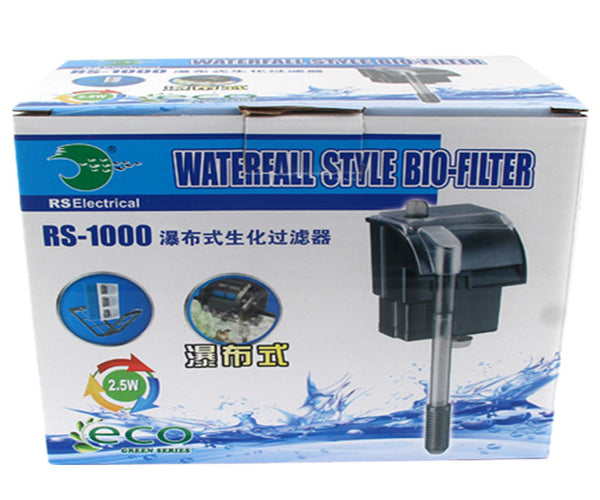
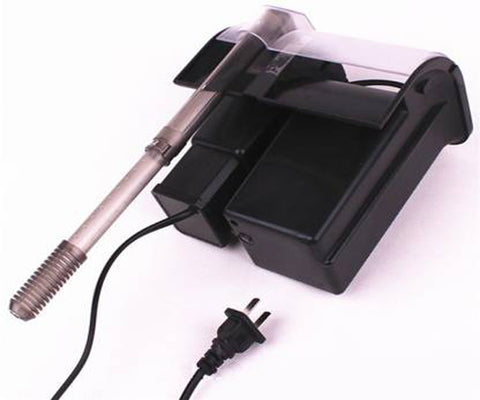
A hang-on-back (HOB) filter is an external power filter that clips onto the rim of the aquarium, with an intake tube dipping into the water and the filter body sitting outside the tank on the back edge. Water is drawn up the intake, pushed through a filter cartridge or media chamber inside the unit, and returned to the tank as a steady waterfall-like flow over the rim.
The RS-1000 is the compact end of the RS hang-on range: a small, low-wattage unit built for nano and small setups rather than heavily stocked or larger tanks. Like other hang-on filters, it typically combines mechanical filtration (trapping debris and particles in a sponge or floss pad) with biological filtration (beneficial bacteria colonising the media, breaking down ammonia and nitrite from fish waste).
Because the whole unit sits outside the tank except for the intake, it's easy to lift out, open, and service without disturbing decor or livestock — one of the main appeals of hang-on-back filtration over fully submerged internal filters.
Compared to a sponge filter (the other common choice for small tanks), a hang-on unit like the RS-1000 provides stronger, more directed flow and typically more filter media volume for its footprint, at the cost of needing mains power and being a bit louder from the return waterfall. It's a reasonable middle ground between a passive sponge filter and a larger, more expensive canister system — enough filtration capacity for a genuinely small tank without the bulk or cost of oversized equipment.
As the entry unit in the RS hang-on lineup, the RS-1000 is best matched to nano tanks and small bowls rather than stretched to cover a bigger or more heavily stocked setup — a filter running near the top of its rated capacity constantly has less margin to keep up if bioload increases, whereas one sized comfortably for its tank runs quieter and needs less frequent attention.
Requirements
The RS-1000 runs on mains electricity (rated at 2.5 watts) — it needs a standard wall socket nearby and, like any submerged/wet electrical appliance, should be plugged in through a drip loop and ideally a residual-current (RCD/ELCB) protected socket for safety.
It hangs directly on the aquarium's back or side rim, so the tank needs an accessible open edge of the right thickness for the clip to grip securely — it isn't meant for fully enclosed rimless tanks without a suitable lip. Rated output is around 600 litres/hour, which is only meaningful before accounting for head height and media resistance — real in-tank turnover is always somewhat lower. As a rough sizing guide, hang-on filters this size suit small tanks, generally up to around 60–80 litres for lightly stocked setups, not larger or heavily stocked aquariums.
Before first use, run the filter for a day or two without fish to confirm the flow is steady and there are no leaks at the intake or return, and to let the cartridge settle into the housing properly. When first setting up a new tank, remember the filter alone doesn't make water safe immediately — the beneficial bacteria that actually process fish waste need time (typically several weeks) to establish on the media, a process usually called cycling.
Because the return flow spills over the rim in a small waterfall, position the filter where the resulting splash and slight surface disturbance won't bother surface-dwelling fish (like bettas or gouramis, which breathe partly from the surface) or blow floating plants around excessively. A tank lid or hood also helps contain any splash and reduces evaporation from the constant surface agitation.
Once installed, periodically check that the flow rate looks consistent with when it was new — a gradually slowing return waterfall over the course of a week or two is a normal early sign that the media has trapped enough debris to need rinsing, rather than a sign anything has actually broken.
Compatibility
Specifications & Maintenance
Real-world specifications and upkeep:
- Power: 2.5W, mains electricity
- Rated output: approximately 600 L/H (before head-height and media losses)
- Suitable for: small, lightly stocked freshwater or saltwater tanks — this is the smallest unit in the RS hang-on range, not intended for large or heavily stocked setups
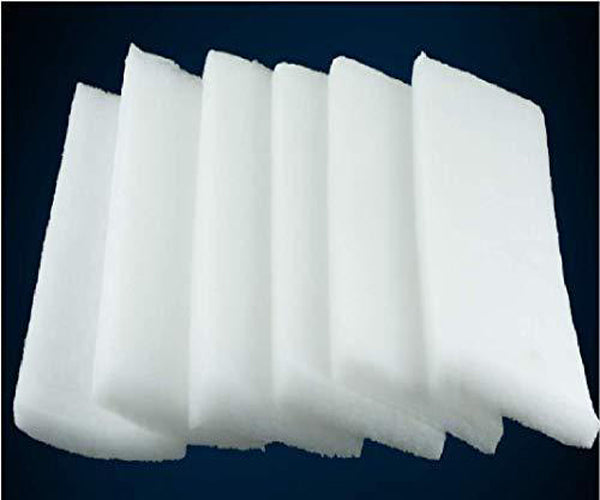
- Media/cartridge: rinse the filter sponge or floss in removed tank water (not tap water, which can kill beneficial bacteria) every 1–2 weeks, and replace worn media roughly every 4–6 weeks depending on bioload
- Motor/impeller: periodically check the impeller for debris or hair buildup, which is the most common cause of reduced flow or a rattling noise over time
- Noise: a healthy unit runs with a quiet trickle from the return flow; a sudden increase in noise or vibration usually points to an impeller obstruction or a housing that's not seated correctly on the rim
- Water level: keep the tank topped up close to its normal level — letting it drop too far can expose the intake and cause the filter to run dry or lose prime
- Priming: if flow stops after a power outage or maintenance, the siphon may need re-priming (often by pouring a little water into the intake chamber) rather than being genuinely faulty
- Splash containment: a lid or hood helps contain the return splash and reduces evaporation from the constant surface agitation
- Staggered media changes: if the cartridge combines mechanical and biological media in one piece, avoid replacing the whole thing at once — swapping it all in a single change effectively resets the bacteria colony and can cause a brief ammonia spike; rinse and reuse what you can, replacing only the most worn portion each time
- What to avoid: never clean media under hot tap water or with soap, both of which kill the beneficial bacteria and can leave residue behind that's harmful to fish even after rinsing
- Expect lower real-world flow: the 600 L/H rating is measured with no media resistance or head height — once media is loaded and the filter is lifting water up over the rim, actual flow through the tank will be noticeably less, which is normal and already factored into the small-tank sizing guidance above