About & Origin
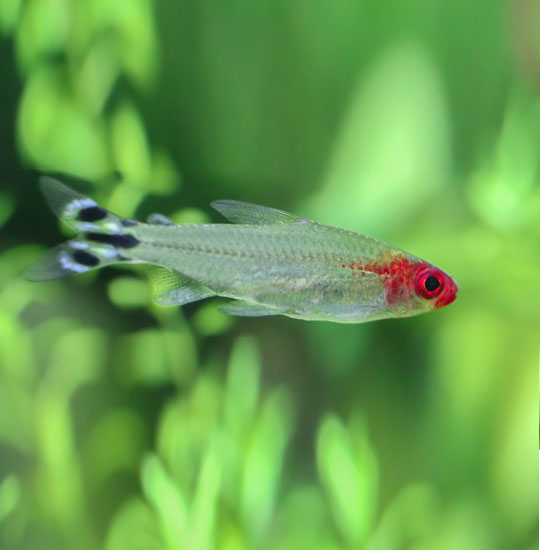
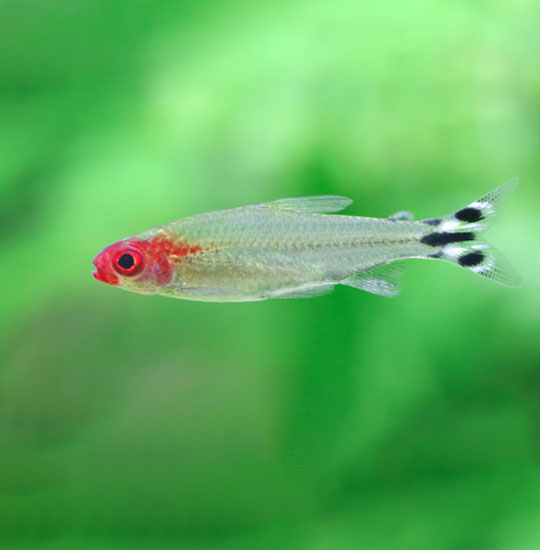
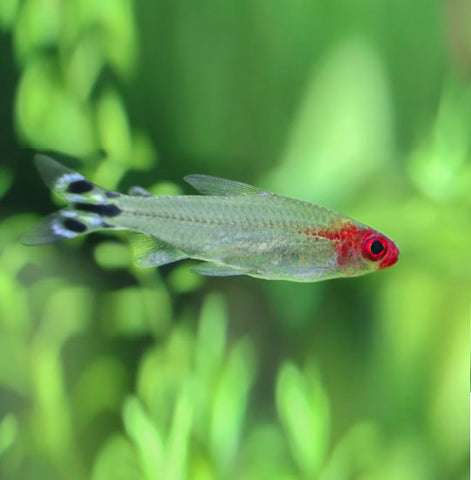
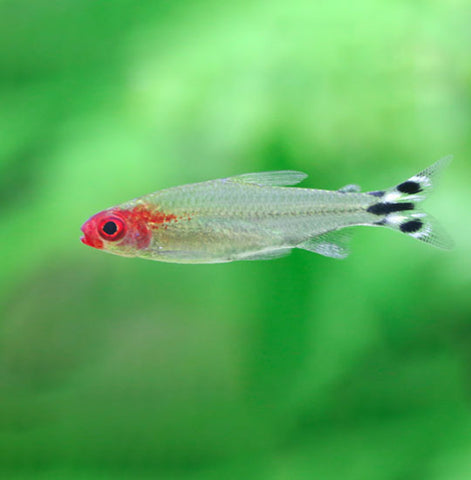
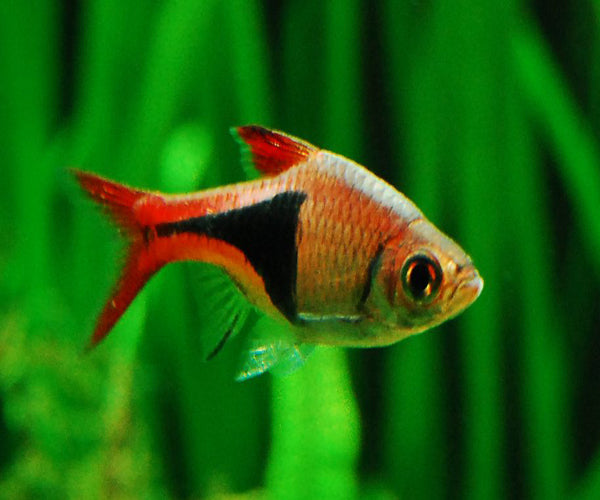
The Rummy-nose Tetra is a small schooling tetra, the common name shared by several closely related Hemigrammus species (commonly H. rhodostomus and H. bleheri) from the Amazon basin, particularly the Rio Negro and Orinoco drainages. It is instantly recognisable by its bright red nose and head, a black-and-white striped tail, and a silver body in between.
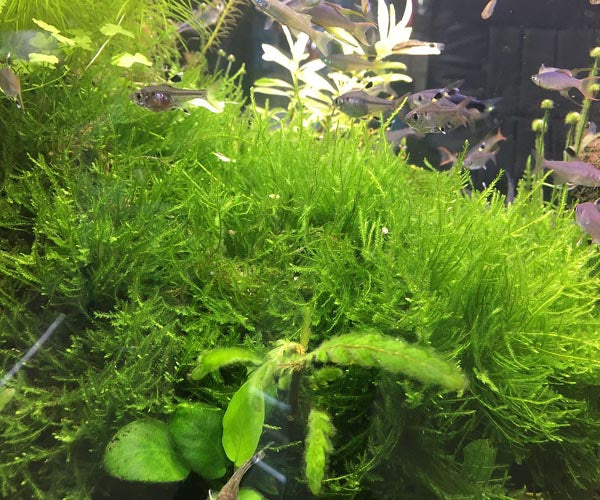
In the wild it lives in dense, coordinated shoals through slow blackwater and clearwater tributaries, and that tight schooling behaviour is unusually strong even by tetra standards — a healthy group of rummy-nose tetras will often swim as a single, synchronised block rather than a loose cluster, which is part of why the species is so popular with planted-tank aquascapers.
The red colouration on the nose is also a well-known health indicator: a bright, solid red nose generally signals a comfortable, well-kept fish, while a fading or patchy nose colour is often one of the first visible signs of stress or declining water quality.
The Rummy-Nose Tetra (Hemigrammus bleheri) is instantly recognisable by its bright red head and nose set against a silvery body with a black-and-white striped tail, and is native to clear and blackwater tributaries of the Amazon basin in Brazil.
It's considered a particularly good "health indicator" fish among experienced keepers — its red colouration is known to fade or blotch when water quality declines or the fish is stressed, and returns to full vividness in clean, stable conditions, making it a useful visual cue for tank health.
It's one of the tightest, most disciplined schooling tetras commonly kept, often moving as a single cohesive unit rather than a loose scattered group.
The Rummy-Nose Tetra (Hemigrammus rhodostomus and closely related species sold under the same name) comes from clear and blackwater tributaries of the Amazon and Orinoco basins. Its bright red nose and head, paired with a bold black-and-white striped tail, make it a favourite in planted aquascapes, and it is often used as an indicator fish — a healthy, well-settled shoal displays vivid red colouring, while stress or poor water quality causes the red to fade noticeably.
Requirements
Rummy-nose tetras need a proper shoal — 8 to 10 or more — both to feel secure and to display the tight schooling behaviour they're known for; small groups scatter and lose their characteristic red colour.
They have a reputation as a slightly more demanding tetra than something like a neon: they are noticeably sensitive to fluctuating or poor water quality, and are often used by experienced keepers as a visible "canary" for tank health, since their nose colour dulls quickly if something is wrong. For that reason they do best in a fully cycled, mature, stable tank rather than a brand-new setup.
They are peaceful, active mid-water swimmers, and appreciate a densely planted tank with some open swimming space and gentle current. Diet is straightforward — quality flake or micro pellet, with occasional live/frozen food for conditioning.
A dedicated shoaler that displays its famously tight schooling behaviour best in larger groups of 8-10 or more — in smaller numbers it schools less cohesively and shows more washed-out colour.
Sensitive to declining water quality compared to some hardier tetras, so consistent maintenance and stable parameters matter more with this species than with many other easy community fish.
An easy omnivore — takes flake and micro pellets, with live or frozen foods appreciated for conditioning and best colour.
It is one of the tighter, more disciplined schooling fish in the hobby, moving almost as a single unit when kept in a proper group of ten or more — smaller groups scatter and lose the synchronized schooling behaviour that makes the species so prized in aquascaping. It is somewhat more sensitive to poor or fluctuating water quality than hardier tetras, rewarding a mature, stable tank.
Compatibility

Water & Care Conditions
Stable water quality matters more for this species than for most community tetras — sudden swings will show up quickly as dulled nose colour:
- pH: 5.5–7.0, soft and slightly acidic, closest to their native blackwater habitat
- Salinity / hardness: freshwater only, soft water (2–12 dGH)
- Temperature: 24–28°C (75–82°F) — on the warmer end for a tetra
- Light: moderate, ideally with plant cover; not especially light-sensitive but shows best colour in a naturalistic, planted setup
- Oxygenation: gentle to moderate flow; prioritise stable, mature, well-filtered water over any single number — this species is one of the least forgiving of ammonia or nitrite
- Health indicator: the intensity of its red nose colouring is a useful real-time signal of water quality and stress level — fading red often means something in the tank needs attention
- Schooling display: shows its famous tight, synchronized schooling behaviour best in open swimming space with a group of ten or more
Soft, slightly acidic, stable water conditions suit this species best and are directly reflected in the vividness of its red nose colouration, making it a genuinely useful visual indicator of overall tank health.
Good, consistent filtration and regular partial water changes matter more to this species than to some hardier tetras — it's not the best choice for a newly set up, still-cycling tank.
Weekly partial water changes of 20-30% help keep this species colourful and active, since like most small characins and rasboras it's sensitive to accumulating nitrates and organic waste over time even though it isn't considered a delicate species.
A mature, cycled tank with established biological filtration is a much safer home for a new shoal than a freshly set-up system, since ammonia and nitrite spikes during cycling are a common cause of losses in small schooling fish.