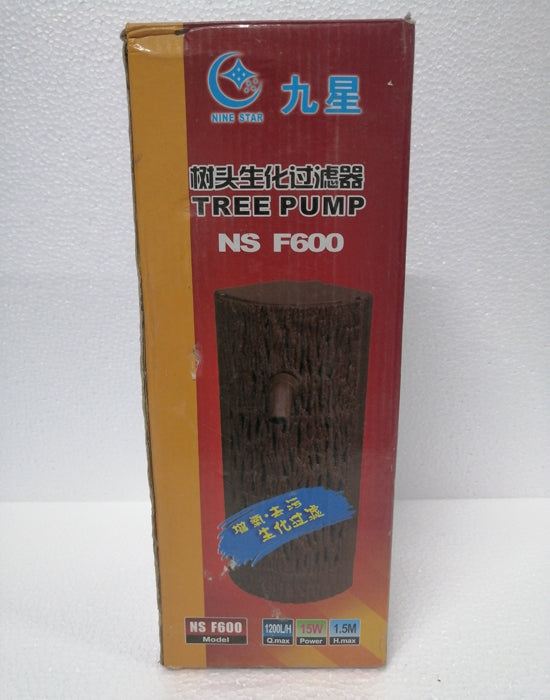
About & Function
The NS F600 is a submersible filtration pump: a compact motor-and-impeller unit that sits fully underwater in the tank, drawing water through an intake strainer, passing it through an internal filter sponge or media chamber, and returning circulated, filtered water back out. It combines the two jobs a separate filter and powerhead would otherwise do — mechanical filtration and water movement — in a single submerged unit, rather than clipping onto the tank's rim like a hang-on filter.
Units in this style are a common, budget-friendly option for smaller and mid-size tanks where an internal filter is preferred over an external hang-on unit — for example, tanks with an open or unusually shaped rim that a clip-on filter wouldn't sit well on. Like other submersible filters, it hosts beneficial bacteria on its media/sponge surface (biological filtration) alongside trapping visible debris (mechanical filtration).
Being fully internal also means there's no external housing hanging off the tank rim, which some keepers prefer purely for appearance, and it can be positioned wherever the tank's layout gives the best water flow rather than being fixed to a single rim edge.
As with any all-in-one filter/pump combo, expect a reasonable trade-off between compactness and the media capacity a larger, dedicated canister filter would offer — this style suits smaller bioloads well but isn't meant to replace a proper canister setup on a heavily stocked larger tank.
Requirements
This is a mains-powered submersible device — the pump housing itself is sealed for full underwater operation, but the power cord and plug are not, so route the cord up and out of the tank through a drip loop, using an ideally RCD/ELCB-protected socket as with any aquarium electrical equipment.
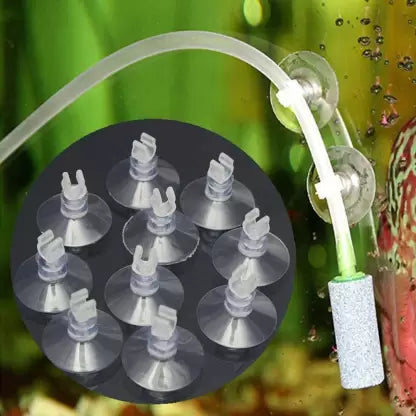
It needs to sit fully submerged to operate correctly, with clear space around the intake strainer for water to flow in freely — most submersible pumps will overheat or suffer damage if run with the water level below the intake. A suction cup or bracket, where included, helps anchor it in place against water movement.
As with any new filter, run it for a day or two before adding fish to confirm it operates correctly, and give the tank several weeks of biological cycling before treating it as fully able to handle a normal stocking level.
Direct the return outlet away from decor and slow-swimming fish, and keep the intake strainer clear of substrate so gravel or sand doesn't restrict flow into the pump.
Check that the mounting suction cups or bracket suit the tank's glass thickness and shape before relying on them, and re-check periodically that the unit hasn't drifted or loosened its grip over time, particularly in a tank with strong overall water movement from other equipment.
Compatibility
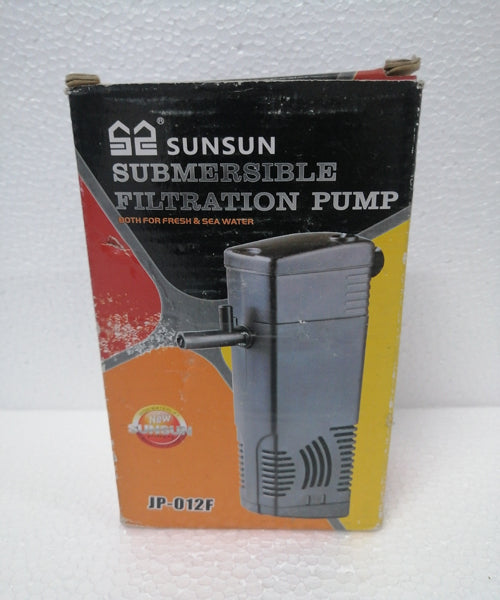
Specifications & Maintenance
Real-world specifications and upkeep:
- Power: mains electricity, fully submersible sealed motor housing
- Suitable for: small to mid-size freshwater or saltwater tanks needing an internal filter/pump
- Media/sponge: rinse in removed tank water (not tap water, which kills beneficial bacteria) roughly every 1–2 weeks; replace once the sponge no longer springs back into shape after squeezing
- Impeller: the most common maintenance point — periodically clear hair, debris, or snail shell fragments that reduce flow or cause noise
- Dry-running risk: never let the water level drop below the unit; running dry, even briefly, can damage the motor
- Mounting: secure with a suction cup or bracket so it doesn't shift or tip with water movement
- Noise: a healthy pump runs quietly and consistently; a new rattle or grind usually means debris has reached the impeller
- Outlet direction: aim the return away from decor and slow-swimming fish
- Capacity: suited to smaller bioloads, not a substitute for a dedicated canister filter on a heavily stocked larger tank
- Cycling: allow several weeks after setup before treating the tank as safely cycled, regardless of how well the pump itself is running
- Seeding: an already-cycled sponge/media from another tank can be moved across to speed this up
- Positioning: being fully internal, it can be repositioned within the tank if flow or noise seems off in one spot, unlike a fixed hang-on filter -- try a different corner or orientation before assuming something's wrong with the unit
- Long-term wear: like any motor running continuously, expect gradually reduced flow output over years of use even with regular cleaning -- a real drop in flow that cleaning doesn't restore is usually the impeller or motor wearing out rather than a blockage