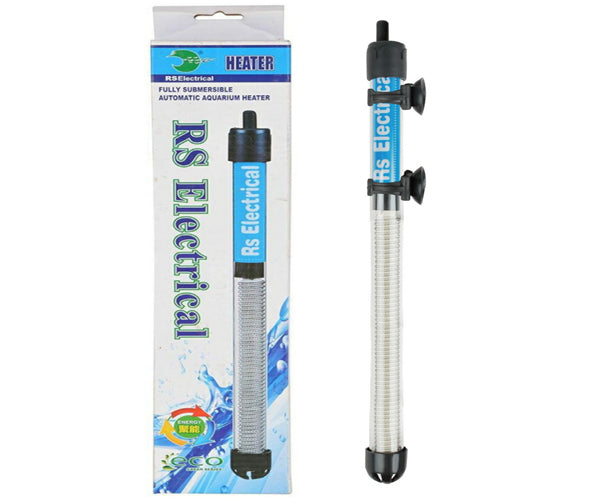
About & Function
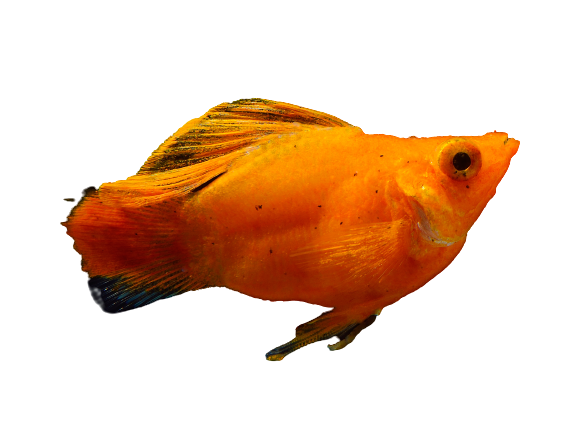
The RS 100W is a mid-sized submersible aquarium heater, built for small-to-medium community tanks that outgrow the smallest nano heaters. Nearly all popular tropical freshwater fish — tetras, guppies, mollies, gouramis, most community cichlids — come from consistently warm regions and need stable, elevated water temperature year-round, which most home environments simply can't provide on their own, especially overnight or through cooler seasons.
Inside the sealed glass or shatter-resistant tube, a heating element pairs with a thermostat that continuously monitors the surrounding water and cycles the element on and off to hold a set target temperature, rather than heating without limit. This automatic cycling is what keeps the tank at a stable temperature rather than swinging hot and cold, and a small indicator light on most units shows at a glance whether the element is actively heating at any given moment.
At 100 watts, this heater has meaningfully more output than the smallest bowl-scale heaters, making it suitable for genuine small-to-medium aquariums rather than just a bowl or nano cube — a size range that covers a large share of typical beginner-to-intermediate community setups housing tetras, guppies, small barbs, and similar tropical fish.
Stable temperature matters beyond simple comfort: repeated swings stress fish immune systems and are a well-documented contributor to disease outbreaks, so a correctly-sized, reliable heater is one of the more important pieces of equipment in a tropical tank.
Most units in this class use a simple mechanical dial thermostat rather than a digital controller, which keeps the design robust and affordable but means the printed temperature markings are only an approximate starting point rather than a precise readout — this is exactly why pairing any heater with an independent thermometer is standard practice rather than an optional extra.
Requirements
This is a mains-powered submersible heater — it plugs into a standard household outlet and must be fully underwater to function safely.
Power: runs on standard AC mains through its cord; never plug it in while the heating element is out of water, as this can crack the element or start a fire.
Tank size fit: using the common rule of thumb of roughly 5 watts per gallon for tanks up to about 55 gallons, 100W comfortably suits tanks in roughly the 15–20 gallon range (about 55–75 litres) under normal room conditions — a colder room or a tank near an exterior wall may need a slightly larger heater or a second unit for full confidence.
Placement: position it in an area of good water flow (near a filter outlet is ideal) so heat spreads evenly through the tank rather than pooling near the heater itself; never let it touch the substrate or sit directly against the glass.
Safety: always unplug before any water change that would expose it to air, and let it cool for several minutes before lifting it out — a hot element exposed suddenly to room-temperature or cold water can crack.
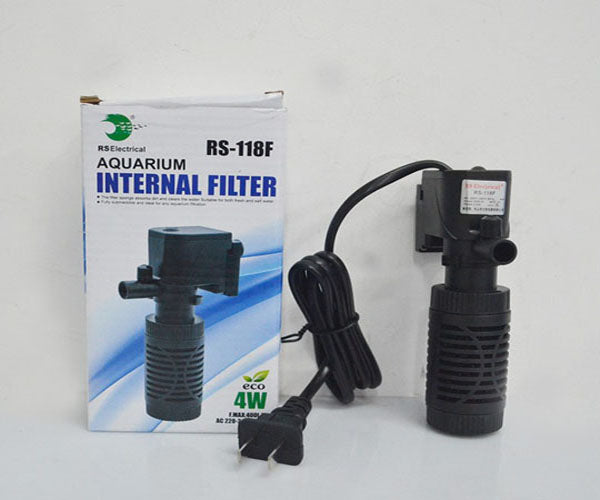
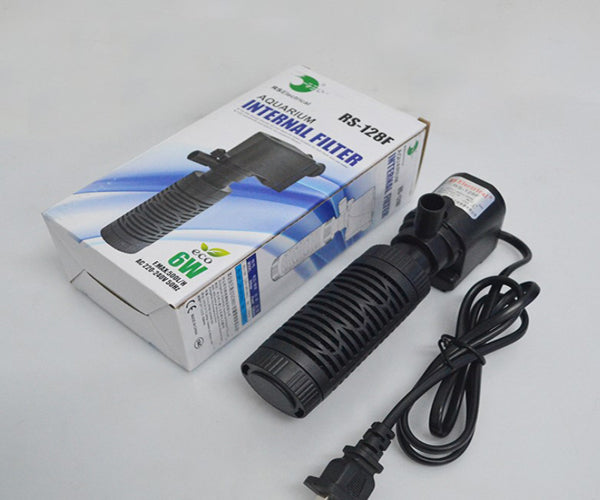
Pairing with filtration: combining this heater with a correspondingly sized internal or hang-on filter helps distribute heated water evenly around the tank rather than letting a warm pocket form near the heater itself.
Acclimatising a new heater: when first setting it up, let it sit submerged and unplugged in the tank water for a few minutes before powering on, so the glass tube equalises to water temperature gradually rather than being powered up cold and heating rapidly right away.
Multiple heaters for larger tanks: some keepers split total wattage across two smaller heaters placed at opposite ends of a tank rather than one large unit — this spreads heat more evenly and means a single failure only leaves the tank partially unheated rather than fully cold.
Compatibility

Specifications & Maintenance
Realistic specifications and upkeep for this heater:
- Wattage: 100W, suited to roughly a 15–20 gallon (~55–75 litre) tank under typical room conditions.
- Target temperature: general tropical freshwater range, typically 24–28°C (75–82°F) — check your specific fish species, since some (discus, bettas) prefer the warmer end.
- Always verify with a separate thermometer: the heater's own dial is a starting point, not a guarantee of actual water temperature — confirm independently, especially in the first week after setup or after any adjustment.
- Cleaning: wipe the tube gently with a soft cloth during water changes to remove mineral scale and algae film, unplugged and cooled first.
- Failure modes: a heater can fail stuck-off (tank slowly cools) or, less often but more seriously, stuck-on (tank overheats) — periodic temperature checks catch both; replace a heater that behaves erratically rather than continuing to rely on it.
- Expected lifespan: with normal use and gentle handling, a heater like this typically lasts several years before the thermostat mechanism starts to drift; a heater more than a few years old is worth checking against a thermometer more frequently than a newer one.
- Adjustment settling time: after changing the target dial, give the heater several hours to reach and stabilise at the new temperature before checking again — small heaters can overshoot briefly right after an adjustment.
- Backup planning: in climates with real winter cold or frequent power cuts, keeping a spare heater on hand (or at minimum a battery-powered air pump to maintain oxygenation during a prolonged outage) reduces risk for temperature-sensitive stock, since fish can chill quickly in an unheated tank overnight.
With correct sizing and periodic temperature checks, a 100W heater like this reliably holds a small-to-medium community tank at a stable, safe temperature for years of continuous use.