About & Origin
The blood parrot is a man-made hybrid cichlid, like the flowerhorn, rather than a wild species -- generally believed to be a cross involving Central American cichlids such as the redhead cichlid and the Midas or red devil cichlid, first developed in Taiwan in the 1980s. It has no single natural habitat of its own.
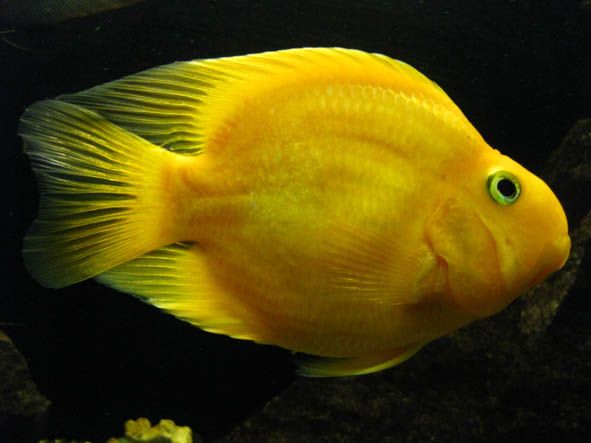
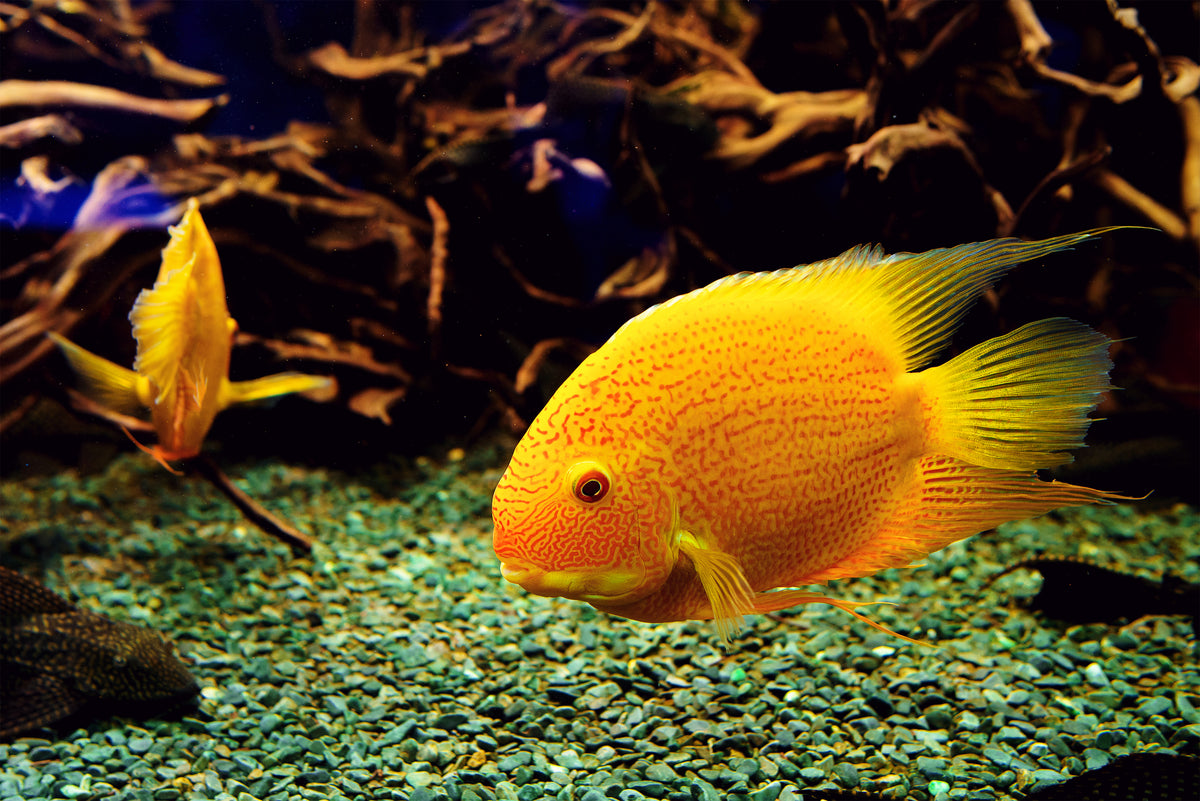
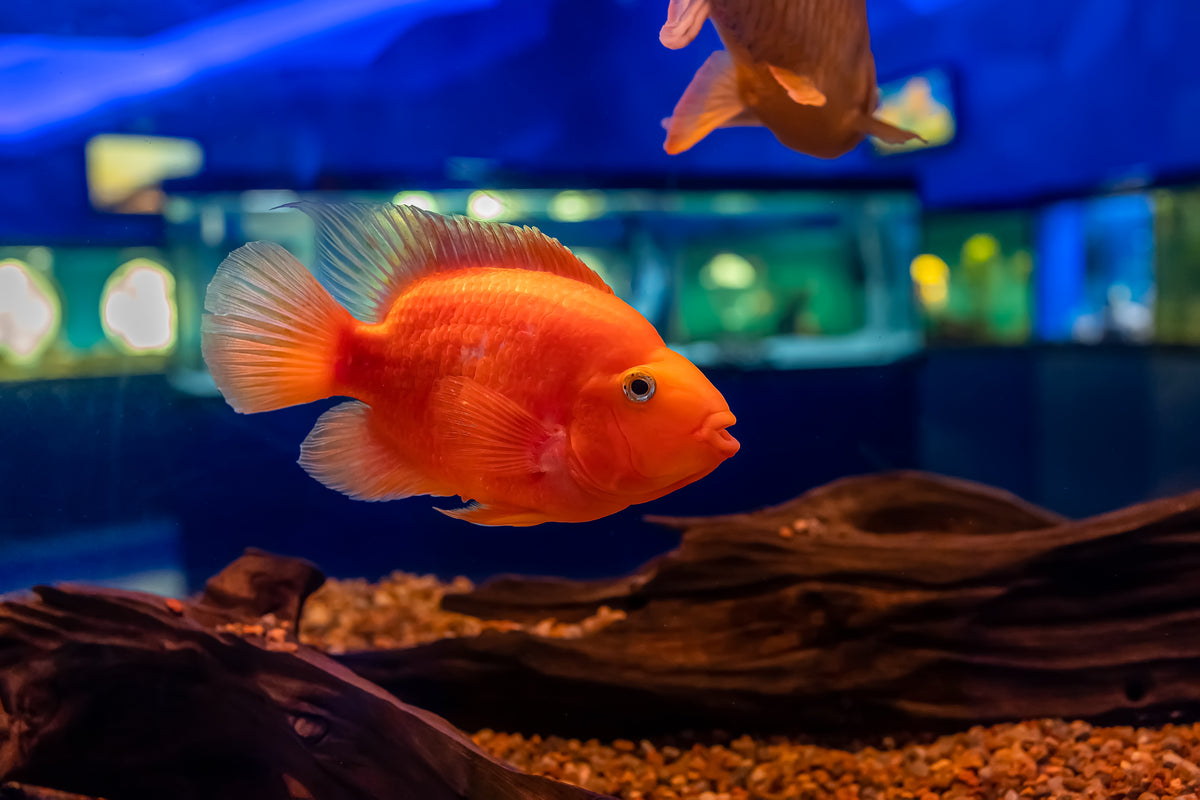
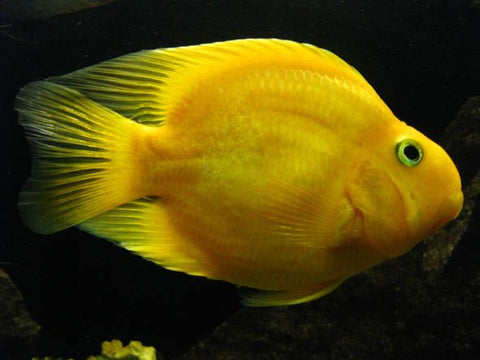
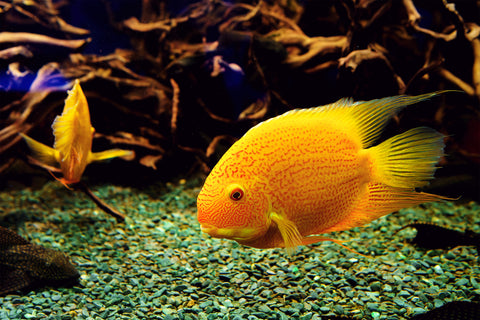
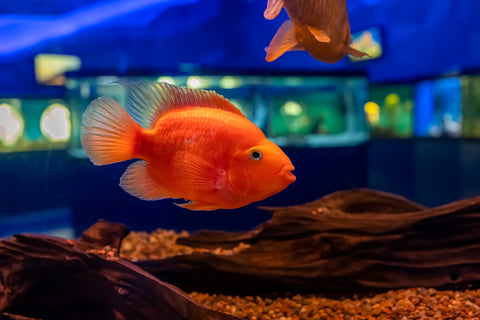
Its most recognisable trait is a small, round mouth that doesn't fully close, an anatomical side-effect of the cross that means it feeds a little differently and slowly compared to full-jawed cichlids. The vivid yellow and red/orange colouring seen in this listing (sometimes further enhanced with dye injection in the trade, which fishykart.com does not practise) is typical of the variety.
Despite its unusual look, it inherits real cichlid intelligence and personality, recognising its keeper and becoming noticeably interactive over time.
This listing pairs the two most common Blood Parrot colour lines -- yellow and red/orange -- rather than a single colour, which is a popular way to stock a display tank since the two tones contrast well against each other and against typical rockwork décor without needing a third species to add visual variety. Beyond colour, yellow and red parrots are the same fish in every practical respect: identical size, temperament, mouth shape, and care needs.
Requirements
A single specimen or small group does well from around 150-200 litres (40-55 gallons) up, growing to roughly 20-25cm. It's semi-aggressive and territorial like most cichlids, though its restricted mouth makes it somewhat less capable of harming similarly-sized tankmates than a full-jawed cichlid of the same temperament.
Because of its unusual mouth shape, feeding needs a little more attention -- sinking cichlid pellets sized appropriately are easier for it to manage than large chunks of food, and slower feeding means it can lose out to fast, aggressive competitors at mealtime.
It appreciates rockwork and driftwood to establish territory, similar to other semi-aggressive cichlids, and will rearrange loose substrate and uprooted plants as a matter of course.
Keeping a mixed-colour pair or small group: yellow and red parrots establish territory and social hierarchy the same way regardless of colour, so mixing the two tones in one tank doesn't introduce any extra compatibility concerns beyond normal Blood Parrot stocking -- provide enough space and hiding spots for each individual to claim its own patch, especially if housing more than a simple pair.
Note on reproduction: as a hybrid, Blood Parrots are functionally sterile or produce very poor breeding results in the vast majority of cases -- most eggs a pair lays don't hatch. Buyers hoping to breed true offspring from a mixed pair should know this upfront rather than expect reliable fry.
Compatibility
Water & Care Conditions
As a hybrid, care follows general semi-aggressive Central American cichlid guidelines rather than one specific wild water chemistry:
- pH: 6.5–7.8
- Water hardness: moderately hard, 8–20 dGH
- Temperature: 24–28°C (75–82°F)
- Oxygenation: moderate flow; standard cichlid-tank filtration is sufficient
Colour intensity in both the yellow and red lines is genuinely diet-dependent -- a good cichlid pellet with natural or added carotenoids (many commercial "colour enhancing" cichlid foods are formulated for exactly this) helps keep either tone vivid over time, while a plain, low-quality diet tends to leave both looking duller than they should.
Weekly water changes of 25-30% paired with strong filtration matter more for long-term health here than hitting an exact water-chemistry number -- Blood Parrots are reasonably chemistry-flexible but genuinely sensitive to poor water quality given their size and bioload.
Because the small, permanently open mouth makes feeding slightly less efficient than in a full-jawed cichlid, some food inevitably escapes uneaten and breaks down in the water -- running slightly stronger mechanical filtration than the tank's nominal rating helps keep up with this extra bioload source specifically, on top of the fish's own waste output.
Well-kept Blood Parrots of either colour commonly live 10-15 years given consistent care, a genuinely long-term commitment worth factoring into any stocking decision involving this hybrid.