About & Origin
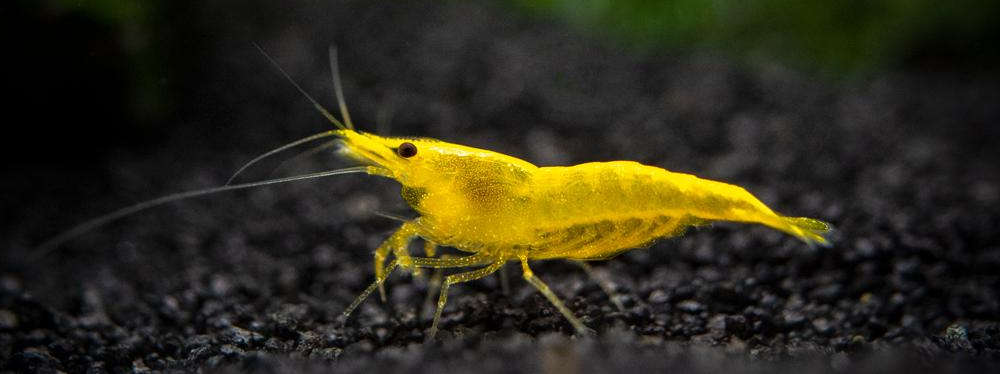
Yellow dwarf shrimp are a small freshwater shrimp -- a selectively bred colour variant of Neocaridina davidi, native to streams and ponds in Taiwan and southern China. The wild-type is a plain brownish colour; decades of selective breeding have produced the bright, solid-yellow strains sold today, ranging from pale lemon to deep, saturated golden-yellow depending on the specific line.
Adults reach only around 2–3cm, spend their time grazing constantly on biofilm, algae, and leftover food across every surface of the tank, and are almost entirely peaceful — their main defence against anything larger is simply hiding, not confrontation.
Neocaridina shrimp are prolific breeders in stable, mature aquariums: females carry visible clusters of eggs under their abdomen and release fully-formed miniature shrimp rather than a larval stage, which is why a small starter colony like this combo pack can grow into a self-sustaining population fairly quickly once established.
Because they're sold and best kept as a group, this combo format suits yellow shrimp well — a colony needs enough individuals to feel secure and to breed successfully, and a single or pair of shrimp is far more vulnerable and far less likely to establish.
Neocaridina shrimp are graded informally by breeders based on colour intensity and coverage — "low grade" individuals may show patchy or translucent colouring, while premium "high grade" lines show solid, opaque colour across the entire body. A combo pack like this typically includes a mix, and colour intensity in offspring bred from the group will vary accordingly generation to generation.
Requirements
Yellow is one of the more practical colour choices for a first shrimp colony, not just a cosmetic one: against dark or planted substrate it's easy to spot at a glance, which makes it simpler for a beginner to notice early trouble signs -- a shrimp that's gone unusually pale, is sitting still for too long, or is missing from a headcount -- long before those issues would be obvious with a duller or more camouflaged colour strain.
10-20 litres is enough to house a starter colony, though giving them more surface area -- plants, moss, driftwood, decor -- supports a bigger, more stable population over time and gives newly-hatched young somewhere to hide from adults and any tankmates.
Let the tank mature for a few weeks before adding shrimp; they rely on grazing an established biofilm and algae layer across every surface, and a brand-new, freshly-set-up tank simply doesn't have that yet.
Supplement natural grazing lightly with shrimp-safe foods -- blanched vegetables, purpose-made shrimp pellets, and an occasional calcium source to support healthy moulting -- but feed sparingly, since shrimp graze near-continuously rather than eating in one sitting, and overfeeding foul a small colony's water fast.
Tankmate choice is the single biggest factor in whether a colony actually establishes: almost any fish with a mouth big enough to fit a shrimp will eat one given the chance, especially freshly-moulted adults and any baby shrimp, so a genuinely shrimp-safe community is narrower than most first-time keepers expect.
A secure lid and a covered or sponge-guarded filter intake matter here too -- shrimp climb more than people expect, and an uncovered intake will pull in small shrimp even against fairly gentle flow.
Compatibility
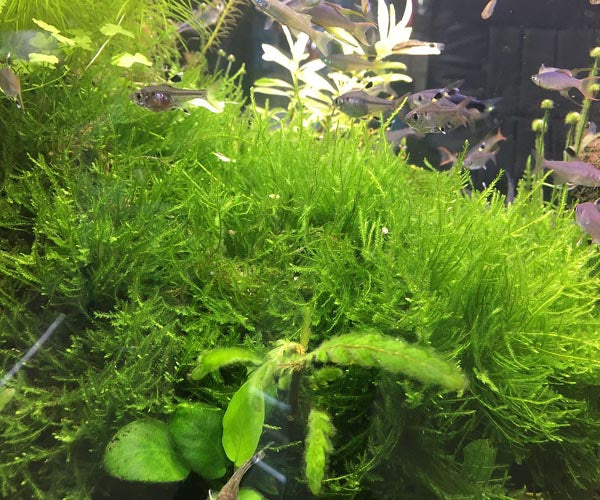
Water & Care Conditions
Because yellow shrimp show colour and colour loss so clearly, they're a genuinely useful early-warning indicator for water problems -- a colony fading toward translucent or pale is often visible days before you'd notice the same issue in a browner or more patterned strain, which makes staying on top of these basics easier, not harder:
- pH: 6.5–7.5 -- stability matters more than hitting an exact figure
- Hardness (GH/KH): moderate, around 6–8 dGH, to support a healthy exoskeleton through repeated moults; very soft water causes moulting problems over time
- Temperature: 20–26°C (68–79°F) -- tolerates cooler water better than most tropical fish, often without needing a heater at all indoors
- Copper: lethal even in trace amounts -- never dose copper-based medication in a shrimp tank, and check tap water and any fertilisers used nearby for it
- Ammonia/nitrite: shrimp have essentially no tolerance for either -- the tank needs to be fully cycled and mature before they go in, not just "probably fine"
Small, frequent water changes suit a colony far better than large infrequent ones -- sudden swings in parameters are considerably more stressful to shrimp than to most fish, so little-and-often is the safer default.
A shed exoskeleton after a moult is a normal, healthy sign, not a dead shrimp -- it looks like a ghostly, intact shrimp shell, and it's fine to leave it in the tank, since the colony will often eat it back for the calcium.
A sponge filter, or a fine pre-filter sponge fitted over a standard intake, is worth using in any tank keeping this colony -- an uncovered filter intake is a real hazard to small shrimp and especially to newly-hatched young.