About & Origin
The widow tetra is a colour-enhanced strain of the black widow tetra, also called the black skirt tetra (Gymnocorymbus ternetzi), a small characin native to the slow-moving rivers and floodplain pools of the Paraguay–Paraná river basin in South America (Brazil, Bolivia, Paraguay, Argentina). The wild fish is silvery-grey with a bold black "skirt" trailing from its rear half, which is where both common names come from.
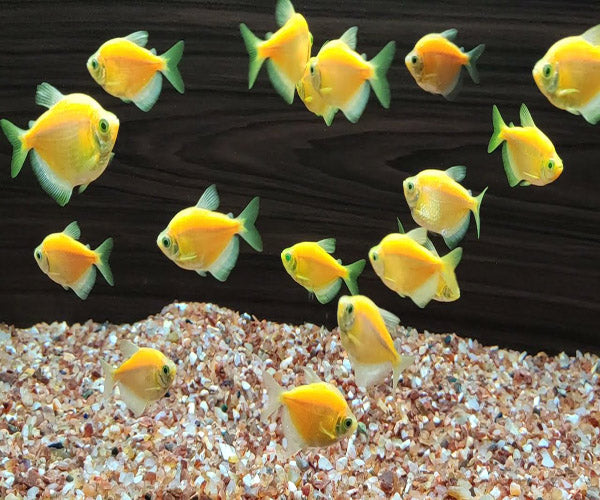
The vivid yellow colour on this fish is produced the same way as colour-enhanced zebra danios: either through the GloFish genetic-modification programme, which gives a permanent, breed-true fluorescent hue, or -- less desirably, and not what fishykart.com stocks -- through dye injection of a plain black widow tetra, which fades and is stressful to the fish. Underneath the colour it is a completely standard, easy-going widow tetra: a deep-bodied, fast, active shoaling characin.
Body shape is a good identifying feature: widow tetras are noticeably taller and more diamond-shaped than most other tetras, with a high, laterally compressed profile and a long, flowing dorsal and anal fin that trail behind the body as the fish swims -- giving the "skirt" effect the black-bodied wild form is named for. In the wild they shoal in loose groups over sandy or leaf-littered bottoms in warm, slow, tannin-stained floodplain water, feeding on small insects, worms, crustaceans, and plant matter that washes in with the seasonal flooding.
Juveniles show only a faint hint of yellow and take a few weeks of good feeding and stable conditions to reach their full adult colour intensity. As with most colour-strain fish, individual vibrancy varies a little fish to fish, and the yellow tone tends to deepen further with age and a varied, high-quality diet. Adults typically reach around 4.5-5.5cm (1.75-2.25in) at full size, making them one of the larger commonly-kept tetras alongside their close relatives.
Requirements
The yellow colouring is purely cosmetic -- everything else about keeping this fish is standard widow tetra care: shoal of 6+ (undersized groups are the usual cause of the species' mild fin-nipping reputation, aimed mostly at slow, long-finned tankmates), a 60cm-plus tank with some planted cover, and an unfussy flake or micro-pellet diet topped up with occasional live/frozen food. Tankmate choice matters more than tank size here: fast, similarly-active community fish do better alongside a widow tetra shoal than anything slow-moving and flowing-finned.
Colour-strain sourcing: GloFish-programme colour is genetic and permanent -- it doesn't fade, transfers to offspring if this strain is bred, and carries no extra health burden. If buying from a source you're unsure about, ask directly whether the colour is genetic or dye-based, since the two look similar at a glance but differ meaningfully in the fish's welfare and in how stable the colour will stay over its lifetime.
Décor for colour contrast: a darker substrate and background make the bright yellow read far more vividly than a pale or busy backdrop -- purely cosmetic, but worth considering if display appearance matters alongside basic care.
Regional note: as with other GloFish-style genetically modified colour strains, breeding or reselling offspring is restricted in a handful of regions even where simply keeping the fish is unrestricted -- worth a quick check locally if breeding this strain is part of the plan.
Compatibility
Water & Care Conditions
Same water profile as the rest of the widow tetra group: pH 6.0-7.5, hardness 4-18 dGH, 22-28°C, gentle-to-moderate flow. Nitrate build-up is the thing to watch most closely with a yellow strain -- it dulls the colour toward a washed-out cream faster than it visibly affects the darker strains, so weekly partial water changes (~20-25%) matter more here than a test kit reading "fine" would suggest. Diffused, moderate lighting also helps keep the tone bright rather than pale.
Health monitoring: the bright, pale-adjacent colouring makes early stress signs -- clamped fins, faded patches, or unusual lethargy -- somewhat easier to catch by eye than on the plain black wild-type form, since deviations from the expected bright tone stand out more clearly.
Well-kept widow tetras of any colour form commonly live 3-5 years, a genuine multi-year commitment worth planning for rather than treating as a short-lived starter fish.
New arrivals settle in better with slow, drip-style acclimation over 20-30 minutes rather than a quick float-and-release -- combined transport and water-chemistry stress is a common preventable cause of early losses in newly purchased tetras.
Because the fluorescent colour is genetic rather than a coating, a visibly dulling fish is a more reliable signal of a real water-quality or health issue here than it would be on a dyed fish, where colour loss can simply be the dye wearing off over time.