About & Origin
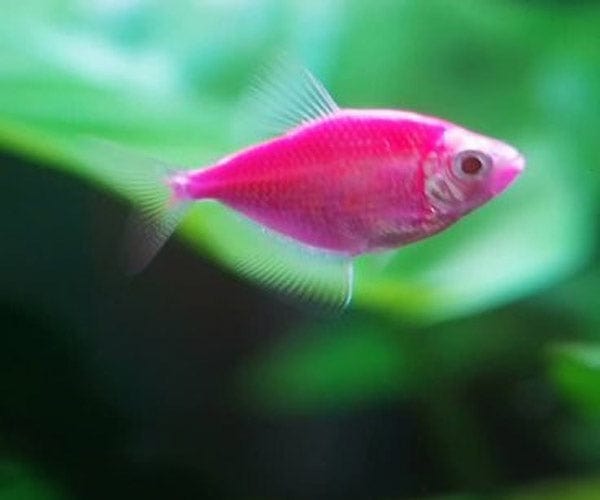
The widow tetra is a colour-enhanced strain of the black widow tetra, also called the black skirt tetra (Gymnocorymbus ternetzi), a small characin native to the slow-moving rivers and floodplain pools of the Paraguay–Paraná river basin in South America (Brazil, Bolivia, Paraguay, Argentina). The wild fish is silvery-grey with a bold black "skirt" trailing from its rear half, which is where both common names come from.
The vivid red/pink colour on this fish is produced the same way as colour-enhanced zebra danios: either through the GloFish genetic-modification programme, which gives a permanent, breed-true fluorescent hue, or -- less desirably, and not what fishykart.com stocks -- through dye injection of a plain black widow tetra, which fades and is stressful to the fish. Underneath the colour it is a completely standard, easy-going widow tetra: a deep-bodied, fast, active shoaling characin.
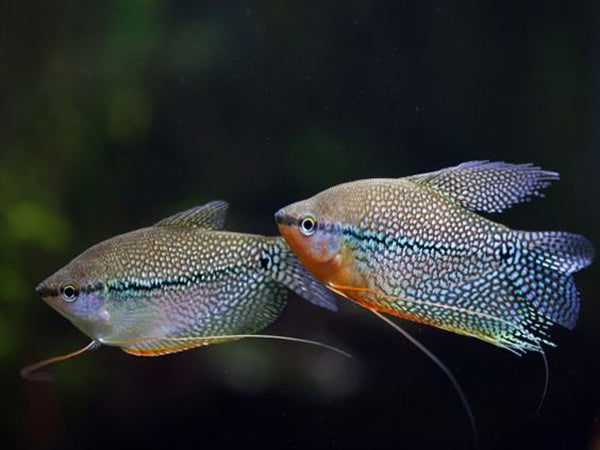
Body shape is a good identifying feature: widow tetras are noticeably taller and more diamond-shaped than most other tetras, with a high, laterally compressed profile and a long, flowing dorsal and anal fin that trail behind the body as the fish swims -- giving the "skirt" effect the black-bodied wild form is named for. In the wild they shoal in loose groups over sandy or leaf-littered bottoms in warm, slow, tannin-stained floodplain water, feeding on small insects, worms, crustaceans, and plant matter that washes in with the seasonal flooding.
Juveniles show only a faint hint of red/pink and take a few weeks of good feeding and stable conditions to reach their full adult colour intensity. As with most colour-strain fish, individual vibrancy varies a little fish to fish, and the tone tends to deepen further with age and a varied, high-quality diet. Adults typically reach around 4.5-5.5cm (1.75-2.25in) at full size, making them one of the larger commonly-kept tetras alongside their close relatives.
Requirements
Standard widow tetra husbandry applies -- shoal of 6+, 60cm-plus tank, planted cover, unfussy flake/micro-pellet feeding -- but new red/pink stock is worth acclimating a bit more carefully than the reputation for hardiness might suggest. Drip-acclimate over 20-30 minutes rather than a quick float-and-dump, and quarantine 1-2 weeks before adding to an established community: colour-strain fish generally handle sudden pH or temperature shifts worse than their wild-type ancestors, and it's easier to catch ich or other issues early in a bare quarantine tank than after they've spread through a display tank.
Group size: a shoal of 6 or more brings out both natural shoaling behaviour and the fish's confidence, which shows directly in how saturated and consistent the red/pink colouring looks compared to a small, stressed group.
Diet: an easy omnivore -- quality flake or micro-pellet as a staple, with occasional live or frozen food (brine shrimp, daphnia, bloodworm) supporting condition and colour intensity. A tight-fitting lid is worth having too, since this species can jump when startled, particularly around water changes or sudden lighting changes. A well-planted tank with some open swimming space at the front suits this active, mid-water shoaling species better than either a bare tank or one crowded wall-to-wall with décor.
Compatibility
Water & Care Conditions
Same native-water profile as the group: pH 6.0-7.5, hardness soft to moderately hard, 22-28°C, gentle flow, comfortable without strong current. This red/pink strain shows its most saturated colour under moderate light softened by floating plants or leaf litter -- bright, direct lighting bleaches it out rather than showing it off, the same as with the other colour strains in this line. Weekly 20–25% water changes keep colour and fin condition at their best, and fin rot or ich, when they occur, are almost always tied to inconsistent water quality rather than any special vulnerability in this colour form. Well-kept individuals commonly live 3–5 years, with full colour saturation typically developing over the fish's first several months. Stability matters more than precision -- a tank held steady near the edge of the tolerable range does better than one that fluctuates around the "ideal" midpoint. A dark substrate and subdued lighting, softened with floating plants or leaf litter, help this strain's red/pink tones read at their most saturated. Fin rot and ich remain the two most common issues to watch for, and both are far more often triggered by inconsistent conditions than by anything inherent to this colour form. Consistent weekly maintenance prevents the great majority of issues before they start.