Axolotl Colors: 15 Morphs, Genetics and Rare Types
Published: 2026-11-13 · FishyKart Blog
Axolotl colors come from a few pigment genes, and breeders combine them into many named morphs. The common ones are wild type (dark with speckles), leucistic (pale pink with dark eyes), golden albino and white albino (red eyes), melanoid (all dark, no shine), copper and GFP, which glows green under blue light. Rare types include mosaic, enigma, chimera and firefly. A veterinary overview by Sean Perry, DVM on PetMD lists 15 morphs, summarised below.
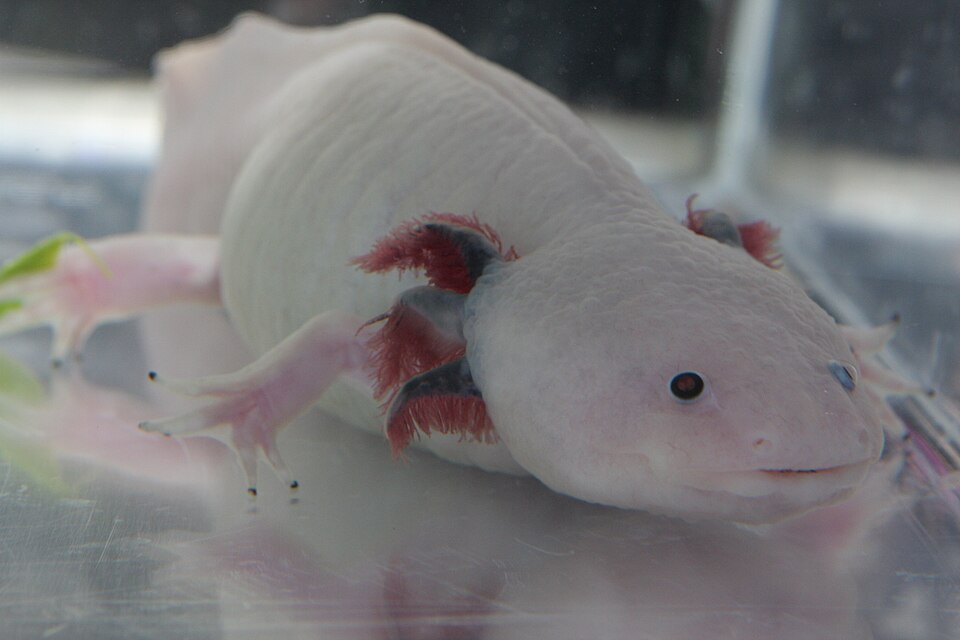
Photo: Henry Mühlpfordt - Wikimedia Commons, CC BY-SA 3.0
All Axolotl Colors at a Glance
| Morph | Look | Eyes / gills | How common |
| Wild type | dark grey, green, black or brown, speckled, shiny flecks | dark / dark | very common |
| Leucistic | pale pink-white, almost translucent | black or dark blue / pink | very common |
| Speckled leucistic | leucistic with dark speckles on head, back, tail | dark / pink | common |
| Golden albino | pale with speckles that turn gold with age | red / pink | common |
| White albino | white to translucent | red / pink | common |
| Melanoid (black) | solid black, dark grey or green, no shine | dark / dark purple | common |
| Heavily marked melanoid | dark with light green to yellow patches | dark / dark | uncommon |
| Copper | brown to rust with light and dark spots | light, clear pupils / varies | uncommon |
| Lavender | silvery to dark purple, Dalmatian-like spots | dark / dark | uncommon |
| Piebald | white with dark patches on top, darken with age | dark / red | uncommon |
| GFP | any base color, glows green under blacklight | depends on base | common in the hobby |
| Mosaic | mottled white and black with gold flakes | varied / striped red and purple | rare |
| Enigma | starts black, turns grey and white with gold patches | dark / dark | very rare, little documented |
| Chimera | two different morphs, split down the body | differ by side | very rare, lab origin |
| Firefly | any body with a glowing GFP tail | depends | very rare, made by tail graft |
Descriptions follow the PetMD axolotl color guide (Sean Perry, DVM). Rarity reflects how often each morph appears for sale, not a fixed price list.
How Axolotl Colors Are Inherited
An axolotl's color comes from three kinds of pigment cells: melanophores (black and brown), xanthophores (yellow) and iridophores (shiny, reflective). The named morphs are what happens when one of these is switched off or limited. The classic color genes, leucistic, albino, melanoid and axanthic, are recessive: a baby shows the color only if it gets a copy from both parents. That is why two wild-type parents can produce leucistic or albino babies if both carry the gene.
- Leucistic: pigment cells do not spread across the body during development, so the body is pale while the eyes stay dark.
- Albino: no melanin at all, hence red or pink eyes; golden and white albinos differ in yellow pigment.
- Melanoid: almost no shiny iridophores, so the animal is dark and matte.
- Axanthic: no yellow pigment, giving a grey look; combined with other genes it produces types such as lavender-like greys.
GFP works differently: it is a transgene, a green fluorescent protein from jellyfish that labs added to track cells, and it shows in the babies even when only one parent carries it. Chimeras and fireflies are not inherited at all; they come from fused embryos or grafted tails and cannot be bred true.
Which Color Is Best for a First Axolotl?
Color does not change care. All morphs need the same cool, clean water, the same diet and the same tank; see axolotl care and what axolotls eat. A few practical notes:
- Albinos see poorly and often struggle to find food; feed them with tongs or a dish.
- Light morphs show stress early: red or curled gills are easy to spot on a leucistic, harder on a melanoid.
- GFP animals do not need a blacklight; shining one on them for long periods can stress them.
- Rare morphs cost more but are not hardier; buy from a breeder who can show the parents.
Before You Buy
Whatever the color, check your state's rules first: a few US states ban or restrict axolotls, and federal rules limit shipping to some areas. Our axolotl legal states guide lists them. Plan the tank before the animal arrives: axolotl tank setup.