Axolotl Predators: What Eats Axolotls in the Wild and in Tanks
Published: 2026-11-25 · FishyKart Blog
The axolotl (Ambystoma mexicanum) had almost no natural enemies for most of its history: in the lakes of the Valley of Mexico it was one of the top predators itself. Today its main predators are introduced carp and tilapia, which eat axolotl eggs, larvae and juveniles and harass adults, followed by native crayfish, aquatic birds and snakes. In home aquariums, the threats are different: nipping tank mates, and other axolotls.
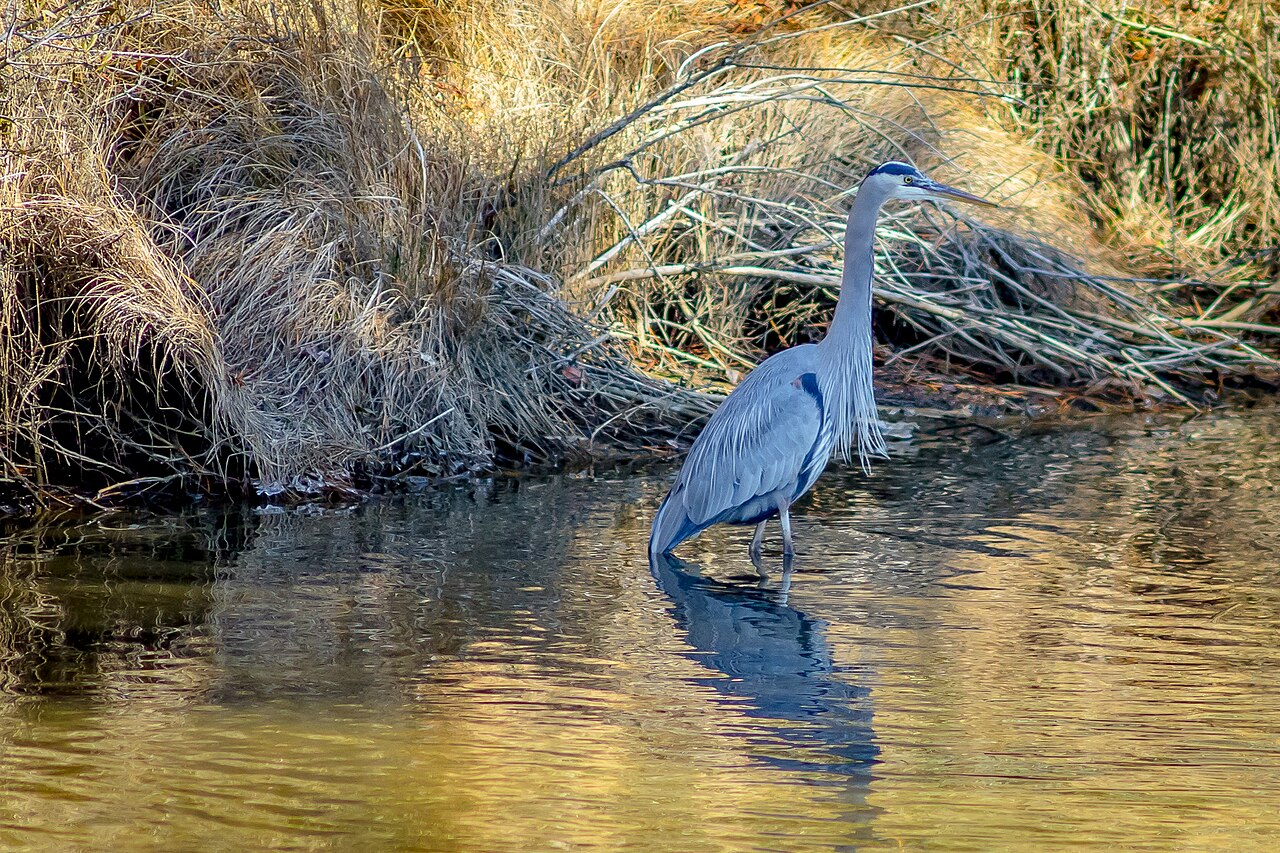
Photo: John Brighenti - Wikimedia Commons, CC BY 2.0. Wading birds like this heron hunt in shallow water; aquatic birds are among the axolotl's natural predators.
Axolotl Predators at a Glance
| Predator | Native or introduced | What it takes |
|---|---|---|
| Common carp (Cyprinus carpio) | Introduced | Eggs, larvae, juveniles; harasses adults |
| Nile tilapia (Oreochromis niloticus) | Introduced | Larvae and juveniles; harasses adults |
| Crayfish (Cambarellus montezumae) | Native | Larvae |
| Aquatic birds (herons and others) | Native | Axolotls (stage not specified) |
| Snakes | Native | Axolotls (stage not specified) |
| Humans | - | Former local catch for food, medicine and pets |
Source: San Diego Zoo Wildlife Alliance Library, axolotl factsheet (reproduction and predators, population and threats), citing Zambrano et al. 2007 and 2015 and Ayala et al. 2019; checked November 2026.
Carp and Tilapia: the Predators That Changed Everything
Carp and tilapia were released into the axolotl's lakes in the 1970s and 1980s to provide food and support local fisheries, according to the San Diego Zoo Wildlife Alliance. A 2010 study by Zambrano, Valiente and Vander Zanden found that the two fish now dominate Xochimilco by numbers and biomass, and that their diets overlap substantially with the axolotl's. So besides eating young axolotls, they compete with adults for the same food. Rainbow trout were also stocked in the area, Mongabay reported in 2024.
The timing matters because axolotl numbers depend most on how many eggs and larvae survive their first year. Even without predators, only about 30-40% of hatchlings are thought to survive. Fish that target exactly those stages push the population down faster than adults can replace it. Researchers counted about 36 axolotls per square kilometer in the 2014 census, against an estimated 6,000 per square kilometer centuries ago, as reported by Mongabay.
Native Predators: Crayfish, Birds and Snakes
A native dwarf crayfish, Cambarellus montezumae, eats axolotl larvae, and aquatic birds such as herons and snakes also take axolotls. None of them was a significant threat on its own: the San Diego Zoo Wildlife Alliance factsheet notes that before the fish introductions, axolotls had no significant predators other than humans. With the wild population now small, every loss counts for more.
How Axolotls Avoid Being Eaten
- Hiding: axolotls that detect a predator, for example tilapia in experiments by Alcaraz et al. (2015), seek refuge and reduce their activity.
- Senses: they pick up predators mainly by smell, helped by visual cues.
- Regeneration: an axolotl can regrow lost limbs, gills and parts of its tail, so a failed attack is often survivable.
- Numbers: a female can lay hundreds of eggs several times a year in good conditions, which offsets heavy losses of young.
Predators in a Home Aquarium
A pet axolotl has no herons to worry about, but the aquarium has its own risks:
- Nipping fish: barbs, many tetras and other active fish pick at the feathery gills and tail fin.
- Other axolotls: juveniles of different sizes bite each other's limbs and gills, and a large axolotl can swallow a much smaller one.
- Small fish and shrimp as prey: the axolotl itself becomes the predator, and swallowed fish can carry parasites.
Most keepers house axolotls alone or with axolotls of a similar size. Safer and riskier options are in axolotl tank mates, and the cool water that also keeps axolotls healthy is covered in axolotl care.
Why It Matters for the Species
The IUCN lists the axolotl as Critically Endangered (2019 assessment), with an estimated 50-1,000 adults left in the wild, while many thousands live in labs, zoos and homes. Predatory fish are one cause alongside polluted water and lost habitat: Mongabay reported that the axolotl's habitat has shrunk by about 99.5% in recent decades. Researchers from the National Autonomous University of Mexico (UNAM) keep axolotls in netted refuges in the Xochimilco canals, Mongabay reported in 2024.