Axolotl Lifespan: How Long Axolotls Live and What Shortens It
Published: 2026-11-16 · FishyKart Blog
An axolotl (Ambystoma mexicanum) lives about 10-15 years in captivity. San Diego Zoo Wildlife Alliance gives about 10 years in managed care, and the longevity records collected by Caudata.org include axolotls of 17, 18 and 19 years. Many pet axolotls never get close, though: the usual killers are warm water, gravel and an uncycled tank, all of which are avoidable.
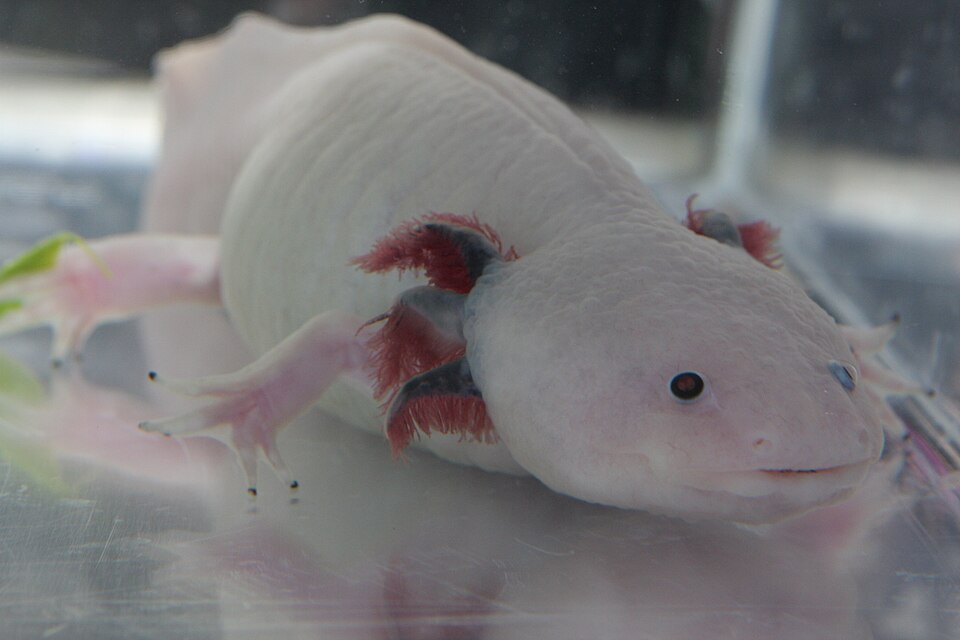
Photo: Henry Mühlpfordt - Wikimedia Commons, CC BY-SA 3.0
Axolotl Lifespan in Numbers
| Setting | Lifespan | Source |
| Zoos and managed care | about 10 years | San Diego Zoo Wildlife Alliance |
| Well-kept pets | 10-15 years | common keeper range |
| Documented records | 17, 18 and 19 years | Caudata.org longevity list (rev. January 2024) |
| Wild, Xochimilco | not reported | San Diego Zoo Wildlife Alliance |
Put another way, an axolotl is fully grown at about 2 years, so a healthy one spends roughly 80-90% of its life as an adult. Buying one is a commitment of over a decade.
What Shortens an Axolotl's Life
Axolotls are not fragile in general, but they are unforgiving about a few specific things. In order of how often they cause trouble:
- Warm water. The Ambystoma Genetic Stock Center at the University of Kentucky keeps axolotls at 15-18 C (60-65 F) and says they should never be kept above about 22 C (72 F). A summer room or a tank under a light can pass that for weeks. Heat stress shows as gills curled forward, a curled tail tip and refusing food.
- Ammonia. Axolotls produce a lot of waste. In a tank without an established filter, ammonia burns the gills and skin. Cycle the tank before the axolotl arrives; see how to cycle a fish tank.
- Gravel. Axolotls suck in food with whatever is under it. Gravel and small pebbles can block the gut. Use a bare bottom or fine sand, as in our axolotl tank setup.
- Tank mates. Fish nip the gills, and axolotls eat or choke on small fish and shrimp. Bigger axolotls bite smaller ones.
- Poor diet. A diet of only bloodworms or feeder fish leaves gaps and, with feeders, brings parasites. Earthworms and quality pellets are the base; details in what axolotls eat.
- Handling. Their skin is delicate and their skeleton partly cartilage. Move them only with a soft net or container.
Does Color or Morph Change Lifespan?
There is no good evidence that leucistic, golden, wild type or other morphs live shorter or longer lives. Lifespan follows care, not color. Albino and leucistic axolotls are more sensitive to bright light, so give them shade, but that is a comfort issue rather than a lifespan factor. Morph differences are in axolotl colors.
Signs of an Older Axolotl
In the last years of a long life many axolotls slow down. Typical changes:
- eats less and less eagerly, and needs food placed closer;
- gills look thinner and less fluffy even in good water;
- moves less and rests in one spot for longer;
- females stop producing eggs.
The same signs in a young axolotl are not aging. In an axolotl of only a few years, thin gills and poor appetite almost always point to water temperature or quality. Test the water and check the thermometer before assuming age.
Wild Axolotls: Why There Is No Figure
Wild axolotls live only in the canals and lakes of Xochimilco in Mexico City. San Diego Zoo Wildlife Alliance lists the species as Critically Endangered (IUCN, 2019 assessment), threatened by habitat loss, poor water quality, urbanization and introduced fish. So few remain that no one has reliable data on how long they live in the wild. Almost all pet axolotls in the US come from captive-bred lines, and some states restrict them; check where axolotls are legal before buying.
How to Give an Axolotl Its Full Lifespan
- Keep the water at 60-68 F (16-20 C) year round; plan a fan or cooler for summer.
- Use a 20 gallon long or larger tank per adult, fully cycled, with gentle flow.
- Bare bottom or fine sand only.
- Feed earthworms and pellets, adults 3-4 times a week.
- Change part of the water weekly and test for ammonia and nitrite.
- Keep it alone or only with axolotls of the same size.
The complete routine is in our axolotl care guide, and size by age in how big do axolotls get.