Bloodfin Tetra: Price in India and Care Guide
Published: 2026-11-01 · FishyKart Blog
The bloodfin tetra (Aphyocharax anisitsi) is a silver tetra with bright red fins, and one of the toughest fish you can put in a beginner tank. At FishyKart it costs ₹65, among the cheapest tetras in the store. It grows to about 5-5.5 cm, lives in a 2 feet tank in a group of six or more, and handles a wide 18-28°C range and harder tap water that would stress a neon. Its one weakness: it may nip long fins.
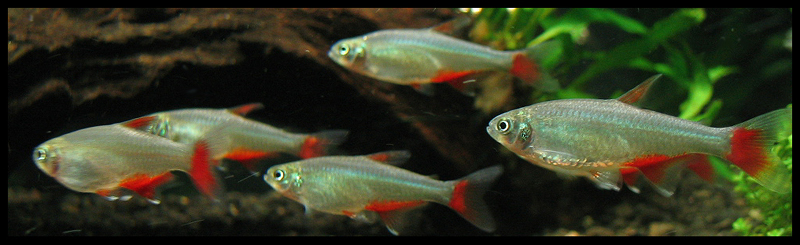
Photo: VGW2006 at English Wikipedia - Wikimedia Commons, public domain
Bloodfin Tetra Price in India
| Fish | Price at FishyKart | Group of 6 |
|---|---|---|
| Blood Fin Tetra | ₹65 (regular ₹80) | ₹390 |
The price is taken from FishyKart's own store and can change with offers and stock. Because this fish must live in a group, the real cost is the group of 6-10, still one of the lowest-cost schools you can buy.
Why It Suits Indian Tap Water
Many popular tetras, such as neons and cardinals, come from soft, acidic Amazon water. The bloodfin tetra comes from the Paraná river basin in Brazil, Paraguay and Argentina, further south, where water and seasons vary more. That shows in its numbers:
| Parameter | Bloodfin tetra | Neon tetra (for comparison) |
|---|---|---|
| Temperature | 18-28°C | 21-25°C |
| pH | 6.0-8.0 | 4.0-7.5 |
| Hardness | 3-25 dGH | 1-12 dGH |
| Adult size | 5.5 cm | 3 cm |
| Minimum tank | 60 x 30 cm base, about 54 litres | 60 x 30 cm base |
Sources: SeriouslyFish species profiles for Aphyocharax anisitsi and Paracheirodon innesi; FishBase species summary for Aphyocharax anisitsi (size, range, IUCN Least Concern).
In practice this means a bloodfin tetra is happy in most Indian homes all year, needs a heater only in cold winters, and does not need RO water in cities with moderately hard supply water. Stability still matters more than the exact number: change 25-30% of the water weekly with dechlorinated water at the same temperature.
Tank Setup
- Tank: a 2 feet tank (60 x 30 cm base) for a group of 6-8; bigger groups need a 3 feet tank.
- Swimming space: bloodfins are fast and stay in the upper and middle water. Keep plants at the sides and leave the centre open.
- Lid: active tetras can jump; cover the tank.
- Light and decor: a darker gravel or sand bottom makes the red fins stand out.
Tank Mates and Fin Nipping
SeriouslyFish describes the bloodfin tetra as "peaceful enough but may nip a little at long-finned or slow-moving tankmates" and says to keep it in a group of at least six. It fits best with other quick, short-finned fish: zebra danios, white cloud minnows (for cooler tanks), widow tetras, Colombian tetras, rosy barbs, platies and corydoras. Avoid bettas, fancy long-tail guppies, angelfish and gouramis with long feelers.
If you already keep the serpae tetra, note the difference: serpaes are more known for nipping, while bloodfins are usually milder in a proper group.
Feeding, Sexing and Breeding
SeriouslyFish calls it unfussy: it accepts most dried, frozen and live foods. Feed small flakes or micro pellets daily, with bloodworm or daphnia a few times a week. Males are slimmer than females and develop tiny hooks on the pelvic and anal fins as they mature; you will not see the hooks without close inspection, but the slimmer body is easy to spot.
It is a prolific egg scatterer. Eggs hatch in about 24 hours, and the fry need infusoria for the first few days, then microworm or baby brine shrimp. Adults eat their own eggs, so breeding tanks need a mesh bottom or dense fine plants and the adults should be removed after spawning.
A note on names: the "glass bloodfin" sold in some shops is a different, transparent fish (Prionobrama filigera). For more choices, see the types of tetra fish guide.
View Bloodfin Tetra → Browse Tetras →