Freshwater Angelfish Care: Tank Height and Tank Mates
Published: 2026-10-28 · FishyKart Blog
The freshwater angelfish (Pterophyllum scalare) is a South American cichlid with a body built for height, not length: an adult is about 6 inches long but 8-10 inches tall from fin tip to fin tip. That shape decides most of its care. Angelfish need a tall tank, ideally around 20 inches high, warm water around 76-84°F, and tank mates too large to fit in their mouths. They are often reported to live 10 years or more and are often kept as a single fish or a pair.
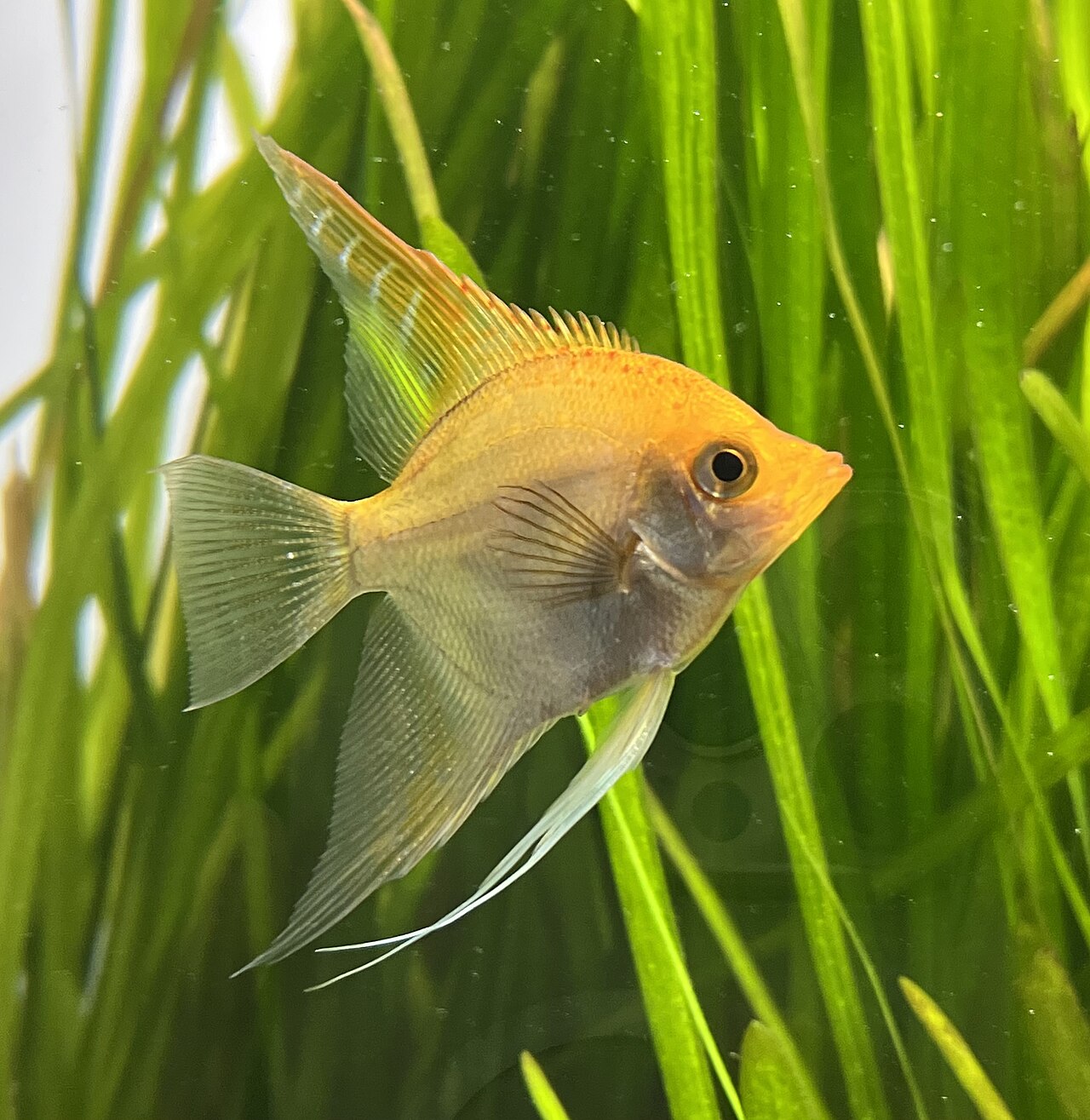
Photo: Versions111 - Wikimedia Commons, CC BY 4.0
| Parameter | Value |
| Scientific name | Pterophyllum scalare |
| Origin | Amazon basin and Guiana rivers |
| Adult size | About 6 in long, 8-10 in tall with fins |
| Lifespan | 10+ years |
| Temperature | 76-84°F (24-29°C) |
| pH | 6.5-7.5 |
| Minimum tank | About 55 gallons for a pair or small group |
| Tank height | About 20 in recommended |
| Temperament | Semi-aggressive |
Why Tank Height Matters
Angelfish fins keep growing for their first year or so. In a short tank, adults cannot turn comfortably, and fins get damaged. A standard 29 gallon tank is about 18 inches tall, enough for juveniles but cramped for adults; Seriously Fish suggests about 100 x 40 x 50 cm (roughly 53-55 gallons, 20 inches high) as a minimum. Tall plants, such as Amazon swords, and vertical driftwood mimic the flooded root tangles where angelfish live in the wild.
The Neon Tetra Problem
Young angelfish and neon tetras are often sold together, and the mix works for a few months. Then the angels grow, and small tetras become food. If you want tetras with angelfish, choose larger species, or add the tetras first and the angels as small juveniles. See our neon tetra care guide for why neons are especially at risk.
Pairs and Spawning
Angelfish choose their own partners. Buying a group of six juveniles and letting a pair form is the usual approach. A pair cleans a flat surface, often a broad leaf, slate or the tank glass, lays rows of eggs and fans them. During spawning the pair becomes territorial and will chase other fish away, so a pair in a community tank needs plenty of space.
Feeding
Angelfish eat flakes, pellets and frozen foods such as bloodworms and brine shrimp. Feed small amounts once or twice a day. They are fast to the surface at feeding time, so slow eaters in the same tank may need food targeted to them.
Tank Mates
- Good: corydoras, bristlenose plecos, pearl gouramis, larger rasboras and tetras, peaceful livebearers such as mollies
- Avoid: fin-nippers like tiger barbs and serpae tetras, aggressive cichlids, and fish small enough to be eaten
Angelfish are listed in our gold, koi, angels and barbs collection.