How Big Do Angelfish Get? Size by Species, Length and Height
Published: 2026-11-16 · FishyKart Blog
A common freshwater angelfish (Pterophyllum scalare) grows to about 6 inches (15 cm) in body length but 8-10 inches (20-25 cm) tall from fin tip to fin tip, so an adult angel is taller than it is long. The other two species differ: the altum angel reaches about 7 inches (178 mm) long and is the tallest, while Pterophyllum leopoldi stays near 4 inches (100 mm). Height, not length, is what decides the tank.
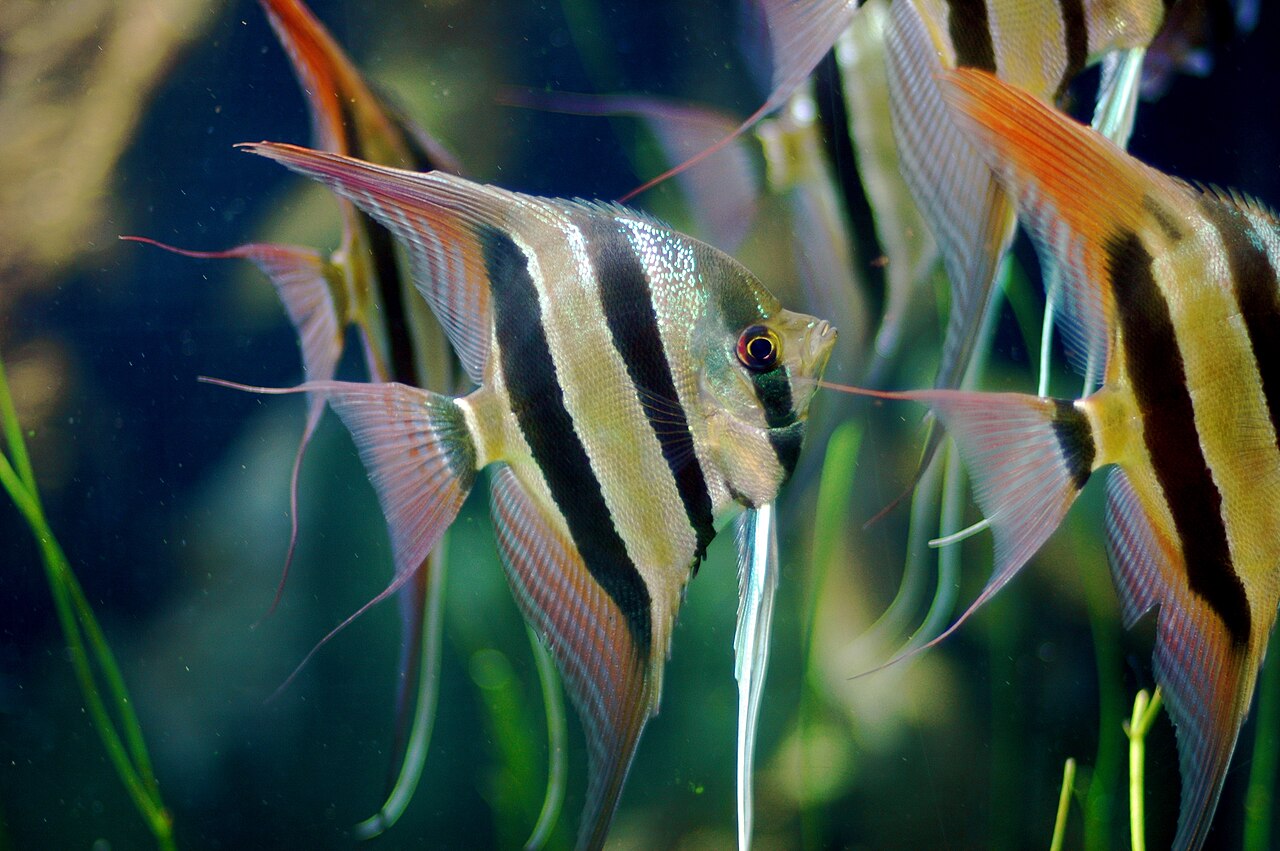
Photo: Jeff Kubina - Wikimedia Commons, CC BY-SA 2.0
Angelfish Size by Species
| Species | Adult length | Height with fins | Water temperature | In US stores |
| Common angelfish, P. scalare | about 6 in (150 mm standard length) | 8-10 in (20-25 cm) | 75-86 F (24-30 C) | almost all angels sold, all color strains |
| Altum angelfish, P. altum | about 7 in (178 mm total length) | taller than scalare | 82-90 F (28-32 C) | rare, mostly wild caught |
| P. leopoldi | about 4 in (100 mm standard length) | smallest of the three | 72-84 F (22-29 C) | occasional, specialist shops |
Data from the Seriously Fish species profiles for P. scalare, P. altum and P. leopoldi. Standard length is measured without the tail fin, total length with it; heights for scalare follow the same source, which notes adults reach 20 cm or more tall.
Length vs Height: Why Angels Are Measured Twice
An angelfish has a disc-shaped body with very long dorsal and anal fins, so a 6 inch common angel stands 8-10 inches tall, up to about 1.7 times its length. Most fish profiles give only length, which makes angelfish look smaller than they are. For tank planning the height matters more: an adult common angel needs roughly 20 inches (50 cm) of water depth to turn without folding its fins, which is why Seriously Fish recommends a tank with a 100 x 40 cm base (about 39 x 16 inches) and at least 50 cm (20 inches) of height for adults.
Fancy strains change the picture. Veil and long-finned angels carry extra fin length, which makes them the first to tear fins in a short tank; the body size is the same as a standard angel.
How Big Is a Store Angelfish?
Most angelfish are sold as juveniles with a body about the size of a coin, often described as dime, nickel or quarter size. That is a small fraction of adult size: a quarter-size angel has a body around 1 inch across, compared with 6 inches long and 8-10 inches tall when grown. Buyers who see a tiny fish in a 20 gallon display tank are often surprised within months, because angels grow fast while young and their fins keep extending through the first year. Plan the tank and tank mates for the adult, not the fish in the bag.
What Limits Angelfish Growth
- Tank height. A tank shorter than the fish does not make it smaller; it damages fins and stresses the fish. A standard 29 gallon is about 18 inches tall, enough for juveniles only (see 29 gallon tank dimensions).
- Water quality. Angelfish kept with high nitrate or in crowded tanks grow slowly and stay stunted. Regular partial water changes matter most while they grow; steps in how to clean a fish tank.
- Food. Young angels need several small meals of quality flakes, pellets and frozen foods a day to reach full size.
- Temperature. Common angels grow well at 75-86 F; cooler water slows growth, while altum angels need much warmer water than other community fish.
- Crowding and bullying. In a group the dominant angels grab most of the food, and smaller ones fall further behind.
What Their Adult Size Means for Tank Mates
An adult angelfish has a mouth big enough to swallow small fish, and as it grows it starts treating neon tetras and similar small fish as food. Fish that were safe with juvenile angels can disappear one by one months later. Choose tank mates that will still be too big to eat when the angel is 6 inches long, and avoid fin nippers that target its long fins. Our freshwater angelfish care guide covers safe tank mates, tank height and spawning pairs in detail.
Comparing tank sizes for adults? A 4 foot, 21 inch tall tank is covered in 55 gallon tank dimensions, and the wider family of these fish in types of cichlids.