Amazon Sword Plant Care: Size, Light and Root Tabs
Published: 2026-10-29 · FishyKart Blog
The amazon sword (Echinodorus grisebachii, often sold as Echinodorus amazonicus or E. bleheri) is a classic rosette plant that grows 12-20 inches tall with long, sword-shaped leaves. It needs moderate light, a substrate with root tabs, and a tank of about 20 gallons or more. It does not need CO2, which makes it one of the easiest large background plants.
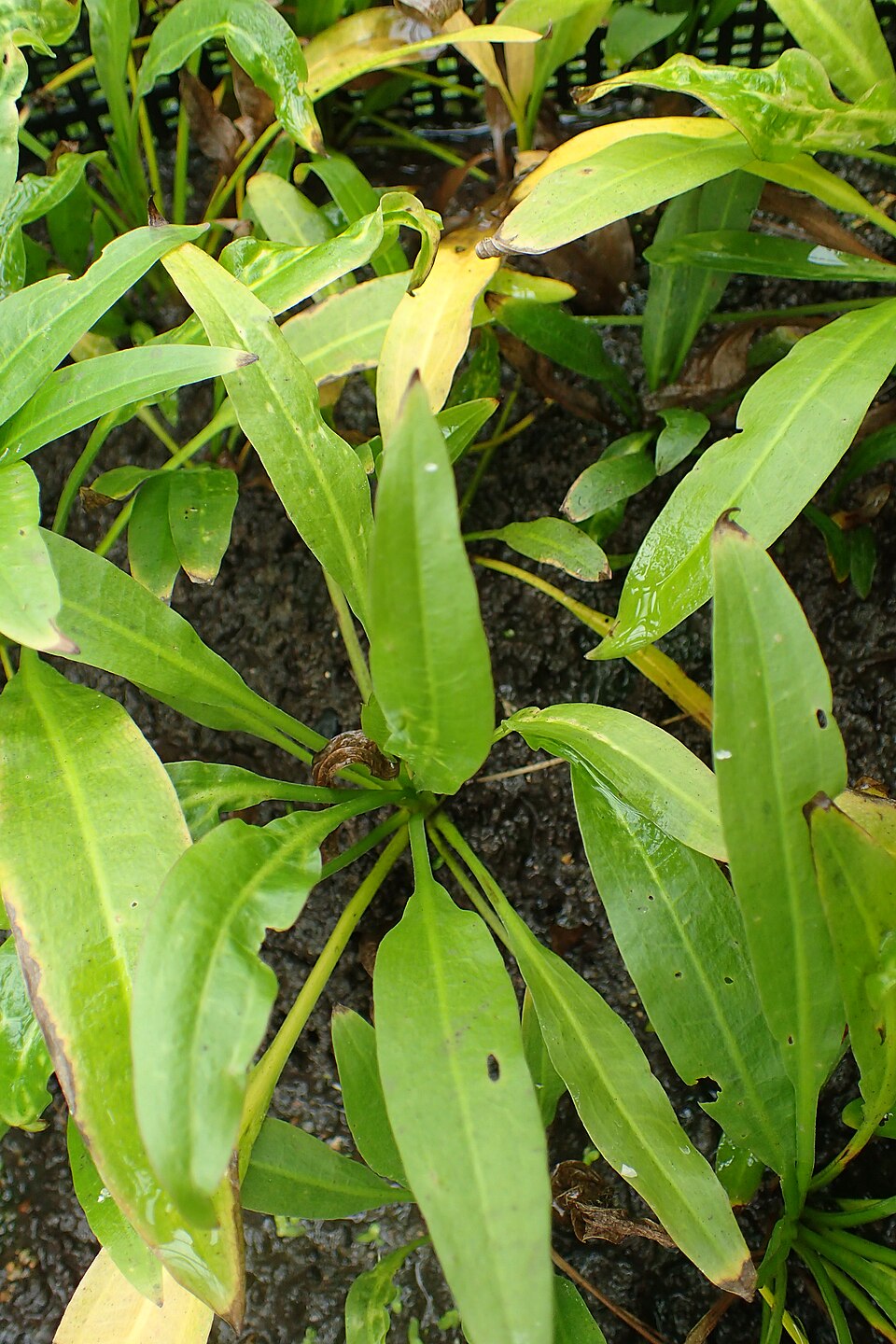
Photo: Krzysztof Ziarnek, Kenraiz - Wikimedia Commons, CC BY-SA 4.0
| Parameter | Value |
| Scientific name | Echinodorus grisebachii (trade names amazonicus, bleheri) |
| Origin | South America |
| Height | Commonly 12-20 in |
| Light | Moderate |
| Substrate | Gravel or sand with root tabs, or nutrient substrate |
| Temperature | 72-82 F |
| CO2 | Not required |
| Tank size | 20 gal minimum, best 30+ gal |
How to Plant an Amazon Sword
1. Trim damaged leaves and long roots to about 2 inches.
2. Plant the roots in the substrate but keep the crown (where leaves meet roots) above it.
3. Add a root tab next to the plant; repeat every 2-3 months.
4. Place it in the back or middle of the tank; it will shade smaller plants.
Why Amazon Sword Leaves Melt
Most amazon swords are farmed emersed (with leaves out of water). In the aquarium those leaves often yellow and die in the first weeks while the plant grows new, softer underwater leaves. Cut off dying leaves at the base and keep feeding the roots.
Light and Fertilizer
- Light: a standard LED for 6-8 hours a day is enough. Very low light gives tall, thin leaves.
- Yellow leaves with green veins: often iron shortage; root tabs with iron or a liquid fertilizer help.
- Holes in leaves: often potassium shortage, or snails eating old leaves.
Propagation
A healthy amazon sword sends out a long runner with small plantlets. Let plantlets grow 3-4 leaves and small roots, then cut and plant them, or leave them attached until they root in the substrate.
Tank Mates
Amazon swords are tough enough for angelfish, discus and gouramis, and give shade for corydoras. Large plant eaters such as some silver dollars and goldfish may shred the leaves, and big digging cichlids uproot them.