How to Lower pH in an Aquarium Safely
Published: 2026-11-29 · FishyKart Blog
To lower pH in an aquarium safely, first test both pH and KH (carbonate hardness), remove anything that adds carbonates, such as crushed coral, limestone or shells, and then bring the pH down slowly with reverse osmosis (RO) water, driftwood or aquarium peat. Slow and stable beats fast: Aqueon says most freshwater tropical fish do best anywhere between pH 6.8 and 7.8, so many tanks need no change at all.
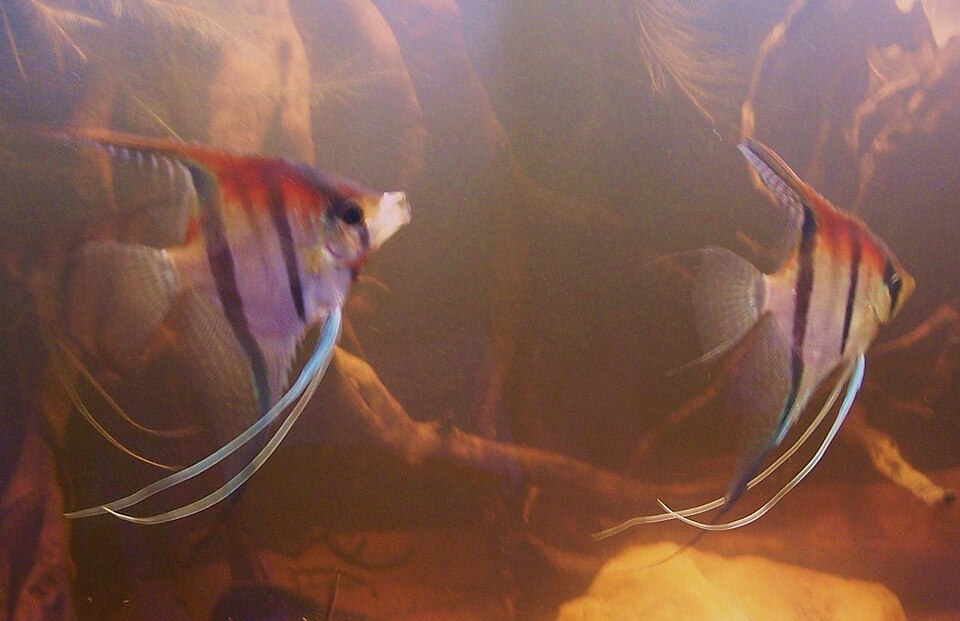
Photo: Ewkaa - Wikimedia Commons, CC BY-SA 4.0. An Amazon biotope tank with angelfish, wood and leaf litter: the soft, tannin-rich setup used for acidic-water fish.
First: Do You Need to Lower pH?
Aqueon's advice is blunt: if your fish are thriving and showing no signs of stress, there is no reason to alter aquarium pH. Most fish adapt as long as water quality is good and pH is stable. Chewy's fish care team lists chasing an exact pH number as a common mistake: a stable pH within an appropriate range is generally more important.
Lowering pH makes sense when you keep soft-water species such as discus, want to breed wild-caught fish from acidic rivers, or your tap water is far above your fish's range. Check where your fish sit:
| Fish | Ideal pH | Water hardness |
|---|---|---|
| Discus | 6.0-7.0 | Soft |
| Gouramis | 6.0-7.5 | Soft to moderate |
| Bettas | 6.5-7.5 | Soft to moderate |
| Tetras | 6.5-7.5 | Varies by species |
| Catfish | 6.5-7.8 | Soft to moderate |
| Goldfish | 7.0-7.8 | Moderate to hard |
| Livebearers (guppies, mollies, platies) | 7.5-8.0 | Mineral-rich |
| African Rift Lake cichlids | 8.0-8.5 | Hard |
Source: Chewy, How To Lower pH in a Fish Tank Safely, checked November 2026. Livebearers and Rift Lake cichlids are a reason not to lower pH.
If you keep goldfish, livebearers or African cichlids in hard tap water, the high pH is probably right for them. Species-level numbers for some of our fish are in rummy nose tetra and neocaridina shrimp water parameters.
Why KH Decides Everything
KH, also called alkalinity or buffering capacity, is the amount of carbonate in the water. It acts like a sponge for acid: high-KH water resists pH change, while low-KH water swings quickly. That is why the same piece of driftwood turns soft water acidic but barely moves hard water, and why a pH-down product in high-KH water wears off and the pH climbs back.
Chewy's first step is to test pH and KH in both the tank and your source water. The result tells you which method can work:
| Your test shows | Likely cause | What works |
|---|---|---|
| High pH, high KH in tank and tap | Hard source water | Mix in RO or deionized water to cut KH; wood and peat alone do little |
| High pH and KH in tank, tap much lower | Carbonate decor or substrate, or top-ups without water changes | Remove coral, aragonite, limestone, shells; do regular water changes |
| Slightly high pH, low KH | Soft water, little acid in the tank | Driftwood, aquarium peat, leaf litter work well; go slowly, low KH swings easily |
5 Ways to Lower Aquarium pH
1. Remove Carbonate Materials
Crushed coral, aragonite sand, limestone and some shells slowly dissolve and add carbonates, which raise KH and hold pH up. If you want softer, more acidic water, take them out. Some decorative rocks also contain limestone, so check what a rock is made of before it goes in.
2. Use RO or Deionized Water
RO water has almost no minerals, including the carbonates that buffer pH. Mixing it with tap water lowers KH, so the pH becomes easier to bring down and holds where you want it. Aqueon recommends preparing and testing mixed water before it goes in the tank. Do not use pure RO water alone: water with no buffer is unstable, so blend it with tap water or remineralize it to suit your fish.
3. Add Driftwood
Aquarium driftwood releases tannins and organic acids that lower pH and tint the water the color of tea. The effect is real but modest: Aqueon notes it takes a fair amount of wood, and one or two small pieces do little in a large or well-buffered tank. Use wood sold for aquariums or properly prepared, and soak it first if you do not want brown water.
4. Put Aquarium Peat in the Filter
Peat moss or peat pellets in a mesh bag in the filter release tannins like driftwood. Use only peat made for aquariums, as both Aqueon and Chewy advise, not garden products. Replace it as it runs out and test pH and KH regularly, since the effect fades.
5. Chemical pH Reducers, With Care
Commercial pH-down products work fast, which is the risk. Aqueon says liquid adjusters often have only a temporary effect, the pH drifts back and you end up dosing again, a roller coaster that stresses fish. If you use one, test pH and KH first, follow the label exactly and never use it to cover up a cause such as carbonate rock or very hard tap water.
How Fast Is Safe?
Change pH gradually and test between steps. Chewy's advice is to make gradual adjustments rather than trying to reach the target all at once, retest after each change and stop if fish show stress: gasping at the surface, darting, clamped fins or loss of color.
- Best: adjust before fish go in. Aqueon recommends setting pH before adding livestock, then testing that it stays stable. If you are starting a new tank, do it while it cycles; see how to set up a fish tank.
- With fish in the tank: use partial water changes with the prepared lower-KH water, so each change moves pH only a little.
- New fish: compare your tank's pH to the store's and acclimate slowly by adding small amounts of tank water to the bag.
pH and Ammonia: A Hidden Risk
pH changes how toxic ammonia is. Aqueon explains that the toxic form (NH3) and the less harmful form (NH4+) are balanced at about pH 7.3; above that, more of it becomes toxic, below it less does. Two consequences:
- Dropping pH can mask an ammonia problem rather than fix it. Our ammonia guide warns against lowering pH suddenly to make ammonia less toxic.
- In a tank that has ammonia, a sudden rise in pH, for example after a big water change with hard tap water, makes that ammonia more dangerous at once.
What Not to Do
- No vinegar, lemon juice or other household acids in the tank. We advise against them: they are hard to dose and lead to swings.
- No garden peat or untreated wood that may carry chemicals.
- Do not chase an exact number. A steady 7.4 is better than a pH that swings between 6.5 and 7.5.
- Do not lower pH for livebearers or Rift Lake cichlids. They need the hard, alkaline water.
- Do not fix pH while ignoring KH. Without lowering KH, the pH will come back.