Why Is My Fish Tank Cloudy? White, Green and Brown Water Fixes
Published: 2026-10-29 · FishyKart Blog
A cloudy fish tank usually has one of three causes, and the color tells you which: white or grey haze is most often a bacterial bloom or fine substrate dust, green water is free-floating algae, and brown or yellow water is tannins from driftwood or leaves. In a tank less than a month old, a white haze is very common and normally clears within a few days to about two weeks without any chemicals.
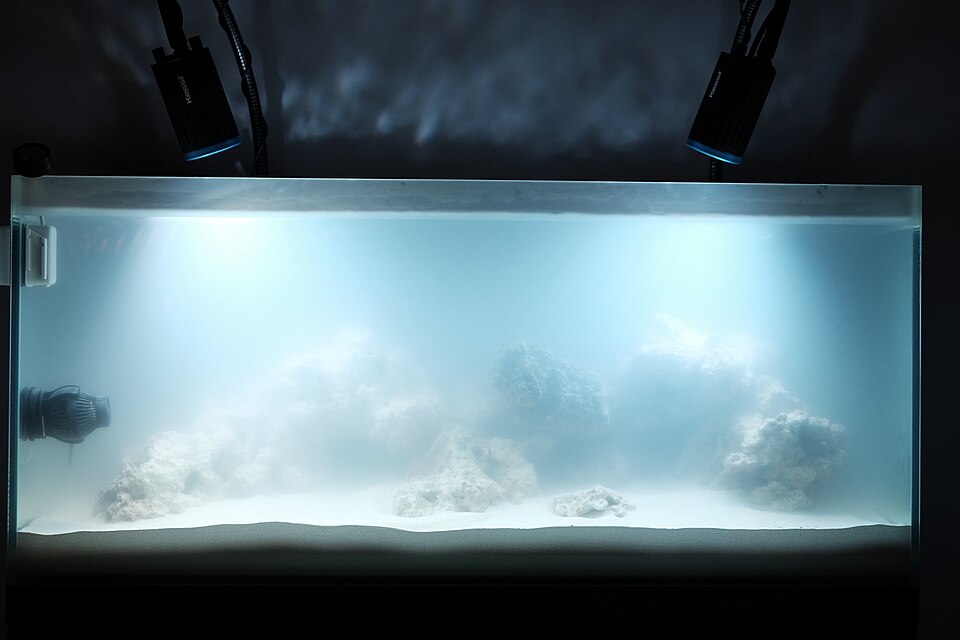
Photo: kerinin - Wikimedia Commons, CC BY-SA 2.0
Quick Guide by Color
| Color | Likely cause and fix |
| White or grey | Bacterial bloom, substrate dust or overfeeding. Wait, feed less, rinse new substrate |
| Green | Free-floating algae (green water). Less light, fewer nutrients, UV sterilizer |
| Brown or yellow | Tannins from driftwood, leaves or peat. Activated carbon, water changes, pre-soak wood |
| Grey with a bad smell | Rotting food or a dead animal. Find and remove it, test ammonia |
White Cloudy Water
Bacterial bloom is the classic white haze in a new tank. Free-floating bacteria multiply quickly on the ammonia and organic matter in the water before the filter bacteria catch up. It also appears after overfeeding, a big gravel clean or a filter that was cleaned too hard. Fix it by feeding very lightly, leaving the filter alone and letting the tank settle. Read how to cycle a fish tank if the tank is new.
Substrate dust looks similar but appears right after filling the tank or moving gravel and settles within hours to a few days. Rinse new gravel or sand before use and pour water onto a plate or bag to avoid stirring it up.
Green Water
Green water is caused by tiny algae floating in the water column. Common triggers are too much light (especially direct sunlight on the tank), long lighting hours and excess nutrients from overfeeding or too few water changes. Fixes that work:
- Move the tank out of direct sun and keep lights to about 6-8 hours a day.
- Feed less and keep up weekly water changes.
- Add fast-growing aquarium plants or floating plants such as duckweed to compete for nutrients.
- A UV sterilizer clears green water reliably because it kills the floating algae as they pass through.
Algae eaters do not clear green water, although they help with algae on surfaces. See best algae eaters.
Brown or Yellow Water
New driftwood and dried leaves release tannins, which stain the water like tea. This is harmless for most fish and many soft-water species even prefer it. If you want clear water, soak or boil wood before use, run activated carbon in the filter and do regular water changes until the staining fades.
When Cloudy Water Is a Warning
- Fish gasping at the surface or hiding. Read fish swimming at top of tank.
- A bad smell, which points to rotting food or a dead fish or snail.
- Ammonia or nitrite above 0 ppm on a test.
In these cases, find the cause, remove waste and do a partial water change with dechlorinated water at the same temperature.
Mistakes to Avoid
- Chasing a bacterial bloom with daily big water changes or deep filter cleaning, which can prolong it.
- Using clarifiers without fixing the cause.
- Adding many fish to a cloudy new tank before the cycle is complete.