Marimo Moss Ball Care: Light, Cleaning and Zebra Mussel Warning
Published: 2026-10-29 · FishyKart Blog
A marimo moss ball is not a moss but a slow-growing green alga, Aegagropila linnaei, that forms velvety balls in cold lakes in Japan, Iceland and Northern Europe. In an aquarium or jar it needs low, indirect light, cool water below about 77 F (25 C) and a gentle rinse and roll every few weeks. Marimo grow only about 5-10 mm a year (5 mm is the figure most often cited), so a ball the size of a golf ball may be years old.
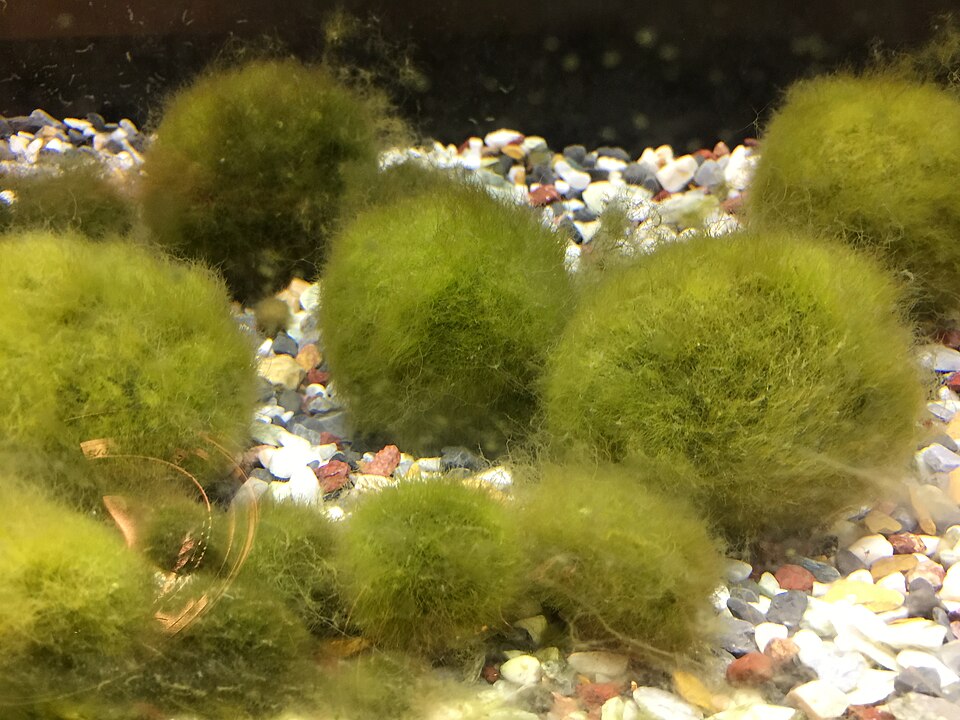
Photo: bryan... from Taipei, Taiwan - Wikimedia Commons, CC BY-SA 2.0
| Parameter | Value |
| Scientific name | Aegagropila linnaei (green alga) |
| Origin | Cold lakes: Lake Akan (Japan), Lake Myvatn (Iceland), Northern Europe |
| Growth | Roughly 5-10 mm per year |
| Light | Low to moderate, indirect; no strong direct sun |
| Temperature | Cool; ideally below 77 F (25 C) |
| Care | Rinse and roll every 2-4 weeks; change jar water every 1-2 weeks |
How to Care for a Marimo Moss Ball
1. Light: place it in indirect light or under a normal aquarium LED. Direct sun heats the water and turns marimo brown.
2. Water: tap water treated with dechlorinator is fine. In a jar without a filter, change the water every 1-2 weeks.
3. Cleaning: every few weeks lift it out, rinse it in clean, cool water and gently squeeze it like a sponge.
4. Rolling: turn it occasionally so all sides get light and it keeps its round shape.
Marimo in an Aquarium
Marimo do well in tropical tanks if the temperature stays at the lower end, around 72-76 F. They are safe with shrimp and most community fish; cherry shrimp and amano shrimp graze the biofilm on them. Avoid goldfish, large plecos and some cichlids, which tear them apart. Marimo can also be split: pull a ball gently in half and roll each part into a new ball.
Common Problems
- Turning brown: too much light or heat, or dirty water. Move it, rinse it, and give it cooler water.
- White or grey patches: often too much light. Rotate the ball so that side faces down.
- Floating: air bubbles trapped inside. Squeeze it gently underwater.
- Falling apart: usually rot from a dark spot inside. Remove the dead part and roll the rest into a smaller ball.
The Zebra Mussel Warning (US)
In late February 2021 a pet store employee in Seattle reported invasive zebra mussels in moss balls, and in March 2021 the US Fish and Wildlife Service and US Geological Survey issued a "destroy, dispose and drain" advisory; contaminated moss balls were found in many states and retailers pulled the product. Zebra mussels can spread into rivers and lakes and damage ecosystems. If you buy marimo:
- Buy from a trusted seller and inspect the ball for small striped shells.
- Never dump moss balls or aquarium water into drains, ponds or streams.
- Follow your state's current guidance if you find a mussel.
Marimo vs Other Easy Plants
Marimo is the slowest grower among beginner plants. For faster nutrient uptake pair it with hornwort or java moss; see our list of aquarium plants for beginners.