10 Easy Aquarium Plants for Beginners (No CO2 Needed)
Published: 2026-10-29 · FishyKart Blog
The easiest aquarium plants for beginners are java fern, anubias and java moss: they grow in low light, need no CO2 injection and attach to rocks or driftwood, so you cannot bury them wrong. Add one fast grower such as hornwort to soak up nutrients, and one root feeder such as amazon sword or cryptocoryne with a root tab, and you have a planted tank that helps your fish and fights algae.
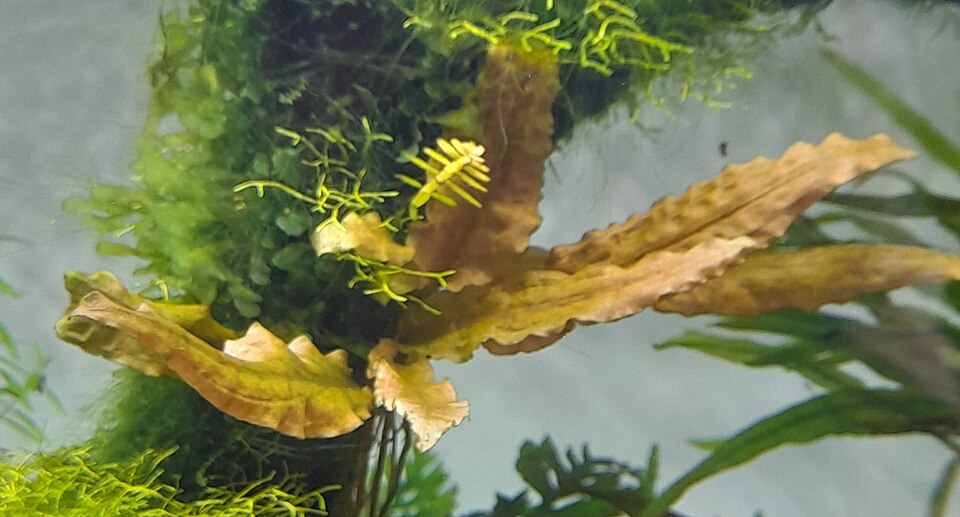
Photo: Yercaud-elango - Wikimedia Commons, CC BY 4.0
10 Easy Plants Compared
| Plant | Light / Planting / Growth |
| Java fern | Low / Tie to rock or wood / Slow |
| Anubias | Low / Tie to rock or wood / Very slow |
| Java moss | Low / Tie or let float / Medium |
| Hornwort | Low-medium / Float or weigh down / Fast |
| Amazon sword | Medium / Substrate + root tabs / Medium, gets big |
| Cryptocoryne wendtii | Low-medium / Substrate + root tabs / Slow-medium |
| Marimo moss ball | Low / Rests on bottom / Very slow |
| Duckweed | Any / Floats / Very fast |
| Water sprite | Medium / Float or plant / Fast |
| Vallisneria | Medium / Substrate / Fast, sends runners |
Plants That Grow on Rocks and Wood
Java fern and anubias are epiphytes: their rhizome (the thick horizontal stem) rots if buried. Tie them to driftwood or rocks with cotton thread or glue them with gel superglue. Both have tough leaves that most fish ignore, which makes them good with goldfish-type and cichlid tanks where soft plants get eaten. Java moss forms green carpets and is a favorite spawning spot for shrimp and small fish.
Fast Growers That Fight Algae
Hornwort and duckweed grow fast and pull nitrate out of the water, which starves algae. Hornwort can grow several inches a week, so trim it often. Duckweed covers the surface quickly; remove a handful weekly so light still reaches lower plants. Fast plants are the best first step if you are fighting algae.
Root-Feeding Plants
Amazon sword and cryptocoryne take most nutrients through their roots. Plain gravel works if you push a root tab fertilizer under the plant every 2-3 months. Cryptocorynes often lose leaves ("crypt melt") in the first weeks; that is normal.
What You Need for a Simple Planted Tank
- Light: a standard aquarium LED, 6-8 hours a day on a timer.
- Substrate: gravel or sand for most beginner plants; root tabs for swords and crypts.
- Fertilizer: an all-in-one liquid fertilizer once a week if plants look pale.
- No CO2: every plant on this list grows without CO2 injection.
Plants for Betta, Shrimp and Goldfish Tanks
- Betta tanks: floating plants and broad anubias leaves give bettas resting spots; see best plants for betta fish.
- Shrimp tanks: java moss and marimo collect biofilm that cherry shrimp graze.
- Goldfish and cichlids: stick to anubias and java fern, which they rarely eat.
Buy live plants online in our aquarium plants collection.