Anubias Plant Care: Nana, Light, Rhizome and Algae
Published: 2026-10-27 · FishyKart Blog
Anubias is a genus of tough, slow-growing plants from West and Central Africa, and Anubias barteri, especially the compact var. nana, is the one most aquariums use. It grows only a new leaf every few weeks, thrives in low light, and like java fern it lives on wood or rock with its rhizome uncovered.
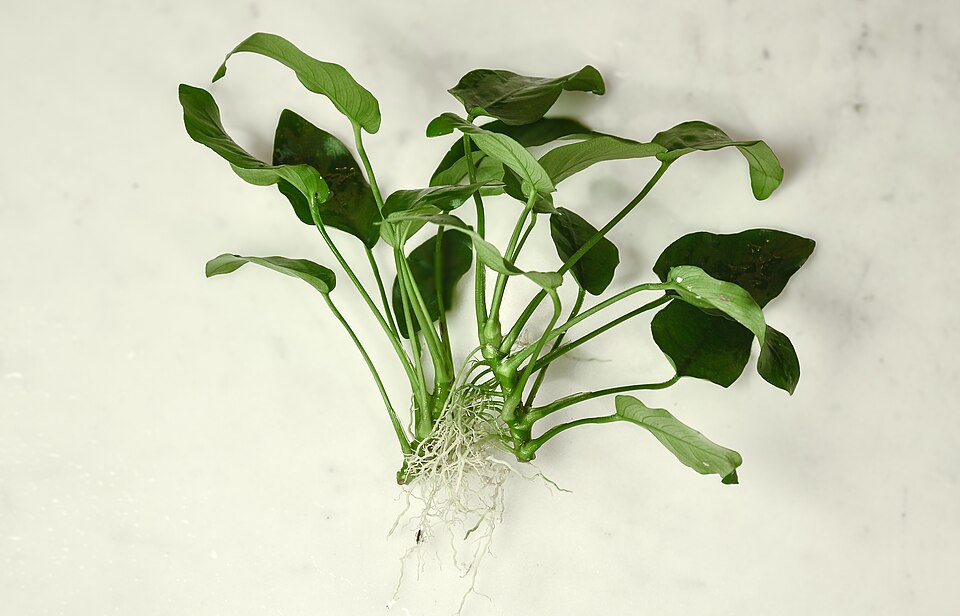
Photo: Abhik.Mazumdar.73 - Wikimedia Commons, CC BY 4.0
| Parameter | Value |
| Scientific name | Anubias barteri (nana, coffeefolia, petite and other forms) |
| Origin | West and Central Africa, stream banks |
| Height | 2-16 in depending on form; nana about 2-4 in |
| Growth | Very slow |
| Light | Low |
| Temperature | 72-82°F (22-28°C) |
| Placement | Tied to wood/rock or rhizome above substrate |
Anubias Forms for Different Tanks
- Anubias nana: 2-4 in, foreground and nano tanks
- Nana petite: under 2 in, the smallest common form
- Coffeefolia: textured, wrinkled leaves with a reddish new leaf
- Anubias barteri (standard): larger leaves for midground and background
Planting Without Rotting the Rhizome
Anubias usually comes in a pot with rock wool. Remove the wool, keep the roots, and tie or glue the rhizome to driftwood or stone. Roots can go into the substrate, but the rhizome must stay above it; a buried rhizome turns soft and rots.
Algae on Anubias Leaves
Because each leaf lives for a year or more, slow-growing anubias collects green spot algae in bright tanks. Place it in shade under taller plants or driftwood, keep lighting moderate and add nerite snails or otocinclus to graze the leaves.
Why Fish Leave Anubias Alone
The thick, bitter leaves are ignored by almost all fish, which makes anubias one of the few plants that survive with goldfish, parrot cichlids and other plant-wreckers. It is also a favourite resting leaf for bettas.
See our listed anubias barteri