Hornwort Aquarium Plant: Care, Growth and Shedding
Published: 2026-10-27 · FishyKart Blog
Hornwort (Ceratophyllum demersum) is a rootless aquatic plant with whorls of stiff, forked needles that grows fast, often 1-4 inches (3-10 cm) a week in good light and nutrients. It survives a wide temperature range, roughly 59-86°F (15-30°C), so it works in tropical tanks, cool goldfish tanks and outdoor ponds alike.
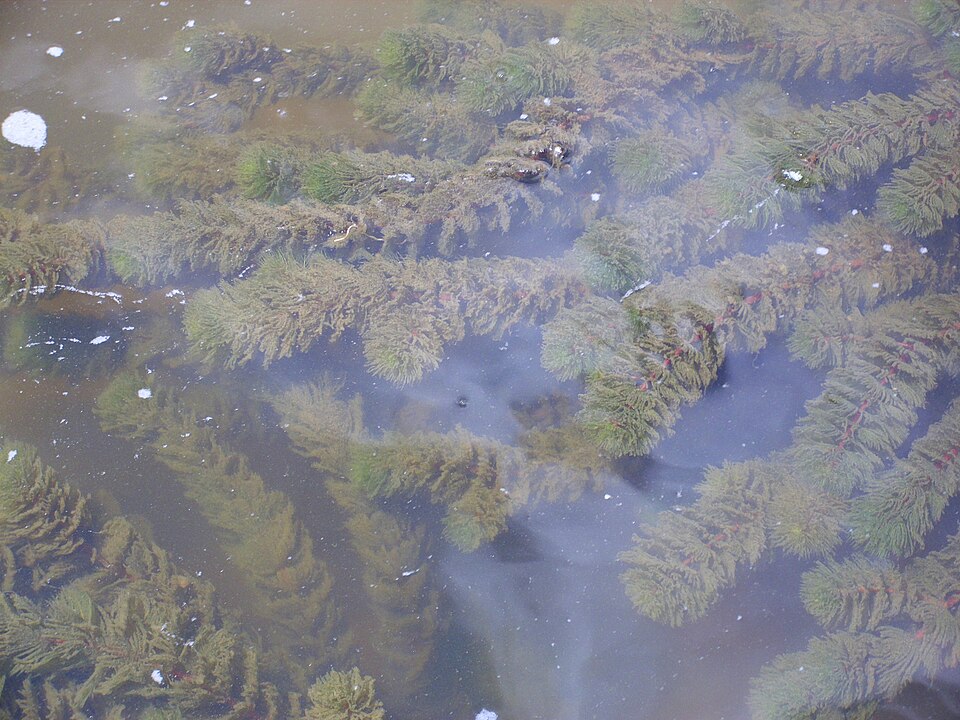
Photo: Javier martin - Wikimedia Commons, Public domain
| Parameter | Value |
| Scientific name | Ceratophyllum demersum |
| Roots | None - absorbs nutrients through its leaves |
| Growth | Very fast |
| Temperature | 59-86°F (15-30°C) |
| Light | Low to high |
| Placement | Floating or weighted / tucked into substrate |
| Difficulty | Very easy |
Floating or Planted?
Because hornwort has no true roots, it can simply float, shading the tank and giving fry cover. To use it as a background plant, tuck the base under a rock or plant weight; buried stems can rot, so anchor rather than bury. It sometimes grows pale anchoring shoots called rhizoids into the substrate.
Why Hornwort Helps Water Quality
- Fast growth pulls nitrate and phosphate out of the water, competing with algae
- Dense needles shelter guppy and molly fry
- Tolerates cool water, so it suits goldfish tanks where many tropical plants fail
Needle Shedding and Other Problems
Hornwort's best-known habit is dropping needles when it is stressed: right after a move, after a big temperature or light change, or when fertiliser runs out. Cut away bare stems and keep the healthy tips; they regrow quickly. Shed needles clog filters, so vacuum them out for the first week.
Trimming and Spreading
Hornwort spreads by fragments: any piece of stem grows into a new plant. Trim regularly and remove excess, and never release it into local waterways, where it can become invasive.
Live plants are listed in our aquarium plants collection