White Fuzz on Fish: Fungus or Columnaris? How to Tell and Treat
Published: 2026-11-21 · FishyKart Blog
White fuzz on fish is almost always one of two problems: Saprolegnia, a water mold that grows as white or grey cotton-like tufts on damaged skin, or columnaris, a bacterial infection caused by Flavobacterium columnare that forms flatter, yellowish-white patches, often on the mouth or across the back. Both start most often after an injury, poor water or stress, and both can kill a fish if ignored. The first steps are the same: isolate the fish, test the water and fix it; the medicine depends on which one it is.
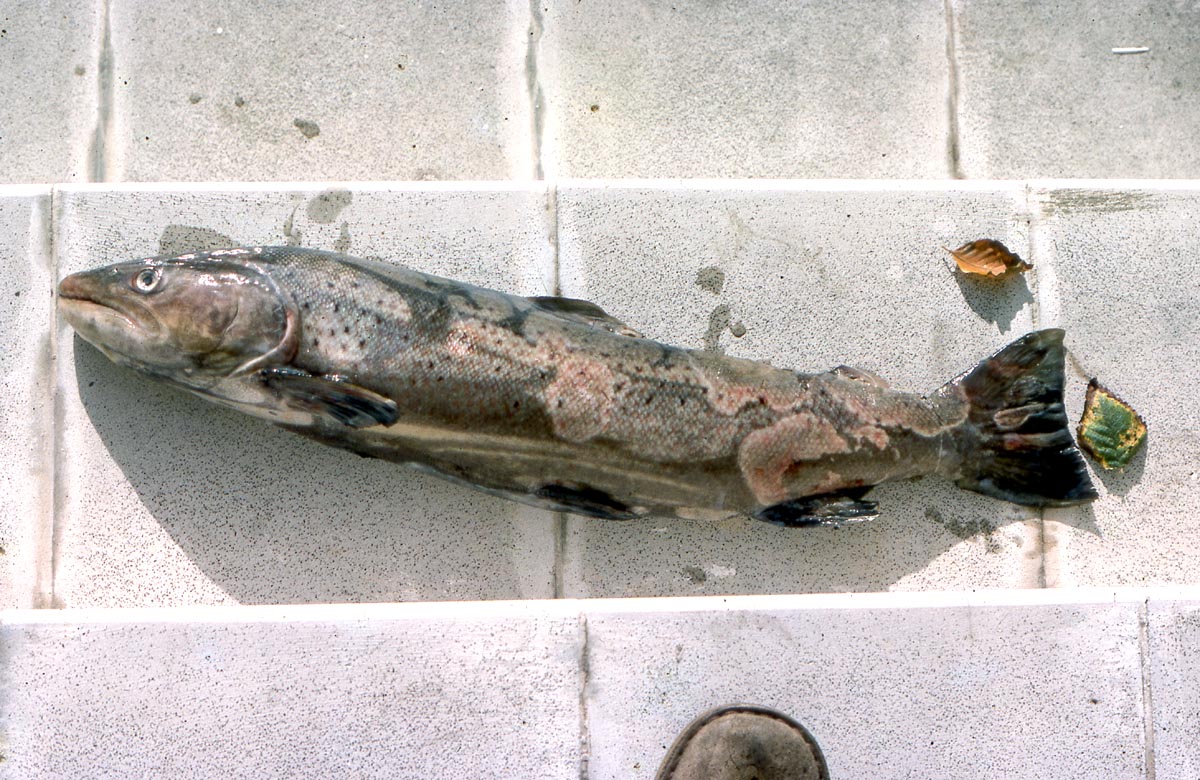
Photo: Velela - Wikimedia Commons, CC BY 3.0
Fungus or Columnaris: How to Tell
| Sign | Saprolegnia (water mold) | Columnaris (bacteria) |
| Look | Raised cotton-like tufts, white or grey, can turn brown or green as debris sticks | Flat, pale patches covered in yellowish-white mucus, often with a reddish edge |
| Where | On a wound, torn fin or old injury; on dead eggs | Mouth ("mouth fungus"), gills, and a "saddle" band starting at the dorsal fin |
| Water temperature | Grows at 37-91 F (3-33 C), more common in cooler water | Worse in warm water; outbreaks rise sharply as temperature goes up |
| Spread | Mostly a secondary invader of damaged tissue | Contagious between fish, faster in crowded tanks |
| Speed | Spreads outward from one spot | Spreads quickly in warm, crowded tanks |
The look and temperature data come from the columnaris review in Veterinary Research (2013) and standard descriptions of Saprolegnia. Our quick test: if the patch is fluffy and stands up in the water like cotton wool, think water mold; if it is flat, slimy and spreading around the mouth or back, think columnaris. When in doubt, treat as columnaris, which moves faster.
Saprolegnia: The "Cotton Wool" Water Mold
Saprolegnia is not a true fungus but an oomycete, a water mold whose spores live in almost every freshwater tank, pond and stream. It feeds on dead and decaying tissue, so on fish it usually appears where the skin is already damaged: a fight wound, a net injury, a fin bitten by a tank mate, or skin weakened by another disease. Once established it spreads across the skin as a cotton-like film and can kill the fish. It also grows on unfertilized fish eggs, which turn white and fuzzy and can infect healthy eggs next to them.
Columnaris: The Bacterium Often Called Fungus
Columnaris is caused by the bacterium Flavobacterium columnare, but its fuzzy look earned it names like "cotton wool disease" and "mouth fungus". The 2013 review notes that its typical lesions start as pale skin with a reddish edge, covered in yellowish-white mucus, and that "saddle-back" lesions begin at the base of the dorsal fin and spread down both sides. It also attacks gills, so a fish may gasp before skin signs are obvious. Temperature matters a lot: in one trial with salmon and trout, there were no deaths at 9.4 C (49 F), but at 20.5 C (69 F) all steelhead and coho died. Tropical tanks run warmer still, which is why columnaris moves fast in them. Crowding, high organic load and raised nitrite all increase the risk.
What to Do First
- Move the fish to a hospital tank with clean, heated, dechlorinated water and gentle filtration.
- Test the main tank for ammonia, nitrite and nitrate. Both problems follow poor water; see ammonia in a fish tank for safe levels.
- Do a 25-30% water change in the main tank and remove uneaten food, dead plants and any dead fish.
- Check the cause of injury: sharp decor, a fin-nipping tank mate, rough netting.
- Remove white eggs from breeding tanks so the mold cannot jump to healthy ones.
Treatment Options
Use a product that matches the cause and follow its label dose exactly. Antifungal treatments help with Saprolegnia on fish and eggs; columnaris, being bacterial, needs an antibacterial treatment, and in aquaculture it has been treated with potassium permanganate, copper sulfate baths or antibiotics such as oxytetracycline and florfenicol. Many medications harm filter bacteria, shrimp, snails or scaleless fish, which is one more reason to treat in a separate tank. Do not raise the temperature to "cook out" a columnaris infection the way some keepers do for ich: warmth helps Flavobacterium, not the fish. If several fish show signs, the patch grows by the hour or the gills are affected, contact an aquatic veterinarian.
How to Prevent White Fuzz
- Keep water clean with weekly partial changes; the routine is in how to clean a fish tank.
- Do not overstock or overfeed: organic load feeds both problems.
- Quarantine new fish for 2-4 weeks before adding them.
- Avoid injuries: smooth decor, compatible tank mates, careful netting.
- Keep temperature stable, with no sudden swings after water changes.
White spots that look like grains of salt are a different disease; see ich (white spot disease).