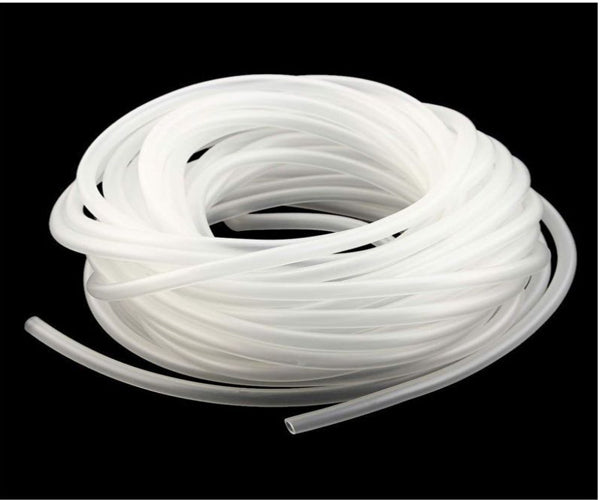
About & Function
This is standard flexible airline tubing — the thin plastic hose that carries air from an air pump to wherever it's needed in the tank: an air stone, a sponge filter, an ornament that bubbles, or the air intake of a hang-on-back filter. On its own it does nothing; it's the connector that lets an air pump's output actually reach the water.
Inside the pump, a vibrating diaphragm pushes air out under light pressure. That air travels down the pipe and is released underwater, usually through a diffuser like an air stone that breaks it into a stream of fine bubbles. As those bubbles rise, they drag water up with them, creating gentle circulation, and — more importantly — they dramatically increase the surface area of water exposed to air at the tank's surface, which is what actually drives oxygen in and carbon dioxide out, not the bubbles themselves.
It's a common misconception that the bubbles themselves are what oxygenates the water directly through their surface as they rise — in a typical home aquarium the bubbles are simply moving too fast and are too large for much direct gas exchange to happen through their own skin during the short trip to the surface. The real work happens where the water surface meets room air: agitation from the rising bubble column, and from any resulting current, keeps replacing the top layer of water with fresh water, and it's that constantly-renewed surface layer where the bulk of real oxygen-in, CO2-out gas exchange actually takes place.
Beyond air stones, the same tubing is used to feed sponge filters, air-driven undergravel filters, and decorative bubblers, and it's also the standard connector used to run a battery-powered backup air pump during a power outage — a small piece of kit worth keeping on hand precisely because this tubing is so cheap and universal.
Requirements
Fully passive tubing — no power draw of its own. It requires an air pump on one end to actually move air through it; without a pump, it's just an empty hose.
Cut to length as needed for the distance between your air pump and the tank. Standard airline tubing fits standard air pumps, air stones, valves, and check valves without any special sizing — it's a widely interchangeable size across the hobby.
If the pump sits below the waterline of the tank (e.g. on the floor next to a raised tank/stand), fit a check valve in the line to stop water siphoning back down the tube into the pump during a power cut.
Run the tubing with a gentle downward slope from the pump to the tank where possible, and avoid letting a long loop of it dip low and then rise again — condensation and any water that does creep back can pool in a low sag and partially block air flow over time. Where the line has to pass behind a stand or cabinet, keep the bend gradual rather than sharp; PVC tubing kinks fairly easily and a kink cuts off flow just as effectively as switching the pump off.
If running more than one outlet from a single pump (for example an air stone and a sponge filter together), a gang valve or manifold fitted with individual flow-control valves lets you split and independently adjust each line's air volume, rather than relying on the pump's own single fixed output to do double duty.
Match tubing length roughly to the actual distance needed rather than leaving a long slack coil — excess length adds unnecessary resistance to the air path and gives more opportunity for an accidental kink somewhere along a loose loop tucked behind the stand.
Compatibility
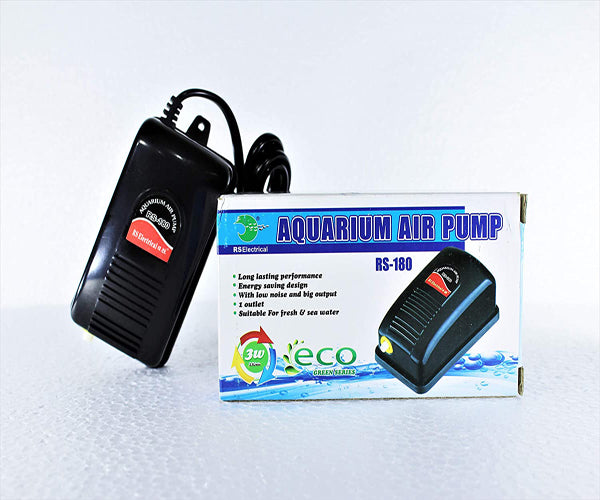
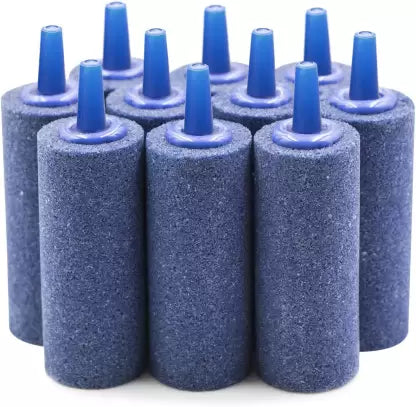

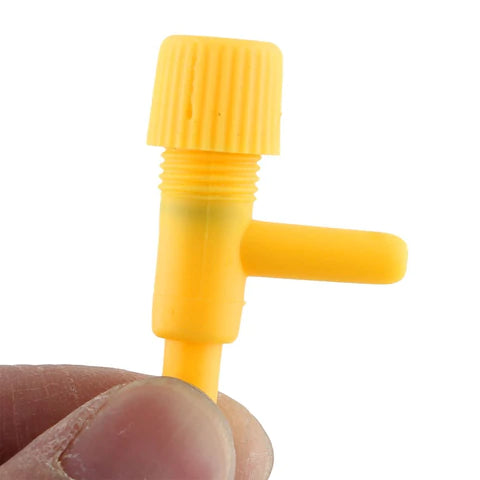
Specifications & Maintenance
Real-world specifications and upkeep:
- Type: flexible PVC airline tubing, standard hobby diameter
- Power: none — passive, requires an air pump to move air through it
- Degradation: over months of use tubing can stiffen, discolor, or develop a slight algae film on the inside; both make air flow less efficient
- Cleaning: a stiff or clogged length can sometimes be cleared by flushing with hot water; badly kinked or brittle sections are best cut out and replaced since tubing is inexpensive
- Kinking: avoid tight bends behind furniture or stand edges — a kinked pipe cuts off air flow to whatever it's feeding just as effectively as a switched-off pump
- UV/sunlight exposure: tubing routed where it gets direct sun (e.g. near a window) will stiffen and discolour noticeably faster than tubing kept out of direct light
- Connection fit: a loose-fitting joint at the pump, valve, or air stone lets air hiss out at the connection instead of reaching the diffuser — a snug push-fit, or a small dab of aquarium-safe silicone at a permanent joint, fixes this
- Cost: because it's inexpensive per metre, it's usually more practical to replace a length of stiffened or kinked tubing outright than to keep working around the problem
- Check valve maintenance: if a check valve is fitted in the line, check periodically that it still moves freely — a stuck-shut valve silently blocks air flow, and a stuck-open one no longer protects against back-siphoning
- Spare stock: because tubing is cheap and used across almost every air-driven accessory (stones, sponge filters, bubblers), keeping a spare length on hand avoids a full outage while waiting to buy more
- Battery backup pairing: keeping this tubing already cut and ready alongside a battery-powered backup air pump means a power cut can be dealt with in seconds rather than while searching for spare parts