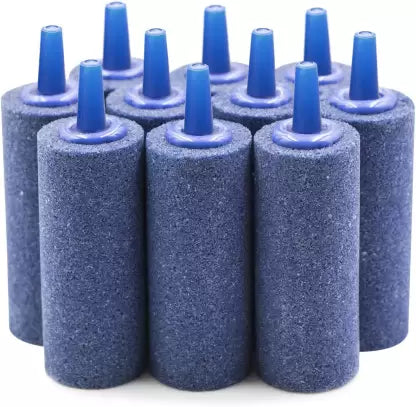
About & Function
An air stone is a small porous diffuser block — usually mineral or resin-bonded — that sits at the end of an airline and breaks a single stream of pump air into a curtain of fine bubbles instead of a few large, noisy ones. This cylinder-shaped version gives an even, all-round column of bubbles rather than a flat single-direction stream.
The bubbles themselves aren't what oxygenates the water directly; what actually matters is the water movement and surface agitation they create. As the bubble column rises, it drags water up with it, and that circulation brings low-oxygen water from deeper in the tank up to the surface, where gas exchange with the air actually happens — oxygen dissolving in, carbon dioxide and other gases escaping out. A steady stream of fine bubbles from a good air stone noticeably increases this surface turnover.
Air stones are also commonly used to drive sponge filters and other air-powered filtration, and as a gentle, fry-safe alternative to a powerful water pump in breeding or nursery tanks.
Bubble fineness comes down to pore size in the stone material, and it's a genuine trade-off: a very fine-pored stone produces the prettiest mist-like bubble curtain but restricts air flow more, meaning the pump has to work harder against more back-pressure to push the same volume of air through — some smaller diaphragm pumps genuinely struggle to drive a very fine stone at all. A coarser stone flows more freely with less strain on the pump, at the cost of slightly larger, less visually fine bubbles. The cylinder shape used here spreads that resistance around its whole curved surface rather than one flat face, which generally makes it easier for a modest pump to drive well compared to an equivalent flat disc stone.
Beyond simple aeration, a well-placed air stone is also a classic low-tech way to keep a small area of the water surface moving during winter in an unheated or lightly-heated setup, helping prevent a stagnant, low-oxygen dead zone from forming in a corner with poor circulation.
Requirements
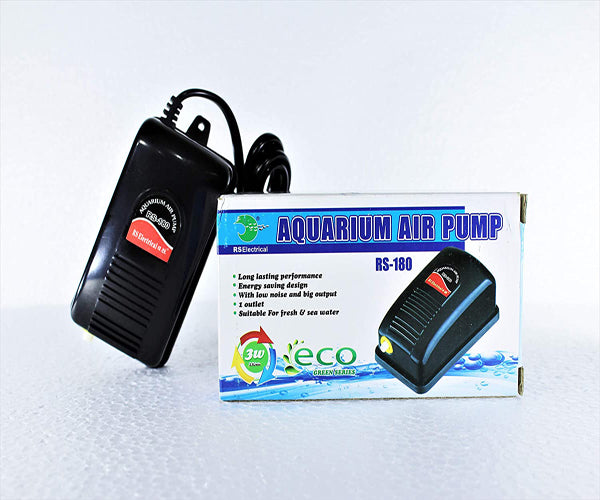
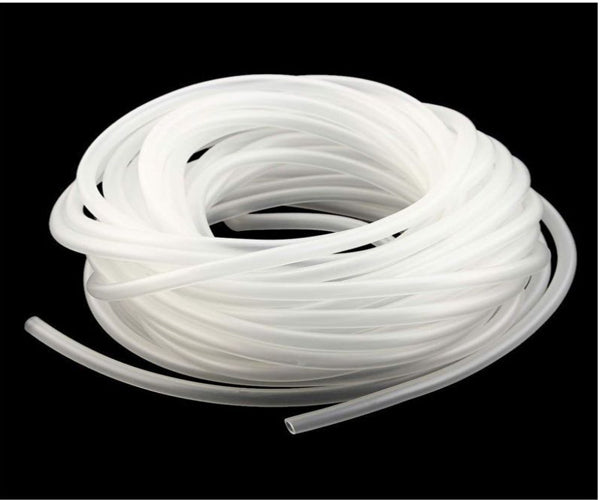
An air stone is entirely passive — it does not plug into anything itself. It needs an air pump connected via airline tubing to actually produce bubbles; without a pump pushing air through it, it just sits inert underwater.
Weight it down or wedge it in place if needed, since a stone this size can drift or get pushed around by strong filter outflow. Position it away from direct plant leaves if you want to avoid constant leaf movement, or right under floating plants/near the surface if the goal is maximum surface agitation.
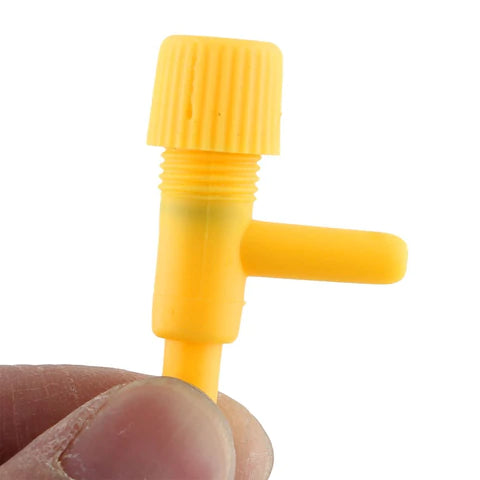
Match pump output to the stone rather than assuming any pump will do — an undersized pump will only manage a weak trickle of bubbles rather than the intended fine curtain, while a well-matched or slightly oversized pump (with a flow-control valve to dial it back if needed) gives a much steadier, denser stream. If running the stone from a shared pump alongside other airline outlets, expect the bubble output to drop somewhat once a second or third device is added to the same pump, since the total air output is being divided.
Depth matters too: a stone placed near the substrate has to push its bubble column further to reach the surface, giving more time for water circulation but also meaning the visible bubble stream travels through more of the tank — worth factoring into where it's positioned relative to fish that startle easily or plants that dislike constant leaf movement.
Anchoring options range from a simple aquarium-safe suction cup or clip holding the airline just above the stone, to a small ceramic or plastic base weight the stone sits in — either works, the main goal is stopping the stone (and the airline feeding it) from tumbling across the substrate or getting buried under sand over time, which muffles and eventually blocks its output.
Compatibility

Specifications & Maintenance
Real-world specifications and upkeep:
- Aeration output: around 30 litres of air per minute at rated pump pressure, per the manufacturer's listing — suitable for small to medium tanks as a supplementary aerator
- Power: none — passive diffuser, driven entirely by whatever air pump it's connected to
- Clogging: the porous surface gradually clogs with mineral deposits and biofilm, and bubble output visibly coarsens or reduces over weeks to months of use
- Cleaning: a light soak and rinse can restore some porous stones; heavily clogged ones are usually cheaper and easier to just replace than to fully clean
- Signs it needs replacing: big, uneven bubbles instead of a fine mist, or a pump that seems to be struggling/humming louder than usual against a partially blocked stone
- Deep-cleaning method: a stone that's still worth saving can sometimes be revived by boiling it in plain water for a few minutes to loosen mineral and biofilm buildup from the pores, then rinsing thoroughly before reuse — never use soap or detergent, which is very difficult to fully rinse back out of a porous stone and can be harmful to fish
- Typical lifespan: a handful of months to roughly a year of continuous running is common before output noticeably degrades, depending on water hardness and bioload — harder water tends to clog stones faster through mineral scale
- Cost of ownership: because air stones are inexpensive, most keepers find it more practical to replace a clogged one outright on a routine schedule rather than repeatedly attempting to fully restore it
- Noise: a sudden change from a quiet, even hiss to a loud gurgling or sputtering usually means the stone has developed uneven clogging, forcing air out through fewer, larger pores instead of evenly across the surface