About & Function
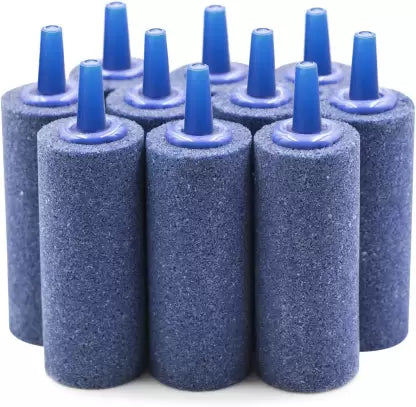
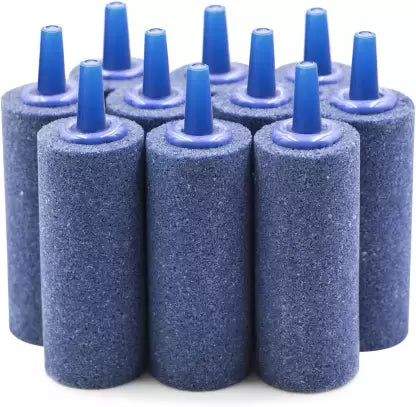
A pack of 10 sand-based cylinder air stones — small porous diffusers that turn a single stream of pump air into a fine curtain of bubbles. Selling them as a pack of 10 rather than one at a time suits keepers running several tanks, a fish room, or a rack, or anyone who wants spares on hand since air stones are a wear item that clogs and needs periodic replacement rather than something bought once and forgotten.
As with any air stone, the value isn't really the bubbles themselves — it's the water circulation and surface agitation the rising bubble column creates, which pulls low-oxygen water up to the surface where actual gas exchange with the air happens.
Being sand-bonded rather than a synthetic resin diffuser, these stones have a naturally fine, even pore structure that produces a consistently fine bubble mist when new, though sand-based stones also tend to be somewhat more brittle and prone to clogging with mineral scale over time than some synthetic alternatives — a trade-off that's part of why they're worth buying as a bulk pack rather than one at a time.
Common uses across a multi-tank setup include topping up oxygenation in a heavily-stocked tank, driving a gentle sponge filter in a fry or quarantine tank where a strong water pump would be too rough, and simply adding visual movement and surface interest to a display tank. Because each stone is small and inexpensive, many keepers treat them as a routine consumable — swapped out on a schedule rather than nursed along once output starts to fade.
For anyone running a proper fish room or breeding rack, buying air stones in a pack of 10 rather than singly also means far less time spent reordering — clogging is inevitable with continuous use, and having a stock of ready replacements on the shelf avoids a tank sitting under-aerated while waiting for a new stone to arrive. It's also simply cheaper per stone bought this way than picking up single stones repeatedly over time.
Some keepers additionally use a small stone like this purely decoratively, tucked into an ornament or behind rockwork purely for the visual bubble effect, independent of any real oxygenation need — a perfectly reasonable use given how inexpensive and easy they are to run.
Requirements
Fully passive — each stone needs its own connection to an air pump via airline tubing (4mm connector size) to produce any bubbles at all. The manufacturer recommends a pump rated above 2 watts per stone; running several stones off one small pump at once will noticeably weaken output on all of them, so size the pump to the number of stones you actually intend to run simultaneously.
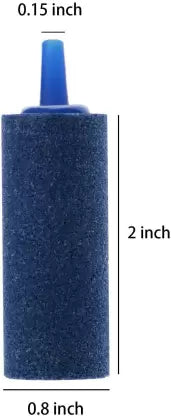
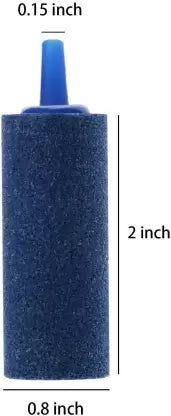
Each stone measures roughly 2 x 0.79 inches — small enough to tuck behind decor or under a sponge filter intake without it being an eyesore.
With 10 stones in the pack, a common setup is running 2-4 stones off a single higher-output multi-outlet pump fitted with a gang valve, letting each stone's flow be trimmed individually rather than all sharing one uncontrolled output. Weight or wedge each stone in place, since a stone this light and small drifts easily in any current from a filter or powerhead — a small suction-cup holder or a stone specifically sold with a weighted base works well if the substrate itself won't hold it down.
Keep spare, unused stones from the pack dry and in their original packaging until needed; a stone left sitting wet and unused for long periods between uses can develop mould or algae in its pores even without ever being connected to a pump.
If several stones are being run from the same pump, expect the combined air draw to add up quickly against the "greater than 2 watts per stone" guidance — a pump that comfortably drives two stones may struggle noticeably if pushed to feed four or five at once, showing up as weaker bubbles across the board rather than any one stone failing outright. Sizing the pump generously for the maximum number of stones likely to run at the same time avoids this.
Airline connectors on these stones are the standard 4mm size used throughout the hobby, so no special tubing or adapters are needed to connect to a typical air pump, valve, or check valve already in use elsewhere in a setup.
Compatibility
Specifications & Maintenance
Real-world specifications and upkeep, per the manufacturer's listing:
- Size: 2in x 0.79in per stone
- Connector size: 4mm
- Recommended pump: greater than 2 watts per stone
- Material: sand-bonded porous stone
- Pack contents: 10 cylinder air stones
- Cleaning: scrub gently with a brush every few weeks to months as the porous surface clogs with mineral deposits and biofilm
- Replacement: once a stone stops producing a fine bubble stream even after cleaning, replace it — having 10 in the pack makes this an easy swap rather than a special trip
- Deep-clean option: a lightly clogged stone can sometimes be revived by boiling briefly in plain water (no soap/detergent) to loosen mineral deposits from the pores, then rinsing well before reconnecting
- Typical lifespan: weeks to a few months of continuous running before output visibly coarsens is common, depending on water hardness — harder water scales up the pores faster
- Noise as a warning sign: a stone that starts gurgling loudly or sputtering unevenly, rather than hissing steadily, is usually clogging unevenly and due for a clean or swap
- Storage of spares: keep unused stones from the pack dry, clean, and in their packaging; a damp, unused stone can pick up mould in its pores before it's ever connected
- Never use soap: soap or detergent residue trapped in the porous structure is very difficult to fully rinse out and can harm fish once the stone is back in use — plain water (or a brief boil) is the safe cleaning method
- Cost-effectiveness: at pack pricing, replacing a clogged stone outright is usually cheaper in time and effort than repeated deep-cleaning attempts, especially once a stone is more than a year or so old
- Position check: periodically confirm the stone hasn't drifted, tipped over, or been buried under substrate, since a partially buried stone can look fine above the surface while producing far fewer usable bubbles than expected