About & Origin
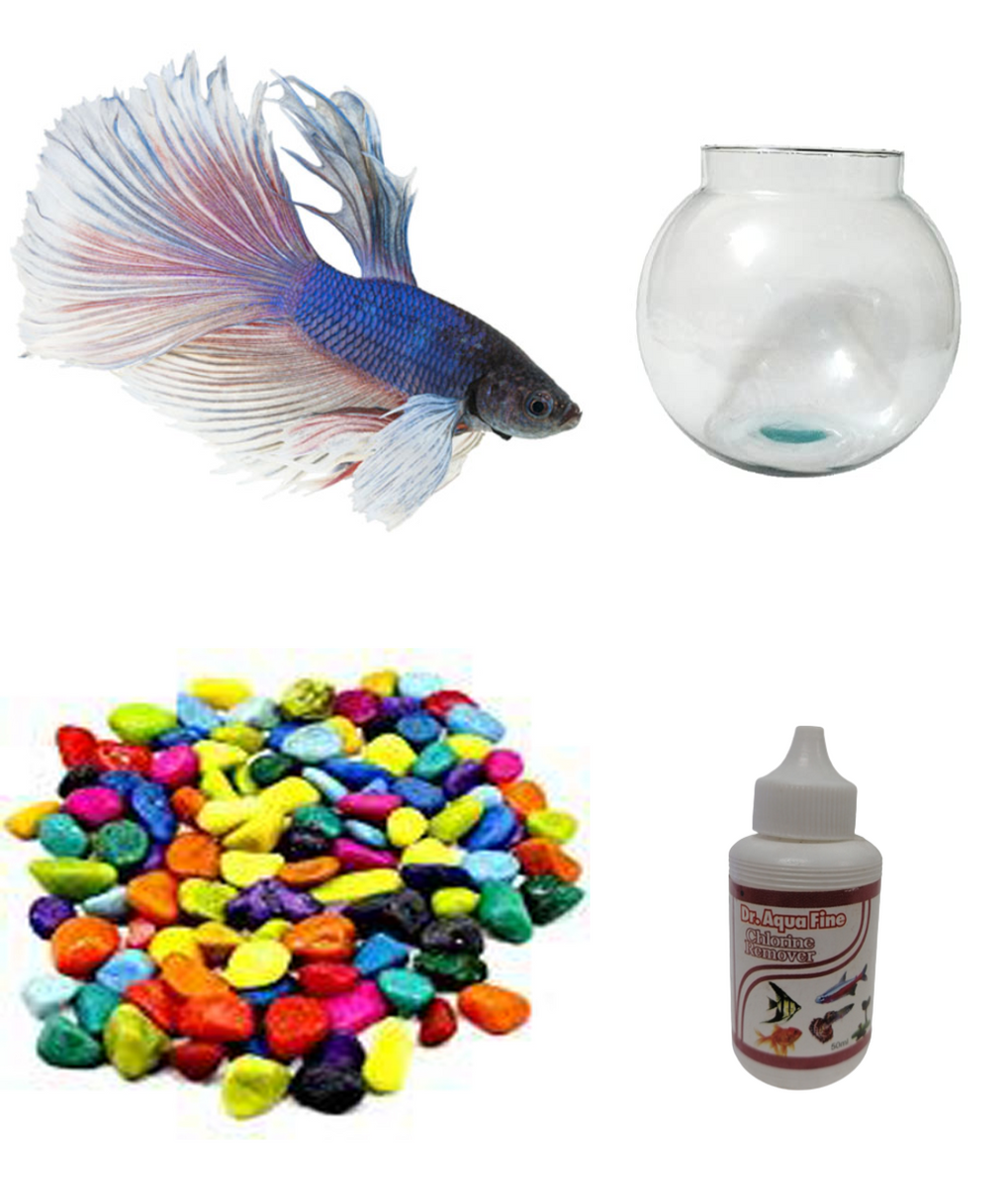
This combo bundles a live betta (Betta splendens) with a general aquarium medicine/water conditioner, aimed at giving a first-time betta owner the fish and one of the basic supporting products together rather than as separate purchases.
Bettas come originally from the shallow, slow-moving rice paddies and floodplains of Thailand and neighbouring Southeast Asia — often warm, still, oxygen-poor water. They evolved a labyrinth organ that lets them gulp air directly from the surface, which is exactly why they're able to tolerate the smaller, simpler setups they're commonly sold into.
The included medicine is typically a general conditioner or stress/immune support product rather than a treatment for one specific disease — check the actual bottle for exact instructions before dosing anything.
Unlike some of the other betta combos sold here, this one deliberately skips a tank/bowl or plant and pairs just the fish with one supporting consumable — a sensible pick for a buyer who already has housing sorted (an existing tank, or one bought separately) and mainly wants the fish plus the first bottle of conditioner needed to safely add tap water to it.
As with any betta, the specific individual fish included will vary — colour, fin type, and pattern differ from one animal to the next even within the same combo listing, since no two bettas are bred or graded identically.
Requirements
Bettas must be kept ONE per tank — never house two bettas together, male or female.
Space: aim for at least 15-20 litres where possible; bettas are often sold into smaller bowls than this, but do better long-term with more room.
The included medicine/conditioner: follow the actual product label's dosing instructions — general conditioners are typically added at every water change to neutralise chlorine/chloramine, not dosed continuously. It's worth checking whether the bottle is a routine dechlorinator/stress-coat or a targeted treatment for a specific ailment, since the two are used very differently — one goes into every water change indefinitely, the other only during an active health issue.
Diet: bettas are carnivorous — a quality betta pellet, with occasional frozen or freeze-dried bloodworm/brine shrimp as a treat. Avoid relying on flake food designed for community fish, which is a poor nutritional match for a betta's protein-heavy natural diet.
Water movement: keep any filter flow gentle — betta fins are not built for strong current.
Acclimating a new fish: float the transport bag in your existing tank for 15-20 minutes to equalise temperature, then add small amounts of tank water into the bag gradually over a similar period before releasing the fish, rather than tipping it straight in — this reduces the shock of a sudden change in water chemistry.
Compatibility


Setup & Care
Real water parameters for this betta:
- pH: 6.5–7.5
- Water hardness: soft to moderately hard, roughly 5–20 dGH
- Temperature: 24–28°C (75–82°F) — bettas are tropical fish and need to stay warm, not left at room temperature in cooler climates
- Oxygenation: tolerant of low-oxygen, still water thanks to their labyrinth organ, though some gentle circulation still helps
- Dechlorination: always treat fresh tap water with a conditioner before it reaches the fish — untreated chlorine/chloramine damages gill tissue
Regular partial water changes keep ammonia and nitrate in check — dose the included conditioner each time fresh water is added, per its label.
Feed once or twice a day, only what's eaten within about two minutes — overfeeding is a common cause of bloat in bettas and of fouled water in smaller setups. Watch for clamped fins, faded colour, or gasping at the surface as early signs a water change is overdue, rather than relying solely on a fixed schedule.
An occasional fasting day — skipping food entirely once a week — is a widely recommended practice for bettas, since they're opportunistic feeders by nature rather than constant grazers, and it gives the digestive system a short break that can help prevent constipation-related bloating over time.