About & Origin
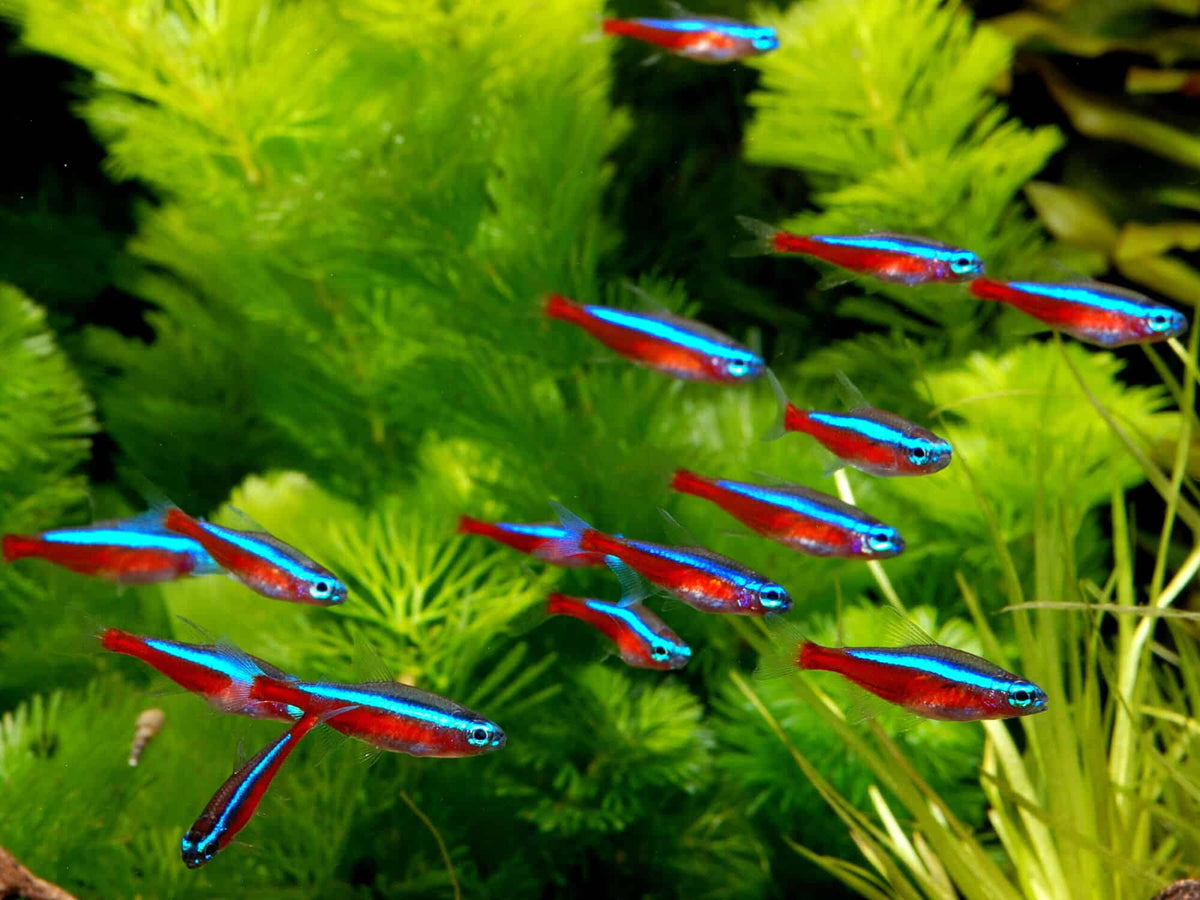
The Cardinal Tetra (Paracheirodon axelrodi) is a small, vividly-coloured tetra native to the blackwater and clearwater tributaries of the upper Rio Negro and Orinoco basins in South America, where it forms enormous shoals numbering in the thousands over sandy, leaf-litter-strewn stream beds. It's one of the most heavily exported ornamental fish in the world, and one of the most visually striking small tetras kept in the hobby.
Cardinals carry a brilliant iridescent blue-green stripe running the full length of the body, from nose to tail, above a vivid red stripe that runs from roughly the middle of the body back — unlike the closely related and often-confused Neon Tetra, whose red is confined to the rear half only, the cardinal's red extends nearly the whole body length, which is the most reliable way to tell the two species apart.
In the wild, cardinal tetras live in soft, acidic, tannin-stained blackwater with very little mineral content — conditions shaped by the dense rainforest leaf litter their native rivers flow through — and while captive-bred specimens are considerably more adaptable than wild-caught fish, they still show their best colour and long-term health in softer, slightly acidic water that echoes their origin.
This combo pack supplies a starter shoal at once, which matches how cardinals should always be kept — as a genuine group, not individually or in pairs.
Most cardinal tetras sold today are still wild-caught from the Rio Negro basin, supporting a genuinely significant sustainable-harvest fishery for local communities in the region, though captive-bred stock is increasingly available and tends to be somewhat hardier and more forgiving of water-chemistry variation than wild-caught fish, which can be more sensitive during the initial acclimation period.
A well-settled shoal of cardinals swimming together in open water, catching the light along that blue-and-red stripe, is widely considered one of the most striking sights a small planted community tank can offer — a big part of why the species has remained a hobby staple for decades despite the arrival of many newer, dyed, or lab-modified alternatives.
Requirements
Cardinal tetras are obligate shoaling fish and should be kept in groups of at least 8–10, ideally more — a small or single specimen will be visibly stressed, hide constantly, and shows almost none of the natural shoaling behaviour that makes this species so appealing in the first place.
A planted tank with some floating cover and subdued lighting suits cardinals well and closely mimics their shaded, leaf-litter-strewn natural habitat; they're a notably poor fit for a bright, bare, high-flow tank, where they tend to stay skittish and washed-out in colour.
A tank of at least 60–75 litres comfortably houses a shoal this size with room to swim, and larger is better if the shoal will grow or share space with other fish.
Diet should be small — cardinals have tiny mouths — high-quality flakes or micro-pellets, supplemented with small live or frozen foods (baby brine shrimp, daphnia) for best colour and condition.
A tightly-fitting lid is worth having, since tetras in general are capable jumpers when startled, and a fully cycled, mature filter is genuinely important before adding a new shoal — cardinals are among the less forgiving community fish when it comes to ammonia or nitrite spikes during a tank's early weeks.
Cardinal tetras are peaceful, non-aggressive schooling fish that should never be housed with anything large enough to see them as food, or boisterous enough to out-compete them for food and stress the shoal.
New cardinal tetras — especially wild-caught stock — benefit from a slower, more careful acclimation than many hardier community fish, since sudden changes in pH or hardness during transfer are a well-documented source of early losses; a slow drip-acclimation over an hour or more is worth the extra effort with this species.
Compatibility

Water & Care Conditions
Cardinal tetras genuinely reward getting the water chemistry right, showing better colour and longevity in conditions closer to their soft, acidic native rivers:
- pH: 5.5–7.0 — softer, more acidic water is closer to ideal, though well-acclimated captive-bred stock tolerates a wider range than wild-caught fish
- Hardness: soft water (1–8 dGH) most closely matches their native blackwater habitat
- Temperature: 23–27°C (73–81°F)
- Water clarity/tannins: cardinals often show their best colour in slightly tannin-stained "blackwater" conditions (achievable with driftwood or catappa/almond leaves), though crystal-clear water is perfectly fine too
- Oxygenation: moderate; gentle to moderate flow suits them better than strong current, which they'd rarely encounter in their natural shaded backwater habitat
Stable, mature water is important — cardinals are somewhat more sensitive to poor water quality and sudden parameter swings than hardier tetra species.
Because many cardinal tetras arrive as wild-caught fish, quarantining new arrivals before adding them to an established community tank is a sensible precaution against parasites or disease that can be more prevalent in wild-collected stock than in farm-raised fish.
Dim, indirect lighting and floating plants not only mimic the shaded rivers this species comes from but also visibly reduce skittishness — a cardinal shoal kept under harsh, bright light with no cover will often stay washed-out and hidden rather than showing the vivid colour it's known for.
A dark substrate is a simple, often-overlooked way to bring out this species' colour further — cardinals, like many blackwater fish, tend to display more intense pigmentation against a dark background than a pale gravel bed, which reflects light and can leave the shoal looking comparatively dull.
Because this species can be more sensitive than average during the first weeks after purchase, holding off on adding new tankmates or doing large water changes right after introducing this combo's shoal gives them time to settle before facing additional change.