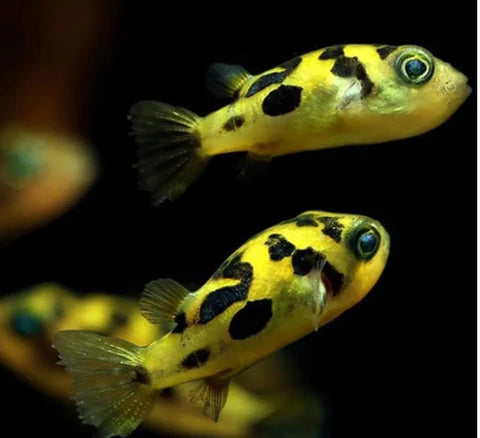
Great Snail Eater! Great For Clearly Pest Snails
Maximum size of 1.2-3.5cm
Dwarf puffers hate flake foods. Offer it and they’ll look at you with indignation. They’ll potter across for a curious scan over then let that flake slump to the base, where it’ll sit festering.
Bloodworm is never refused, either live or frozen, and other foods are accepted according to individual fish temperaments. Some will also gorge on frozen Daphnia or Cyclops, some will only accept live.
The same applies to brine shrimp and Tubifex. Invest in a mixed pack of frozen foods, such as a quintet with five different ingredients and see which your fish prefer.
About & Origin
The Dwarf Puffer, also called the Pea Puffer (Carinotetraodon travancoricus), is the smallest pufferfish species in the hobby, native to slow-moving freshwater streams, canals, and rice paddies in the Western Ghats region of southern India. Fully grown adults reach barely 2.5cm (1"), yet pack the same curious, alert, big-personality behavior as their much larger marine puffer relatives.
Unlike most puffers, the Dwarf Puffer is a true freshwater species that never needs brackish or marine water at any life stage, which is exactly what makes it accessible to freshwater aquarium keepers.
They are intelligent, inquisitive fish that recognize their keeper and will often "beg" at the front of the tank at feeding time — but that same intelligence comes with a genuinely nippy, semi-aggressive streak that needs to be planned around. Each fish also develops its own distinct personality and territory preferences within a tank, something keepers who've watched a group closely often remark on, which is unusual for a fish this small.
Like all true pufferfish, dwarf puffers lack the pelvic fins most fish have and swim instead with a distinctive hovering, almost helicopter-like motion powered mainly by their dorsal, anal, and pectoral fins — this gives them excellent maneuverability for stalking snails and small invertebrates in dense vegetation, but also means they're relatively slow and poor swimmers in open water compared to streamlined fish, part of why they're so prone to being outcompeted or nipped by faster tankmates. They can also famously inflate by gulping water when threatened, though this is a genuine stress response best avoided rather than something to deliberately provoke, since repeated inflation is taxing on the fish.
fishykart.com sources healthy, actively-feeding dwarf puffers, not wild-caught stock straight off a long shipping chain.
Requirements
Small size does not mean low-maintenance — dwarf puffers have real, specific needs.
Tank size: around 5 gallons (19L) per puffer is a reasonable minimum given their territorial streak; a group does best in 10+ gallons with plenty of visual barriers (dense planting, driftwood) to break sightlines between individuals. Cramming several puffers into too small a space with too little visual cover is one of the most common causes of chronic fin-nipping and stress in this species.
Temperament: genuinely nippy toward slow-moving or long-finned tankmates. Many keepers have the best results keeping dwarf puffers in a species-only tank, or a very carefully chosen community. Even within a group of their own kind, some squabbling over territory is normal, especially around feeding time or in an under-decorated tank.
Diet: strictly carnivorous, and unusually for a nano fish, benefits from hard-shelled foods like small snails — puffer teeth grow continuously and need this wear to stay a healthy length. Bloodworm, brine shrimp, and other frozen/live foods round out the diet; they generally refuse dry flake or pellet food.
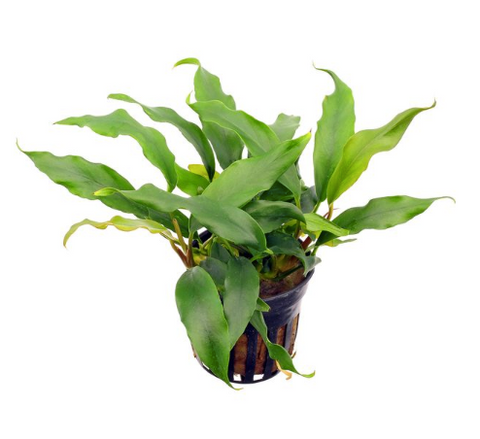
Decor: dense planting and hardscape gives shy or lower-ranked individuals somewhere to retreat, which meaningfully reduces squabbling in a group.
Group dynamics: if keeping several together, a slightly female-skewed ratio and plenty of visual breaks tend to produce calmer, less hierarchical behavior than a tightly matched all-male group, which can bicker constantly over territory. Watch feeding time closely at first — in a group, a dominant individual can monopolize food and leave subordinates underfed if you only feed in one spot.
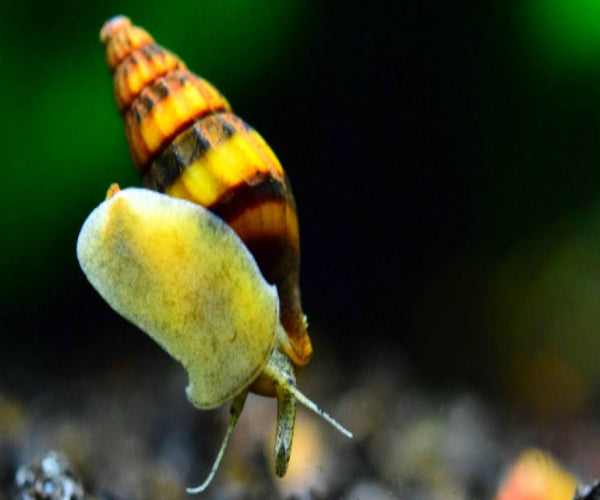
Snail-eating role: their appetite for snails makes dwarf puffers a genuinely effective, non-chemical way to control a pest-snail outbreak in a planted tank, though this also means they're a poor match for a tank where you're deliberately keeping ornamental snails as livestock.
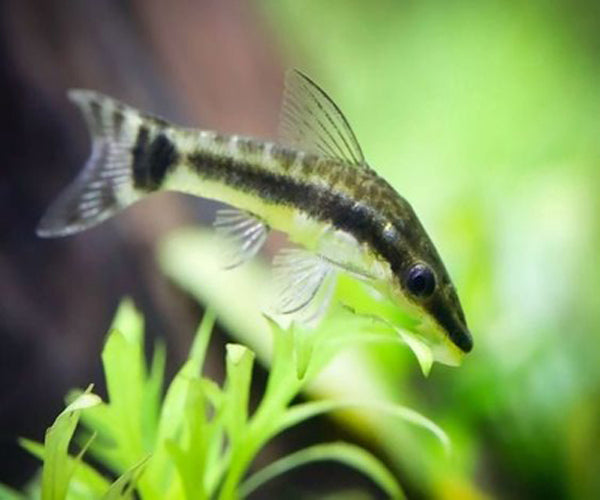
Compatibility
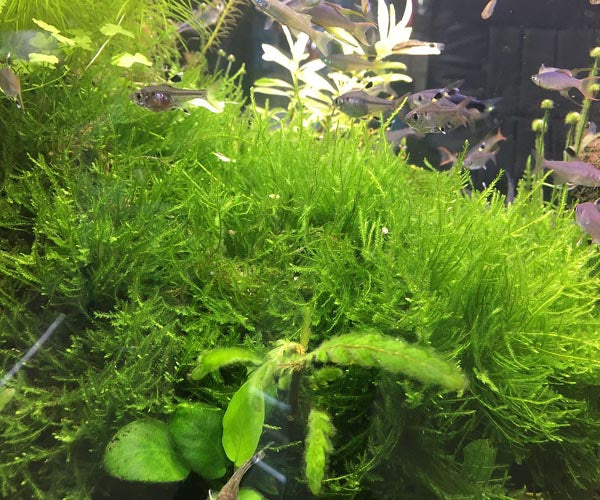
Water & Care Conditions
Dwarf puffers are a soft, slightly acidic water species and do best within these ranges:
- pH: 6.5–7.5
- Salinity / hardness: pure freshwater — unlike many other puffer species, this one should never be kept in brackish water; soft to moderately hard, roughly 2-15 dGH is comfortable
- Temperature: 24–27°C (75–80°F)
- Oxygenation: benefits from good filtration and gentle-to-moderate flow; sensitive to poor water quality relative to its small size, so consistent maintenance matters more than with hardier nano fish
Despite their small footprint, dwarf puffers are considered a more advanced nano fish than their size suggests, mainly because of how sensitive they are to ammonia and nitrite in an uncycled or overstocked tank, and because their strict live/frozen-food diet means feeding needs more planning than dropping in flakes. A fully cycled tank before introduction, weekly partial water changes of around 20–25%, and regular water testing (particularly in the first few weeks) go a long way toward avoiding the sudden losses that under-prepared dwarf-puffer keepers sometimes report.
Because hard-shelled snail prey is part of a balanced diet, offering a varied menu also indirectly supports water quality — a puffer fed only soft foods can develop overgrown teeth that eventually interfere with normal feeding, a welfare issue worth watching for in an otherwise healthy-looking fish. Live plants and a stable nitrogen cycle both help buffer the small margin for error that comes with keeping such a physically tiny fish, since even modest ammonia spikes affect a 2.5cm puffer far more severely than they would a larger, hardier species. Keeping a consistent feeding and maintenance routine, rather than an occasional big cleanup after neglect, is genuinely the biggest factor in long-term success with this species.