About & Origin
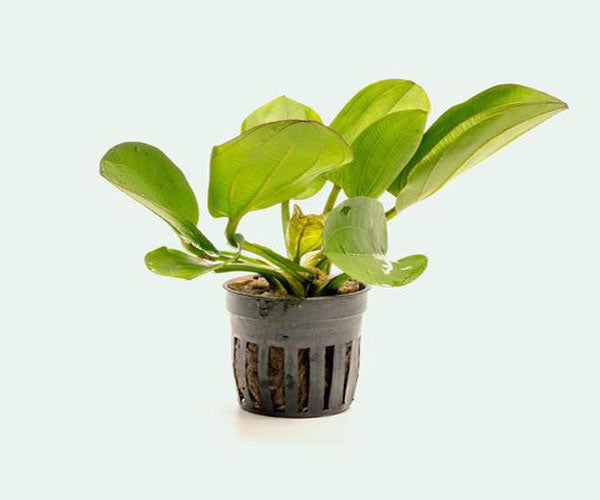
The Amazon Sword (Echinodorus amazonicus, sometimes also called E. bleherae in the trade) is a freshwater aquarium plant native to the slow-moving rivers and flooded margins of the Amazon basin in South America. It's genuinely one of the true classics of the hobby — the archetypal large, green centrepiece plant that's appeared in tanks since the earliest days of the modern hobby.
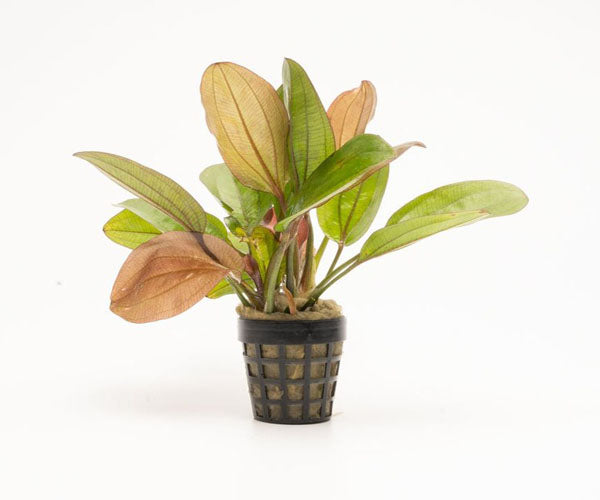
It grows as a rosette of long, lance-shaped, bright to medium-green leaves radiating outward from a short central stem, without true stems of its own. Given enough space and nutrients it can grow quite large, easily becoming the visual centrepiece of a tank.
It's a genuinely undemanding plant by aquascaping standards, which along with its impressive size at maturity is why it has remained a hobby staple for so long.
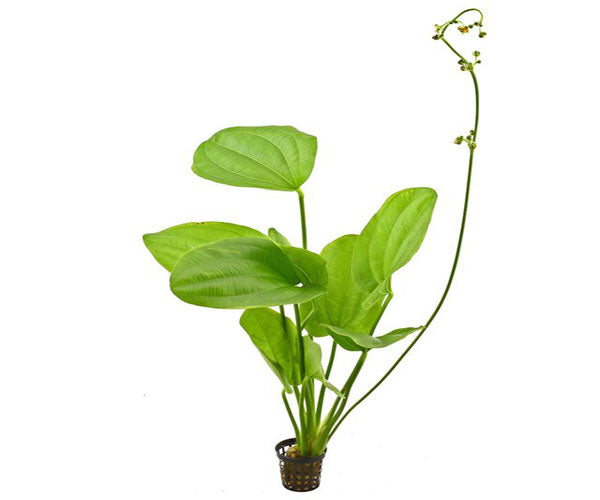
Given time and good root nutrition, mature specimens send up a tall flower stalk above the waterline (if allowed to grow emersed) that can produce small white flowers and plantlets, similar to other Echinodorus species -- though most aquarium keepers never see this stage, since the plant is typically kept fully submerged in a standard aquarium and reproduces by side shoots instead under those normal conditions.
Requirements
The Amazon Sword is a large plant that rewards steady root feeding more than intense light or CO2.
Tank size: at full size it can span 40-50cm across, so it needs real space — best suited to medium and larger tanks rather than nano setups.
Substrate: a heavy root feeder. Nutrient-rich substrate or root tabs make a big difference to leaf size and colour; in nutrient-poor gravel it survives but stays noticeably smaller and paler.
Light: moderate light is enough for healthy growth; it doesn't need intense lighting, though brighter light with matching nutrients gives fuller, larger leaves.
CO2: not required — it's commonly grown successfully in non-CO2, low-tech tanks, though CO2 will noticeably speed up its growth rate.
Placement: as a background or centrepiece plant given its eventual size; plan for the space it will grow into rather than how large it looks at planting.
Trimming and propagation: remove older, yellowing outer leaves at the base as new ones emerge from the crown -- this keeps the plant looking full and healthy rather than leggy and sparse. Side shoots (plantlets forming at the base) can be gently separated and replanted elsewhere once they've developed their own independent root system.
Compatibility
Water & Care Conditions
Echinodorus amazonicus is tolerant and grows best within:
- pH: 6.5–7.5
- Hardness: soft to moderately hard water, roughly 3–15 dGH
- Light: low to moderate; tolerates a wide range
- Temperature: 22–28°C (72–82°F)
- Nutrients: benefits most from root-level feeding (substrate or root tabs) rather than water-column dosing alone
Outside these ranges it typically survives but stays smaller with paler leaves — a classic sign it needs more root nutrients rather than a change in water chemistry.
Weekly water changes and stable temperature support consistent growth, though as a genuinely hardy plant it tolerates an occasional lapse in maintenance far better than more delicate stem or carpeting plants sharing the very same tank would.
Because it's such a heavy root feeder, a specimen planted directly in nutrient-poor gravel with no supplementation will noticeably underperform one given proper root tabs, even under otherwise fully identical water conditions -- substrate quality genuinely matters just as much as, or more than, anything measured with a standard water test kit. Given proper feeding, expect a young plant to reach an impressive display size within roughly 6-12 months of steady, healthy growth, at which point it becomes the natural visual focus of almost any community aquascape it's planted into.