About & Origin
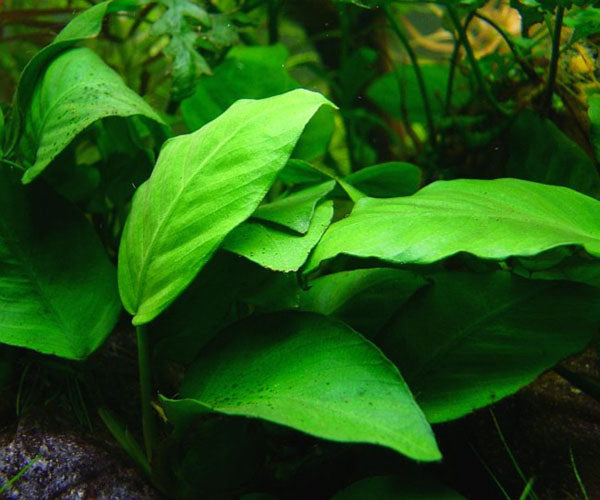
Echinodorus palaefolius is a large, robust freshwater aquarium plant native to marshy wetlands and slow-moving freshwater habitats across Central and South America, where — like several of its close Echinodorus relatives found throughout the region — it grows naturally both emersed along muddy banks and fully submersed in shallow standing water.
Its overall leaf shape changes quite noticeably depending on how exactly it's grown: emersed leaves tend to be broader and more rounded, while submersed aquarium growth instead produces narrower, longer, more lance-shaped leaves. Either way it forms a genuinely substantial, full rosette and, like other large swords, is generally grown as a striking centrepiece rather than a background filler plant.
It's a genuinely robust, adaptable species that handles the transition between emersed nursery growth and submersed aquarium life better than many other more delicate aquascaping plants.
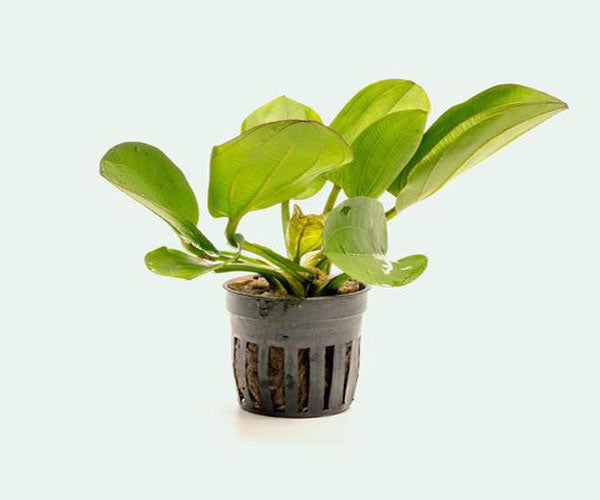
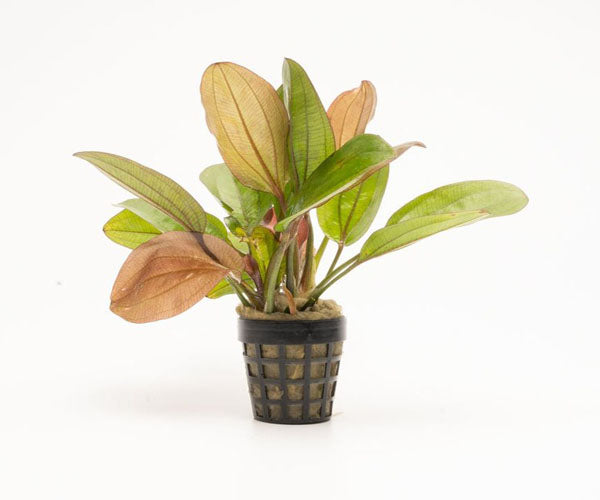
Most specimens sold in the hobby are grown emersed at the nursery (out of water, in humid greenhouse conditions) since this produces faster, denser growth for propagation -- meaning the plant you receive will typically need a genuine period of adjustment as it converts to fully submersed growth after planting, shedding its original leaf form along the way before healthier new growth appears.
Requirements
Echinodorus palaefolius shares the same general needs as most large sword plants in the hobby: real space and steady, consistent root feeding over time.
Tank size: grows into a sizeable rosette, so it's best suited to medium and larger tanks where it has room to spread rather than nano setups.
Substrate: a heavy root feeder — a nutrient-rich substrate or root tabs noticeably improve growth and leaf size compared with plain, unfertilised gravel.
Light: moderate light supports good growth without being strictly required to be intense; it adapts reasonably well across a range of lighting.
CO2: not required, though it will grow faster and fuller with supplementation.
Settling in: newly submersed specimens (grown emersed at the nursery) may shed some of their original emersed-form leaves as they transition — this is normal, with new submersed-form leaves following shortly after.
Placement and trimming: plant with enough clearance to reach its full rosette size; remove yellowing or melted leaves at the base as needed during the transition period and beyond, since new growth continues from the crown.
Patience during transition: don't judge this plant on its first few weeks in a new tank -- a period of leaf loss right after planting is expected, not a sign of failure, and the plant typically rebounds strongly once it has converted fully to submersed growth and rooted in properly.
Compatibility
Water & Care Conditions
Echinodorus palaefolius is adaptable and grows best within:
- pH: 6.5–7.5
- Hardness: soft to moderately hard water, roughly 3–15 dGH
- Light: low to moderate
- Temperature: 22–28°C (72–82°F)
- Nutrients: benefits most from root-level feeding rather than water-column dosing alone
Outside these ranges it tends to persist but grow smaller and slower — pale or stunted new leaves are usually a nutrient sign worth investigating first, rather than a water chemistry issue truly worth chasing.
During the emersed-to-submersed transition period, water changes can proceed on a normal schedule -- this species doesn't need special handling beyond patience while it converts leaf forms. Weekly partial water changes and consistently stable temperature both support steady, healthy long-term growth once the plant becomes fully and properly established in its new home over the following weeks.
A specimen given adequate, consistent root feeding will typically resume vigorous, healthy growth within just a few short weeks of planting, developing a full new set of submersed leaves and becoming a genuine centrepiece within a couple of months of steady care. Avoid disturbing the roots unnecessarily once it's settled in, since repeated uprooting or rescaping slows this recovery process considerably and can trigger yet another round of stressful leaf loss.